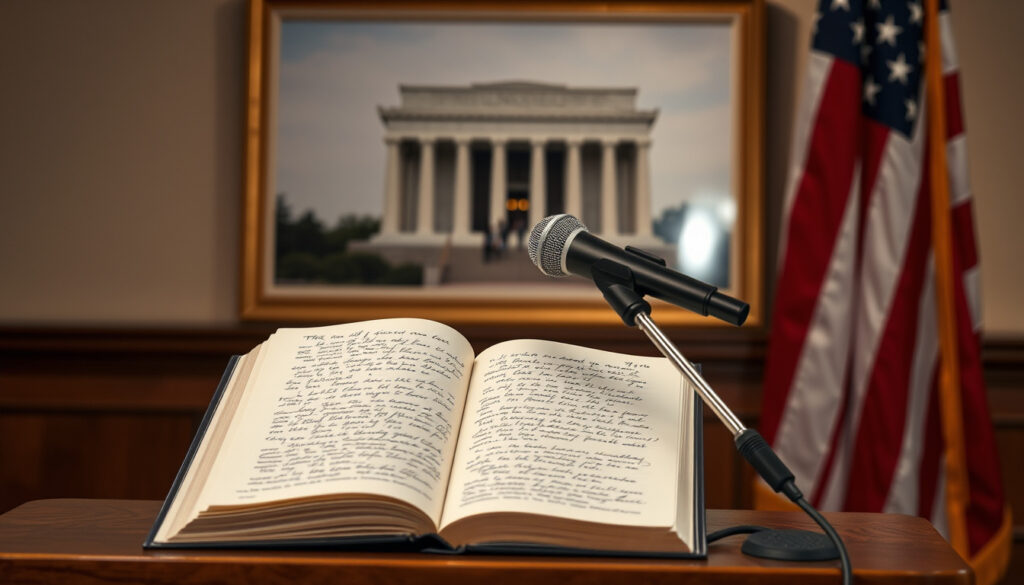
Martin Luther King: Biography, Legacy & Key Facts
Every January, schools and streets across America honor Martin Luther King Jr., but the man behind the holiday had a legacy that reaches far beyond that one August afternoon on the steps of the Lincoln Memorial. He was just 39 when he was assassinated in Memphis on April 4, 1968, yet his vision for racial equality and economic justice still shapes debates today. This article looks beyond the iconic speech to explore the facts, the unanswered questions, and what his views might mean for current political conversations.
Born: January 15, 1929 ·
Died: April 4, 1968 ·
Age at death: 39 ·
Nobel Peace Prize: 1964 ·
Height: 5 ft 7 in (1.70 m) ·
Children: 4
Quick snapshot
- Born January 15, 1929, in Atlanta, Georgia (National Park Service)
- Assassinated on April 4, 1968, in Memphis, Tennessee (Encyclopaedia Britannica)
- Won the Nobel Peace Prize in 1964 (NobelPrize.org)
- Exact net worth at death — estimates vary (Wikipedia)
- Full extent of conspiracy theories around the assassination (National Archives)
- MLK’s personal stance on LGBTQ rights (Encyclopedia.com)
- 1955-1956: Montgomery Bus Boycott (ABC News)
- 1963: March on Washington and “I Have a Dream” speech (ABC News)
- 1968: Assassination in Memphis (Encyclopaedia Britannica)
- Ongoing debates over MLK’s economic justice legacy (NobelPrize.org)
- Modern political figures invoke or challenge his principles (Harvard Gazette)
- MLK Day continues as a federal holiday (1986) (National Park Service)
Eight key facts, one pattern: King’s life was compact but remarkably dense — from a precocious student to the youngest Nobel Peace Prize winner at the time, all within 39 years.
| Label | Value |
|---|---|
| Full Name | Martin Luther King Jr. |
| Born | January 15, 1929, Atlanta, Georgia |
| Died | April 4, 1968, Memphis, Tennessee |
| Spouse | Coretta Scott King |
| Children | 4 (Yolanda, Martin III, Dexter, Bernice) |
| Nobel Peace Prize | 1964 |
| Height | 5 ft 7 in (1.70 m) |
| Net Worth at Death | ~$250,000 (approx. $2 million today) |
What is Martin Luther King famous for?
Martin Luther King Jr. is best known as the most prominent leader of the American civil rights movement from the mid-1950s until his assassination in 1968 (Encyclopaedia Britannica). He championed nonviolent resistance, organized landmark protests, and delivered speeches that still echo in classrooms and political rallies.
When was Martin Luther King born and died?
- Born: January 15, 1929, in Atlanta, Georgia (NobelPrize.org)
- Died: April 4, 1968, in Memphis, Tennessee, after being shot on the balcony of the Lorraine Motel (Encyclopaedia Britannica)
Where was Martin Luther King born?
He was born in Atlanta, Georgia, to the Reverend Martin Luther King Sr. and Alberta Williams King at the family home on Auburn Avenue (National Park Service). That neighborhood is now part of the Martin Luther King Jr. National Historical Park.
King’s fame rests on three pillars: the Montgomery Bus Boycott (1955-1956), the March on Washington in 1963 where he delivered his “I Have a Dream” speech, and the Nobel Peace Prize awarded in 1964 (NobelPrize.org). He also helped organize the Selma-to-Montgomery marches and the Birmingham Campaign, both of which pressured the federal government to pass civil rights legislation (ABC News).
King’s nonviolent philosophy was not just moral but tactical — it forced confrontations that television cameras could broadcast, galvanizing national sympathy and legislative action.
What this means: King’s public image as a peaceful crusader was deliberately crafted, but it was also a strategic choice that worked in the context of the 1960s. The implication is that his legacy is inseparable from the media environment that amplified his message.
Why was Martin Luther King assassinated?
King was assassinated on April 4, 1968, in Memphis, Tennessee, while standing on the balcony of the Lorraine Motel (Encyclopaedia Britannica). He was in Memphis to support striking sanitation workers (NobelPrize.org).
Did MLK know he was shot?
King was shot at approximately 6:01 p.m. CST and died shortly after at St. Joseph’s Hospital (Wikipedia). There is no evidence he knew he was about to be shot. The shot came from a neighboring rooming house (National Archives).
The shooter was James Earl Ray, a convicted criminal who pleaded guilty and was sentenced to 99 years in prison (Encyclopaedia Britannica). The official motive was racial hatred, though conspiracy theories persist. The National Archives notes that King’s death “signaled the seeming end of a period of civil rights progress” (National Archives).
King’s assassination, intended to silence the movement, instead triggered nationwide riots and a surge in federal action — the Civil Rights Act of 1968 was passed just days after his death.
The pattern: While Ray was the lone gunman, the broader environment of racial hostility and political opposition to King’s Poor People’s Campaign created the conditions for the assassination. The trade-off: the violence that killed King also galvanized the legislative victories he had been fighting for.
What are 5 facts about Martin Luther King?
Five concrete facts that round out the man behind the legend:
- He was born Michael King Jr. and later changed his name to Martin Luther King Jr. (NobelPrize.org)
- He skipped 9th and 12th grades and entered Morehouse College at age 15 (NobelPrize.org)
- He won the Nobel Peace Prize at age 35, the youngest male recipient at the time (NobelPrize.org)
- He stood 5 ft 7 in (1.70 m) tall (Encyclopaedia Britannica)
- His net worth at death was reportedly around $250,000 (roughly $2 million today) (Wikipedia)
How tall was Dr. Martin Luther King?
King was 5 feet 7 inches (1.70 meters) tall, according to biographical records (Encyclopaedia Britannica).
How much money did Dr. King have when he died?
Reports vary, but his estate was valued at roughly $250,000 at the time of his death, which would be about $2 million in 2025 purchasing power (Wikipedia). He donated most of his Nobel Prize money ($54,000) to civil rights organizations.
What grades did Dr. King skip?
King skipped the 9th and 12th grades, entering Morehouse College at age 15 without formally graduating from high school (NobelPrize.org). He later earned a PhD in systematic theology from Boston University.
What this means: King’s intellectual precocity wasn’t just a trivia note — it meant he was thrust into leadership roles early, and his academic background gave his activism a theological and philosophical heft that set him apart from other grassroots organizers.
Did MLK support LGBTQ?
This is one of the most debated questions about King’s legacy. The historical record is sparse. King wrote a letter to a gay teen in 1963 expressing sympathy, but he never made a public statement supporting LGBTQ rights (Encyclopedia.com). His wife, Coretta Scott King, became a vocal advocate for LGBTQ rights after his death, stating that King’s principles of justice applied to all.
Did MLK believe in Jesus?
Yes, King was a devout Christian and a Baptist minister. His faith was central to his philosophy of nonviolent resistance (Encyclopaedia Britannica). He often cited Jesus, Gandhi, and Thoreau as influences.
What would MLK think of Trump?
No direct statements exist, but scholars have extrapolated. Given King’s focus on racial equality, economic justice, and his opposition to the Vietnam War, it’s likely he would oppose Donald Trump’s rhetoric on immigration and race (Harvard Gazette). The catch: King was a pragmatist who worked with presidents of both parties, so his exact position remains speculative.
The ambiguity around King’s LGBTQ views reflects a larger tension in his legacy: he was a minister of the 1960s, but his followers apply his principles to 21st-century issues. The consequence for modern activists: they must decide whether to claim King’s authority or adapt his framework to evolving social norms.
The pattern: King’s clear stance on racial justice contrasts with his silence on sexual orientation. This gap has become a flashpoint in debates over whether his legacy can be claimed by all progressive movements.
How old would MLK be if alive today?
King was born on January 15, 1929. If he were alive in 2025, he would be 96 years old. In 2026, he would turn 97. He was 39 when he died, meaning he has been gone for more than half a century.
How old would Dr. King be in 2026?
In 2026, King would be 97 years old. The calculation is straightforward: 2026 – 1929 = 97 (assuming his birthday has passed).
What this means: King’s death at 39 means we lost more than five decades of potential leadership. The trade-off: his martyrdom cemented his moral authority in a way that a longer life might have complicated.
Clarity check
Confirmed facts
- Birth and death dates (National Park Service)
- Assassination by James Earl Ray (Encyclopaedia Britannica)
- Nobel Peace Prize in 1964 (NobelPrize.org)
- Leader of Montgomery Bus Boycott and March on Washington (ABC News)
- Nonviolent philosophy (NobelPrize.org)
What’s unclear
- Conspiracy theories about the assassination (National Archives)
- Exact net worth at death (Wikipedia)
- MLK’s personal stance on LGBTQ rights (Encyclopedia.com)
- What MLK would think of modern political figures like Trump (Harvard Gazette)
- Exact number of times King was arrested (records vary) (The King Center)
Quotes from Martin Luther King Jr.
“I have a dream that my four little children will one day live in a nation where they will not be judged by the color of their skin but by the content of their character.”
— Martin Luther King Jr., March on Washington, 1963 (ABC News)
From his Letter from Birmingham Jail, King wrote: “Injustice anywhere is a threat to justice everywhere.” (Encyclopaedia Britannica)
“The arc of the moral universe is long, but it bends toward justice.”
— Martin Luther King Jr., frequently cited (NobelPrize.org)
These three quotes capture King’s core message: a vision of racial harmony, a moral urgency against injustice, and a long-term optimism that history would vindicate the struggle.
Summary
Martin Luther King Jr. was a once-in-a-century leader whose life was cut short at 39, but whose ideas continue to shape debates on race, economics, and justice. The gap between his iconic status and the complexity of his full legacy — including his economic radicalism and the ambiguity on LGBTQ issues — means that every generation must reinterpret him. For the modern reader, the challenge is not to deify King but to apply his method of nonviolent, fact-driven confrontation to the problems of today. The consequence: if we only remember the “I Have a Dream” speech, we miss the radical who was planning a Poor People’s March and who challenged the Vietnam War. For Americans in 2025, the choice is clear: either study King beyond the holiday, or reduce him to a safe symbol.
Frequently asked questions
What was Martin Luther King’s real name?
He was born Michael King Jr. on January 15, 1929. His father changed both their names to Martin Luther King after a trip to Germany, inspired by the Protestant reformer (NobelPrize.org).
Did Martin Luther King have a PhD?
Yes, he earned a PhD in systematic theology from Boston University in 1955 (Encyclopaedia Britannica).
How many times was Martin Luther King arrested?
King was arrested at least 29 times, according to the King Center, mostly for civil disobedience and protests (The King Center).
What is Martin Luther King Jr. Day?
It’s a federal holiday observed on the third Monday of January, established in 1986 to honor King’s birthday (National Park Service).
What did Martin Luther King say about the Vietnam War?
King publicly opposed the Vietnam War in a 1967 speech at Riverside Church, calling the U.S. “the greatest purveyor of violence in the world today” (NobelPrize.org).
Who was Coretta Scott King?
Coretta Scott King was Martin Luther King Jr.’s wife and a civil rights activist in her own right. After his death, she became a prominent advocate for peace and LGBTQ rights (Encyclopaedia Britannica).
Where is Martin Luther King buried?
King’s remains are interred at the Martin Luther King Jr. Center for Nonviolent Social Change in Atlanta, Georgia, next to his wife Coretta (National Park Service).
Related reading
- James Baldwin: Biography, Books, Quotes, and Legacy — A contemporary of King, Baldwin’s literary voice on race and justice complements the civil rights narrative.
- Christian Dior: Life, Death, and Lasting Legacy — A biographical piece that shares the structure of life, assassination, and legacy, offering a contrast in cultural impact.
More related posts
 Kris Jenner: Biography, Net Worth, Family & Health
 Nature Reserve Near Me – Best Free UK RSPB Sites and Walks
 What Is Non Binary – Meaning, Pronouns, Flag and History
 Jack White: Relationships, Career, and Controversies Explained
 Millie Mackintosh: Children, Husbands & Health News
 Charli XCX Biography: Real Name, Age, Parents & More
 Benjamin Franklin: Inventions, $100 Bill & Presidency Myth
 Angus Cloud Cause of Death: Accidental Overdose Confirmed