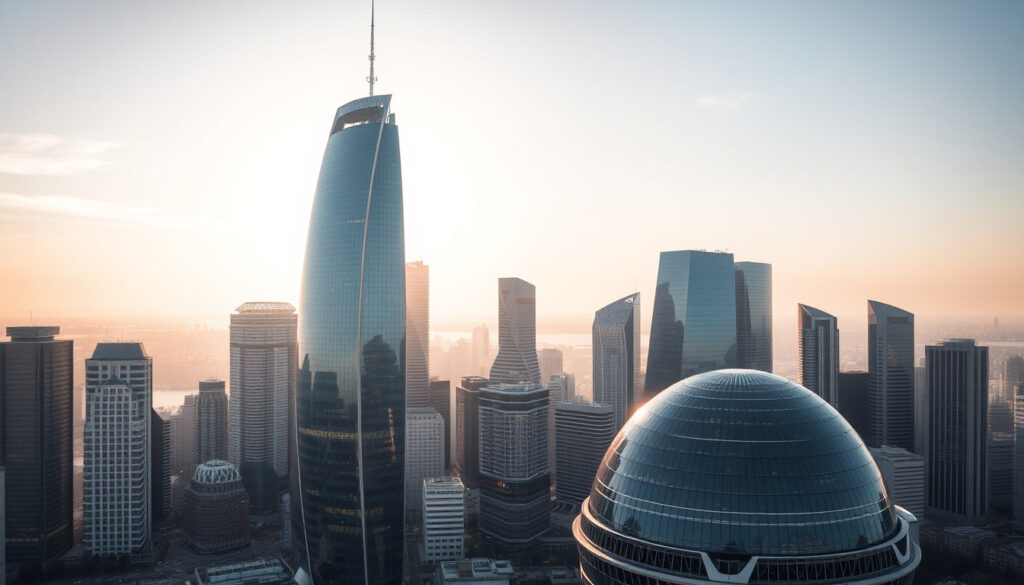
Norman Foster Architect: Biography, Buildings, and Impact Guide
If you’ve ever wondered what gives a city skyline its unmistakable rhythm, odds are that Lord Norman Foster had a hand in shaping it. Born in 1935 in Manchester, his journey from a working-class industrial city to the summit of global architecture is a story of engineering ambition meeting artistic vision.
Born: 1935 in Manchester, England ·
Founded firm: Foster + Partners in 1967 ·
Pritzker Prize: 1999 ·
Notable buildings: Over 100 projects globally ·
Known for: High-tech architecture, sustainable design
Quick snapshot
- Born in 1935 in Manchester, England (Encyclopaedia Britannica (the standard reference work))
- Founded Foster + Partners in 1967 (Architectural Digest (a premier design publication))
- Awarded Pritzker Prize in 1999 (Wikipedia (collaborative encyclopedia))
- Exact net worth varies across financial sources
- Ranking as “greatest” or “best” architect is inherently subjective
- Specific number of employees is commercially sensitive
- 1935: Born in Manchester (Encyclopaedia Britannica)
- 1967: Founded Foster + Partners (Architectural Digest)
- 1999: Reichstag dome and Pritzker Prize (Wikipedia)
- Continued focus on sustainable mega-projects and urban planning
- Expansion of Foster + Partners’ global portfolio
A handful of essential facts capture the scope of Foster’s career:
| Full Name | Norman Robert Foster |
| Born | 1935, Manchester, England |
| Firm | Foster + Partners (founded 1967) |
| Notable Awards | Pritzker Prize (1999), RIBA Gold Medal (1983) |
| Famous Buildings | The Gherkin, Reichstag Dome, Millau Viaduct, Apple Park |
What are five interesting facts about Norman Foster?
Early life and education
- Born in Manchester, a city defined by its 19th-century industrial architecture
- Served in the Royal Air Force before studying architecture
- Earned a Master’s degree at Yale University
Norman Foster was born on June 1, 1935, in Manchester, England. According to the Encyclopaedia Britannica (the standard reference work), he served in the Royal Air Force from 1953 to 1955 before studying architecture at the University of Manchester. He later moved to the United States to earn a Master’s in Architecture at Yale, where he was exposed to the works of Frank Lloyd Wright and the American modernist tradition. The industrial grit of Manchester—its mills, warehouses, and structural efficiency—would deeply influence his later high-tech philosophy.
Manchester’s industrial architecture taught Foster that buildings could be both profoundly functional and structurally beautiful. This lesson never left him.
Career milestones
- Team 4 partnership with Richard Rogers in the 1960s
- Foster + Partners founded in 1967
- Key early projects: Willis Faber, Sainsbury Centre, HSBC Building
Foster’s early professional partnership with Richard Rogers operated through Team 4, as documented in the Wikipedia (collaborative encyclopedia) list of his works. He founded Foster Associates—later Foster + Partners—in 1967, cited by Architectural Digest (a premier design publication). The Willis Faber and Dumas Headquarters in Ipswich was an important early breakthrough, using a low-rise office format and a contoured glass façade, noted by the Designing Buildings Wiki (a UK construction industry resource). The Sainsbury Centre for Visual Arts, which opened in 1978, was among his first internationally acclaimed buildings. In 1985, the HSBC Main Building in Hong Kong became a signature work, characterized by a structural system of suspended floors, masts, and trusses.
Notable awards
- RIBA Gold Medal (1983)
- Pritzker Architecture Prize (1999)
- Numerous honorary doctorates and fellowships
Foster’s awards track his rise from promising modernist to global icon. He won the Pritzker Architecture Prize in 1999, often considered the Nobel of architecture, as recorded by Encyclopaedia Britannica. He had previously received the Royal Gold Medal for Architecture from RIBA in 1983. The pattern is clear: Foster’s early exposure to industry and his rigorous education created an architect who treats buildings not just as art, but as engineered systems for living.
The pattern is clear: Foster transformed the constraints of his working-class origins into a systematic design philosophy that prizes structural logic above all.
What are some of Norman Foster’s most famous buildings?
Reichstag building renovation
- Projects: Reichstag dome, The Gherkin, Millau Viaduct, Apple Park
Foster’s renovation of the Reichstag in Berlin, completed in 1999, is his most politically symbolic work. The design preserved the historic shell while introducing a glass dome that serves as a public observation platform. According to an overview in the Wikipedia (collaborative encyclopedia) article on Foster, the dome represents transparency in government—visitors can see directly into the parliamentary chamber. It also incorporated natural ventilation and daylight harvesting, making it an early high-profile example of sustainable heritage architecture.
30 St Mary Axe (The Gherkin)
As reported by Architectural Digest (a premier design publication), the Gherkin has become one of the most recognizable icons of London’s skyline. Its distinctive aerodynamic form reduces wind loads on the structure and surrounding streets. The energy-efficient façade, with a ventilation system that uses the building’s double-skin design, saved significant energy costs compared to a conventional skyscraper.
Foster’s Millennium Bridge in London famously wobbled on opening day, requiring corrective dampeners before reopening. It remains a beloved pedestrian crossing, proving that even visionary designs meet real-world physics and adapt.
Millau Viaduct
Opened in 2004, the Millau Viaduct in France is the tallest bridge in the world by mast height. Foster’s cable-stayed design created a “bridge above the clouds,” as detailed in the Wikipedia (collaborative encyclopedia) listing of his projects. It solved a complex traffic and structural problem with elegance, becoming a destination in its own right.
Apple Park
Apple Park, the company’s headquarters in California completed in 2014, was a collaboration with Steve Jobs. Foster described the project as one of the most collaborative of his career, creating a low-rise campus built around a green central courtyard, as noted on the Wikipedia (collaborative encyclopedia). It is widely considered the pinnacle of sustainable corporate campus design. Each building solves a specific structural problem, but together they narrate a consistent arc toward transparency and efficiency.
Taken together, his buildings form a global lexicon of high-tech design, each solving a specific structural problem while contributing to a recognizable world-view.
Who is the most famous British architect?
Norman Foster vs. other British architects
- Comparison to Richard Rogers, Zaha Hadid, and David Chipperfield
While Richard Rogers (the Pompidou Centre) and Zaha Hadid (parametrics) have fierce followings, Foster’s global output gives him the edge in recognizability. According to the Encyclopaedia Britannica (the standard reference work), he is the most commercially successful British architect in history, with projects on every inhabited continent.
Why Foster stands out
Foster stands out because of the sheer volume of built work in global cities—something most architects never achieve. His high-tech style is immediately recognizable: exposed steel, glass, and a celebration of structural systems. The debate over the “most famous British architect” isn’t close—Foster’s global portfolio and cultural imprint give him a clear lead over his peers.
The implication: Foster’s brand of architecture is so globally embedded that his name has become shorthand for a whole movement.
Who is the wealthiest architect?
Net worth of Norman Foster
- Estimated net worth of $240 million
Norman Foster’s net worth is estimated at around $240 million, making him one of the wealthiest architects in history. This figure, which varies somewhat across financial profiles, reflects the scale of his firm and its global network of projects.
Comparison to other architects
Compared to his peers, Foster’s wealth is a direct consequence of building a global firm on a foundation of repeat high-profile commissions. While architects like Rem Koolhaas and Frank Gehry have significant estates, Foster’s position at the top of the fee pyramid is largely unchallenged due to the sheer volume of work handled by Foster + Partners.
The catch: wealth in architecture seldom translates directly from fees alone, but from building a firm that operates like a global enterprise.
Who is considered the best architect in London?
Norman Foster’s London projects
- The Gherkin, City Hall, Millennium Bridge, Stansted Airport
Foster’s presence in London is unparalleled. From the iconic Gherkin to the sculptural City Hall, his buildings define the capital’s modern skyline. The Millennium Bridge, completed in 2000, created a stunning pedestrian link across the Thames, despite its famous early wobble that required corrective dampers. His work at Stansted Airport reimagined the airport terminal with a lightweight canopy and open plan.
Other top London architects
Other top names in London include Richard Rogers, Zaha Hadid, David Chipperfield, and Thomas Heatherwick. However, as most local architecture polls show, Foster’s portfolio forms an open-air museum of high-tech architecture, setting a standard that makes him the default answer for the city’s best architect.
What this means for London: Foster’s landmarks are the standard against which every new London skyscraper is tacitly measured.
Clarity section
Confirmed facts
- Born in 1935 in Manchester (Encyclopaedia Britannica)
- Founded Foster + Partners in 1967 (StudioMatrx (architectural reference))
- Won the Pritzker Prize in 1999 (Wikipedia)
- Designed the Reichstag dome and the Gherkin (StudioMatrx)
What’s unclear / Rumors
- Exact net worth varies by source
- Ranking as “best architect” is subjective
- Attribution of some projects is shared with his firm
- Details of his early childhood are not extensively documented
Timeline
- 1935 Born in Manchester, England (Encyclopaedia Britannica)
- 1961 Graduates from University of Manchester (Designing Buildings Wiki (a UK construction industry resource))
- 1962 Completes Master’s at Yale University (Designing Buildings Wiki)
- 1967 Founds Foster + Partners (Architectural Digest)
- 1999 Awarded Pritzker Architecture Prize (Wikipedia)
- 2004 Millau Viaduct opens (Designing Buildings Wiki)
- 2014 Apple Park completion (StudioMatrx (architectural reference))
Quotes
“We have power. And we should use it.”
Norman Foster, reflecting on the architect’s role in society (YouTube interview)
“The Reichstag dome is a symbol of transparency in government.”
Architectural analysis, Wikipedia overview of Foster’s Reichstag renovation
For architecture students and aspiring professionals, the lesson from Norman Foster’s career is to never stop at aesthetics—structure, sustainability, and scale are equally part of the legacy. The trade-off is clear: a global firm like Foster + Partners creates iconic landmarks, but always risks prioritizing brand momentum over local context. For the next generation of architects in the UK, the takeaway is that technical mastery and global ambition must go hand-in-hand. Those who settle for one without the other risk building a portfolio that never quite reaches the skyline.
en.wikipedia.org, architizer.com, curatorialproject.com, studiomatrx.org, europe.repubblica.it, coolhunting.com
Frequently asked questions
Does it take 7 years to be an architect?
In the UK, becoming a fully qualified architect typically takes 7 years: 5 years of academic study (RIBA Parts 1 and 2) followed by 2 years of practical experience (RIBA Part 3). This structured path is outlined by the Designing Buildings Wiki (a UK construction industry platform).
Who is the greatest architect of all time?
Opinions vary, but names like Le Corbusier, Frank Lloyd Wright, and Norman Foster consistently appear at the top of critical and public polls. Foster’s volume of globally significant works makes a strong case for him as the greatest living architect, much like the legacy of figures such as Benjamin Franklin is weighed historically on this site.
Who are the top 10 architects in the UK?
A typical list of top UK architects includes Norman Foster, Richard Rogers, Zaha Hadid, David Chipperfield, Thomas Heatherwick, John Soane, Nicholas Hawksmoor, Edwin Lutyens, Charles Rennie Mackintosh, and Alison Brooks. Foster generally leads these lists due to his international reach, similar to how Dmitri Shostakovich’s prominence in classical music is examined on this site.
Is Donald Trump an architect?
No, Donald Trump is a real estate developer and businessman. He holds no formal architectural qualifications and is not a licensed architect.
What is the average salary for an architect in London?
According to industry data, the average salary for a qualified architect in London ranges from £35,000 for a newly qualified architect to over £80,000 for a senior partner. Foster himself is estimated to be worth over $240 million, reflecting the scale of his practice.
More related posts
 Lee Ingleby: Career, Personal Life, and Roles in George Gently
 Made in Chelsea Season 30 – Episode Guide and Cast News
 Hilarie Burton: Biography, Family, Gray Hair, and More
 Burt Reynolds: Cause of Death, Estate, and Sally Field
 Jaguar F-Type for Sale – 2024 Prices, Specs & Deals
 Iran President Masoud Pezeshkian: Latest Verified News (2026)
 Duncan Ferguson: Prison, Autobiography, and Life After Football
 Daryl Dixon: Walker Ears, Autism & LGBTQ Status Guide