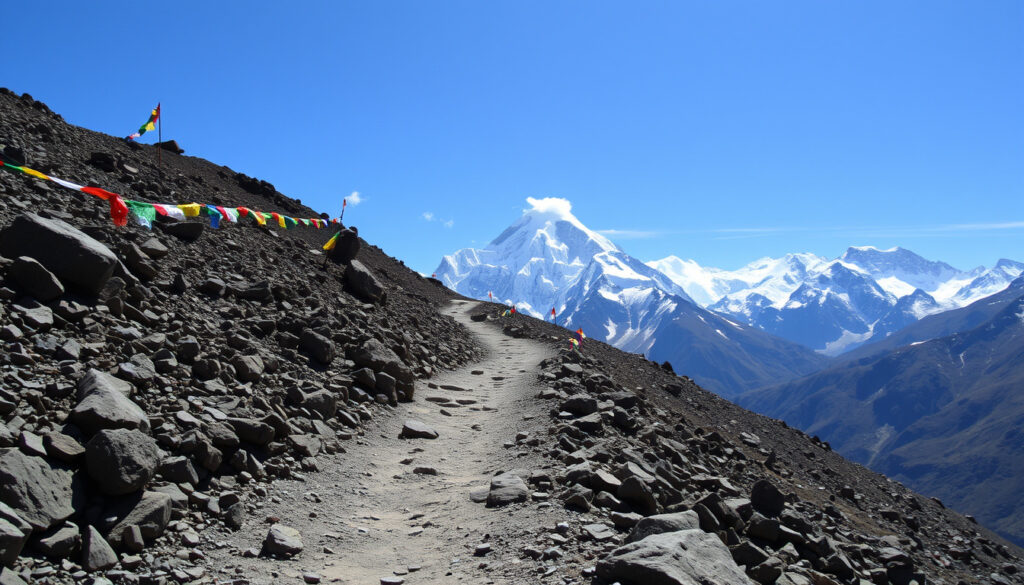
Everest Base Camp Trek: Difficulty, Cost, and Beginner Tips
Everest Base Camp and Kilimanjaro are the two most popular high-altitude trekking goals for beginners, but they are not the same challenge. This guide cuts through the marketing to compare daily walking hours, altitude exposure, oxygen needs, and real costs—so you can choose the right mountain.
Difficulty Rating
- Moderate to challenging — no technical climbing required (Nepal Hiking Team)
- High altitude requires proper acclimatisation (Nepal Hiking Team)
- Over 90% success rate for fit trekkers (Nepal Hiking Team)
Duration
- 12 to 16 days total (Nepal Hiking Team)
- 8 to 10 days of walking (Nepal Hiking Team)
- Acclimatisation days built in at Namche Bazaar and Dingboche (Nepal Guide Trekking)
Fitness Level
- Good cardiovascular fitness required (Nepal Hiking Team)
- Able to walk 5-8 hours daily (Nepal Hiking Team)
- No previous trekking experience mandatory (Nepal Hiking Team)
Cost Estimate
- Guided package: $1,200-$5,000 from Kathmandu (For the Love of Wanderlust)
- Includes permits, accommodation, meals, guide (For the Love of Wanderlust)
- Flights to Lukla not included in most packages (For the Love of Wanderlust)
Everest Base Camp (South) elevation: 5,364 m | Standard trek duration: 12–16 days | Average walking: 5–8 hours/day | Cost range (guided): $1,200–$5,000 | Highest point (Kala Patthar): 5,644 m | Kilimanjaro annual fatalities: 10–15
| Metric | Everest Base Camp | Kilimanjaro |
|---|---|---|
| Maximum altitude | 5,644 m (Kala Patthar) | 5,895 m (Uhuru Peak) |
| Total trek duration | 12–16 days | 5–9 days |
| Total walking distance | ~130 km round trip | ~50–70 km depending on route |
| Average daily walking hours | 5–8 hours | 5–9 hours (summit night longer) |
| Technical climbing required? | No | No |
| Oxygen required for trekking? | No | No |
| Oxygen required for summit? | Yes (for Everest climbers, not trekkers) | No (rescue only) |
| Typical cost (guided) | $1,200–$5,000 | $2,000–$6,000 |
| Success rate (fit trekkers) | >90% | 65–85% depending on route |
How hard is it to climb to Everest Base Camp?
Everest Base Camp is a moderate-to-challenging trek, not a technical climb. The difficulty comes from altitude and endurance rather than steep rock or ice. Most fit beginners can complete it with proper preparation.
Daily hiking hours and elevation gain
Most trekking days involve 5 to 7 hours of walking, according to Nepal Hiking Team. Some longer days can reach 8 to 9 hours, particularly on the approach to Kala Patthar. Elevation gain per day averages 400–600 metres, with rest days built into the itinerary.
Altitude sickness risks
At Everest Base Camp (5,364 m), oxygen availability is roughly half of sea level (For the Love of Wanderlust). Acclimatisation days at Namche Bazaar and Dingboche help reduce the risk of altitude sickness. Even with proper pacing, some trekkers experience headache, nausea, or fatigue. The standard advice is to ascend slowly and hydrate well.
Key challenges for beginners
- Long consecutive days of walking (10–12 days above 3,000 m) (Himalayan Holidays)
- Rugged, uneven trails with rocky descents (Nepal Hiking Team)
- Cold weather and potential snow at higher elevations
Can a beginner do the Everest Base Camp trek?
Yes. Multiple operators accept beginners and the route involves no technical climbing. Previous trekking experience helps but is not mandatory.
Fitness prerequisites
Trekking 5–8 hours daily for over a week requires good cardiovascular fitness. You should be able to walk for 2–3 hours without stopping before you arrive. Strengthening legs and core reduces injury risk on uneven terrain.
Training recommendations
Start training 8–12 weeks before departure. Focus on hiking with a loaded daypack on hills, stair climbing, and long walks. Aerobic sessions of 45–60 minutes, 4–5 times per week, build the endurance you need.
Guide requirements for novices
Nepal requires foreign trekkers to use a licensed guide on the Everest Base Camp route. For beginners, a guide provides pace management, altitude monitoring, and logistical support. Most budget and mid-range packages include an English-speaking guide.
Which is harder, Kilimanjaro or Everest Base Camp?
The answer depends on what you measure: altitude, duration, or success rate. Both are non-technical but the challenge profile differs substantially.
Altitude comparison
Kilimanjaro’s summit is 5,895 m, higher than Kala Patthar at 5,644 m. However, EBC trekkers spend 10–12 consecutive days above 3,000 m, while Kilimanjaro itineraries last only 5–9 days. The longer exposure at altitude on the EBC trek can make altitude sickness more likely for some people.
Duration and distance
Everest Base Camp involves approximately 130 km of walking over 12–16 days. Kilimanjaro covers 50–70 km over 5–9 days. The shorter Kilimanjaro itinerary means less time for acclimatisation, which is why success rates are lower (65–85%) compared with EBC (over 90%).
Success rates and fatalities
Fit trekkers succeed on EBC over 90% of the time. Kilimanjaro’s overall summit rate hovers around 65% on shorter routes and up to 85% on longer ones. Reported fatalities on Kilimanjaro average 10–15 per year, mostly linked to altitude sickness or underlying health conditions. EBC trekking fatalities are rarer, though precise numbers are poorly tracked.
“The EBC trek is a marathon, not a sprint. Kilimanjaro is a sprint with one very intense night.” — Experienced trekking guide, Intrepid Travel
“Most deaths on Kilimanjaro are preventable with proper acclimatisation and honest self-assessment.” — Climbing statistician, Himalayan Database
How many hours of walking is Everest Base Camp?
Total walking time across the entire EBC trek is approximately 60–80 hours over 12–16 days. The longest day is the Kala Patthar ascent, which can take 6–8 hours.
Sample day-by-day breakdown
- Fly to Lukla (2,860 m) – 1 hour flight
- Phakding (2,610 m) – 3–4 hours walking
- Namche Bazaar (3,440 m) – 5–6 hours walking
- Acclimatisation day at Namche – short hikes of 2–4 hours
- Tengboche (3,860 m) – 5 hours walking
- Dingboche (4,410 m) – 5–6 hours walking
- Acclimatisation day at Dingboche – short hikes of 2–4 hours
- Lobuche (4,910 m) – 4–5 hours walking
- Gorak Shep (5,140 m) – 4 hours walking
- Kala Patthar (5,644 m) then EBC – 6–8 hours walking
- Return trek to lower elevations
Rest days included
Standard itineraries include rest and acclimatisation days at Namche Bazaar and Dingboche. These involve 2 to 4 hours of hiking rather than full trekking days (Nepal Guide Trekking).
Pacing and acclimatisation
The slow pace (average 1–2 km per hour on uphill sections) allows your body time to adjust. Rushing increases risk of altitude sickness. Listen to your guide and rest when needed.
How much does it cost to climb to Everest Base Camp?
Prices vary widely by operator quality, inclusions, and group size. Expect to pay between $1,200 and $5,000 for a guided package from Kathmandu.
Budget options
Budget packages ($1,200–$1,800 per person) typically include basic teahouse accommodation, three daily meals, guide, and porter. They may offer less experienced guides or group sizes of 8–12 trekkers.
Mid-range packages
Mid-range options ($1,800–$3,500) include better teahouses, smaller group sizes, and more experienced English-speaking guides. Some include domestic flight costs or airport transfers.
Luxury inclusions
Premium packages ($3,500–$5,000) offer private guides, single-room accommodation, higher-quality meals, and extra services like gear rental or helicopter rescue insurance.
Why can’t planes fly over Mount Everest?
Jet aircraft can fly above Everest’s 8,848 m summit—cruising altitudes exceed 10,000 m—but they avoid the region for safety reasons.
Aircraft performance at high altitude
The air density at Everest’s altitude reduces engine efficiency and lift. A sudden depressurisation at those heights would leave only seconds of useful consciousness before passengers and crew lose capacity due to hypoxia. This makes direct overflight risky.
Safety regulations
Civil aviation rules require aircraft to stay within gliding distance of a suitable airport. In the Everest region, the nearest airports are tiny mountain airstrips with limited emergency facilities. Contingency planning is impractical.
Turbulence risks
The jet stream near Everest can exceed 200 km/h, creating extreme turbulence. Strong winds flowing over the Himalayan massif generate dangerous rotor and mountain wave effects that even large aircraft avoid.
Which is the highest base camp in the world?
Everest South Base Camp at 5,364 m is often described as the highest base camp in the world, though several others compete for the title.
Comparison of base camps above 5,000 m
| Camp | Elevation | Mountain |
|---|---|---|
| Everest South Base Camp (Nepal) | 5,364 m | Mount Everest |
| Everest North Base Camp (Tibet) | 5,150 m | Mount Everest |
| Cho Oyu Base Camp | 5,000 m+ | Cho Oyu |
| Makalu Base Camp | 5,000 m+ | Makalu |
Everest vs others
Everest South Base Camp is the most accessible high-base-camp trek for non-mountaineers. Its popularity means established infrastructure of teahouses and lodges, unlike more remote base camps requiring full expedition support.
Related reading: Slieve Donard Hiking Guide: Height, Routes, Difficulty
fortheloveofwanderlust.com, escapehimalaya.com, himalayatrekkingnepal.com, himalayanglacier.com, placesnepal.com, himalayanglacier.com, endlesssherpaadventures.com, placesnepal.com, alphaadventuretreks.com
Frequently Asked Questions
Can I trek to Everest Base Camp without a guide?
Nepal requires all foreign trekkers to use a licensed guide on the EBC route. Solo trekking without a guide is no longer permitted.
What is the best month for Everest Base Camp trek?
Pre-monsoon (March–May) and post-monsoon (October–November) offer the most stable weather, clear skies, and moderate temperatures.
Do I need trekking poles for Everest Base Camp?
Trekking poles are recommended for reducing knee strain on descents, especially on the rocky trails near the Khumbu region.
Is altitude sickness common on the EBC trek?
Some degree of altitude-related symptoms is common—headache, nausea, fatigue—but severe acute mountain sickness is rare with proper acclimatisation.
How should I train for the Everest Base Camp trek?
Focus on cardiovascular endurance, leg strength, and hiking with a loaded pack. Aim for 4–5 days per week of training for 8–12 weeks before departure.
What permits are required for Everest Base Camp?
You need a Sagarmatha National Park permit and a Khumbu Rural Municipality permit. Your guide or operator arranges these in Kathmandu.
Can I charge my devices on the EBC trek?
Teahouses offer charging ports, typically for a small fee (US$1–3 per charge). Solar battery packs are a better option for remote sections.
More related posts
 Julia Bradbury: Health, Family, Career & Teetotal Change
 Gina Yashere: Biography, Partner, Net Worth, and More
 Jimmy Choo: Luxury Brand, Shoes Price & Founder Biography
 Matt Bomer Biography: Age, Husband, Kids & Career
 Mount Etna Safety Guide: Is It Safe to Visit
 Arthur Conan Doyle: Life, Works, and Legacy
 Michael Learned: Top Questions About the Waltons Star
 Jerry Lee Lewis: Scandal, Music, and Legacy of a Rock Pioneer