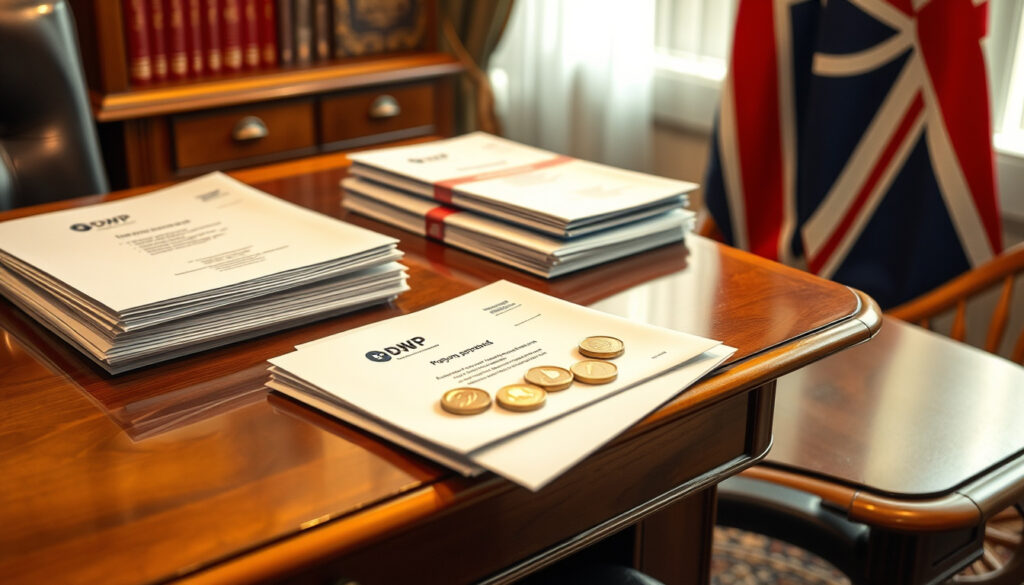
DWP WASPI Pension Compensation – Latest Status and Updates
Women born in the 1950s who were affected by increases to the state pension age continue to seek clarity on compensation following years of campaigning. The Department for Work and Pensions has not yet announced any official forms, calculators, or payout dates for redress, despite ongoing advocacy from affected groups. The situation remains under active review, with government responses and parliamentary petitions shaping the current landscape.
The WASPI (Women Against State Pension Inequality) campaign has spent years arguing that inadequate notification of pension age changes caused financial hardship to hundreds of thousands of women. While the Parliamentary and Health Service Ombudsman has found maladministration in how changes were communicated, official compensation mechanisms have yet to materialise. This article examines what is confirmed, what remains uncertain, and where affected women can find reliable information.
Those seeking to understand their potential eligibility or the status of ongoing efforts should approach current information carefully, as developments can shift rapidly and not all online tools reflect government policy.
Is there a DWP WASPI compensation form?
No official DWP WASPI compensation form currently exists. The government has not launched any scheme through which affected women can submit claims, and no dedicated application process has been announced. This reflects the broader reality that compensation remains under discussion rather than in active delivery.
The absence of official forms does not mean the issue has been ignored. The government published a formal response in December 2024 addressing the Parliamentary and Health Service Ombudsman’s findings, and further review was announced in November 2025 following new evidence. However, these developments represent policy deliberation rather than operational claimant processes.
Women who believe they may be affected should monitor official government channels for announcements, while remaining cautious of third-party websites that may offer estimation tools without reflecting approved compensation structures.
The government response and ongoing review mean any future claim process would be announced through official DWP publications. Third-party sites offering application forms should be verified against gov.uk before use.
Current eligibility framework
The core eligibility criteria relate to birth dates and the timing of state pension age changes. Women born in the 1950s, particularly between 1950 and 1953, experienced increases from age 60 to 65 or 66 depending on their specific circumstances and the legislative timeline. The 1995 and 2011 Pensions Acts introduced these changes without what many considered adequate notice.
Those uncertain about their personal position can use the official state pension age calculator on gov.uk to check their expected eligibility date, though this tool does not estimate compensation amounts or confirm participation in any future scheme.
Under government review
None available
Up to £10.5 billion
Active on parliament.uk
Key facts at a glance
- No DWP compensation form has been released for WASPI claims
- The government’s December 2024 response rejected a blanket compensation approach
- A further review was announced in November 2025 following new evidence
- The Parliamentary and Health Service Ombudsman found maladministration in communication
- Affected women should check gov.uk directly for authoritative updates
- Third-party estimation tools exist but do not represent official schemes
- The petition calling for fair treatment remains open for signatures
| Fact | Source | Date |
|---|---|---|
| Blanket compensation rejected | gov.uk | December 2024 |
| Government review announced | Pensions Age | November 2025 |
| Petition active | parliament.uk | Ongoing |
| PHSO maladministration finding | Ombudsman reports | Various |
| Cost estimate cited | gov.uk | December 2024 |
| 90% women received some notice | Government response | December 2024 |
When is the DWP WASPI pension compensation payout date?
No payout dates have been confirmed by the DWP. The government has not announced when, or if, compensation will be distributed to affected women. What exists instead is an ongoing process of review and deliberation that has yet to produce binding commitments.
The November 2025 announcement that the government would revisit its decision following new evidence represents the most recent development, but this refers to policy reconsideration rather than a scheduled payment timeline. Those following the DWP WASPI compensation update should understand that significant steps remain between policy review and actual payouts.
Unofficial estimates have circulated suggesting average claims of around £2,950 for eligible women, but these figures originate from third-party sources and have not been endorsed by the DWP. Any compensation scheme, if it proceeds, would require formal government approval and detailed implementation planning.
The absence of confirmed payout dates reflects the early stage of the compensation discussion. Women affected should not expect imminent payments but should remain informed through official channels as the review process develops.
Understanding the current phase
The compensation process exists at a policy level rather than an operational one. Government departments are considering responses to findings of maladministration, but no administrative infrastructure for claims processing or payment distribution has been established. This means that even if policy decisions are reached, practical implementation would follow.
Those monitoring this issue through the WASPI DWP compensation update should distinguish between announcements about review processes and announcements about actual payment schedules. The former has occurred; the latter has not.
What could affect future timing
- Outcome of the government review announced in November 2025
- Parliamentary pressure through active petitions
- Budget considerations and fiscal priorities
- Legal challenges or further Ombudsman involvement
- General election cycles and changing administrations
Is there a DWP WASPI pension compensation calculator?
The DWP does not provide an official compensation calculator for WASPI claims. While the department offers a state pension age calculator on gov.uk, this tool serves only to show when individuals reach state pension age based on their birth date. It does not estimate potential compensation amounts or determine eligibility for any future redress scheme.
Third-party tools have emerged to fill this gap. Sites including pensionestimate.uk offer WASPI compensation calculators that attempt to estimate potential payouts based on birth date and the extent of pension delay experienced. These tools can help women understand the range of impact they may have suffered, but users should recognise their unofficial status.
The WASPI compensation calculator available through third-party sources uses inputs such as birth date and estimated pension age changes to generate rough figures. Unofficial estimates suggest potential average claims of around £2,950, though this figure has not been confirmed by the DWP and would likely vary significantly based on individual circumstances.
How unofficial calculators work
Third-party compensation calculators typically require users to input their date of birth and any information they have about when they expected to receive their state pension versus when they actually received it. The tool then produces an estimated figure based on the methodology developed by the calculator’s creators.
These estimates should be treated as indicative rather than authoritative. The actual compensation, if any scheme proceeds, would depend on detailed assessment criteria that have not yet been announced. Calculators may help women articulate the impact they experienced, but they cannot predict official outcomes.
Third-party calculators can provide useful context for understanding potential impact, but they are not government-approved. Women should use these tools for personal reference while awaiting official guidance on any future compensation process.
What calculators can and cannot tell you
- Can do: Estimate impact based on delay duration and birth date
- Can do: Provide personal reference figures for advocacy
- Cannot do: Confirm official compensation eligibility
- Cannot do: Predict actual payout amounts
- Cannot do: Replace official government processes
- Cannot do: Guarantee any payment will occur
What is the latest WASPI DWP compensation update?
The most recent significant development came in November 2025, when the government announced it would reconsider its position on WASPI compensation following new evidence. This represented a notable shift from the December 2024 response, which rejected a blanket compensation approach while acknowledging the Ombudsman had found failings in communication.
The December 2024 government response on gov.uk stated that blanket compensation “cannot be justified” and cited figures suggesting the overall cost could reach £10.5 billion. However, the subsequent November 2025 announcement indicated willingness to revisit this stance, suggesting the policy landscape remains fluid.
Campaign groups continue their efforts through various channels. The WASPI website maintains information for affected women, while an active petition on parliament.uk calls for fair treatment of those impacted by pension age changes. Parliamentary debates have kept the issue visible, though no binding commitments have resulted.
Claims about specific payout amounts, dates, or approved schemes circulating on social media or unofficial websites have not been confirmed by official sources. Women should verify any significant claims through gov.uk or waspi.co.uk before acting.
Government position as of late 2024
The formal government response published in December 2024 acknowledged that communication of state pension age changes to affected women was inadequate in some cases. The Ombudsman had found maladministration, and the government accepted this finding in principle while stopping short of endorsing the compensation levels the Ombudsman recommended.
The response noted that around 90% of affected women did receive some form of notification about changing pension ages, though the timing and clarity of this notification remained contested. The government argued that a blanket compensation scheme would cost significantly and raise questions about fairness relative to other groups who experienced policy changes.
November 2025 review announcement
The announcement that the government would reconsider its decision following new evidence marked a significant development. Coverage in Pensions Age suggested that emerging information had prompted ministers to think again about the appropriate response to the Ombudsman’s findings.
This does not guarantee compensation will be paid, but it does suggest the policy door remains open. Women following the DWP WASPI compensation update should expect further announcements as the review progresses.
Timeline of key events
Understanding the sequence of developments helps contextualise the current situation. The following timeline captures major milestones in the WASPI compensation discussion.
- 1995 and 2011: Pensions Acts introduce increases to women’s state pension age from 60 to 65/66
- Ongoing 2010s: Women begin raising concerns about inadequate notification of changes
- PHSO investigation: Ombudsman examines communication failings and finds maladministration
- December 2024: Government publishes formal response rejecting blanket compensation
- November 2025: Government announces review of position following new evidence
- Ongoing: Campaign groups continue advocacy through waspi.co.uk and parliamentary channels
The timeline illustrates that this issue has developed over more than a decade, with significant milestones spaced years apart. Women awaiting resolution should anticipate that further developments may also take time to emerge.
What is confirmed and what remains unclear
Those seeking to understand the WASPI compensation situation benefit from clearly separating established facts from areas of genuine uncertainty. This distinction helps manage expectations while remaining engaged with legitimate advocacy efforts.
| Established information | Information that remains unclear |
|---|---|
| No official compensation forms or calculators exist | Whether compensation will actually be paid |
| Ombudsman found maladministration in communication | When any payout might occur |
| Government acknowledged findings in December 2024 | What amounts might be paid to eligible women |
| Government review announced November 2025 | Whether the review will lead to policy change |
| Affected women born in 1950s, pension age raised | How individual eligibility will be determined |
| Active petition on parliament.uk | Whether petitions will influence government approach |
| Unofficial estimates suggest around £2,950 average | Whether these estimates reflect any official thinking |
The table highlights that while the broad facts of the issue are documented, the critical questions about actual payments remain unanswered. Women should proceed with awareness of this distinction.
Background and context
The WASPI issue stems from changes to state pension legislation that accelerated increases to women’s state pension age. Originally, women would have reached pension age at 60 alongside their male counterparts reaching 65, but the 1995 and 2011 Acts changed this timeline significantly.
The core grievance centres on notification. Campaigners argue that women received insufficient warning about changes that would affect their retirement planning, sometimes discovering the impact only when they expected to claim their pension. The Ombudsman investigated these communication failures and found that maladministration occurred.
The government’s position has evolved from initial rejection of blanket compensation toward a more considered review. This shift reflects ongoing pressure from campaigners, parliamentary advocates, and emerging evidence about the true extent of impact on affected women.
Scale of impact
The number of women potentially affected runs into hundreds of thousands. The government has acknowledged this scale while noting the significant cost implications of any compensation approach. The £10.5 billion estimate cited in official responses illustrates the financial dimension of the issue.
Beyond the financial aspects, campaigners emphasise the personal impact on women who planned their retirement around expectations that changed without adequate notice. These lived experiences inform much of the advocacy effort.
Official sources and statements
Several official and quasi-official sources provide documented information about the WASPI compensation situation. These sources should be prioritised when seeking authoritative updates.
The government response to the PHSO report acknowledged that communication of changes to women’s state pension age “cannot be justified” in certain respects while stopping short of endorsing the compensation levels recommended by the Ombudsman.
— Government response, gov.uk, December 2024
Reports indicate the government will revisit its decision following new evidence, marking a potential shift in the official position on WASPI compensation.
— Pensions Age, November 2025
The WASPI campaign website provides ongoing updates from the perspective of affected women, while the parliamentary petition offers a channel for direct advocacy. The government’s formal response remains the authoritative statement of official policy as of late 2024.
Summary and current outlook
Women affected by WASPI pension age changes face continued uncertainty alongside ongoing advocacy. No official compensation forms, calculators, or payout dates exist, though the government has committed to reviewing its position following new evidence. The issue remains active in parliamentary and public discourse, with campaigners maintaining pressure for fair resolution.
Those seeking personal clarity should monitor official government announcements, use the available state pension age calculator for basic eligibility checking, and engage with established advocacy channels. Third-party tools can provide context but should not be mistaken for official processes.
The DWP WASPI compensation update offers one useful reference point for tracking developments, though women should verify significant claims against official sources.
Frequently asked questions
What is WASPI?
WASPI stands for Women Against State Pension Inequality. It is a campaign group representing women born in the 1950s who were affected by increases to their state pension age without what they consider adequate notice.
Why was the state pension age changed for women?
The 1995 and 2011 Pensions Acts introduced legislation to equalise and eventually align men’s and women’s state pension ages. These changes accelerated existing plans and affected women born in the 1950s.
How many women were affected?
Hundreds of thousands of women born between 1950 and 1960 were impacted by state pension age changes. The specific numbers vary depending on the birth cohorts and criteria applied.
Has the government accepted the Ombudsman’s findings?
The government acknowledged the Ombudsman’s findings of maladministration in its December 2024 response while stopping short of committing to the compensation levels recommended. A further review was announced in November 2025.
Where can I check my state pension age?
The official state pension age calculator is available on gov.uk. This tool shows when you will reach state pension age based on your birth date but does not estimate compensation.
Can I claim compensation now?
No official compensation claim process exists at present. The government has not launched any scheme through which women can submit claims for WASPI-related redress.
What is the estimated compensation amount?
Unofficial third-party estimates suggest average claims of around £2,950, but these figures have not been confirmed by the DWP and do not represent approved compensation rates.
How can I support the campaign?
The WASPI campaign maintains a website with information on how to get involved. A parliamentary petition calling for fair treatment remains open for signatures through the official petition portal.
More related posts
 Florence Welch: Disability, Partner, Age, and Personal Life Facts
 Cast of Kabhi Khushi Kabhie Gham… – Full Cast and Child Actors Guide
 Kate Bush 2025: Biography, Relationships, and Unique Voice
 Nature Reserve Near Me – Best Free UK RSPB Sites and Walks
 Signs (2002) Review: Horror, Twist, and Why Water Hurt Aliens
 Biggie Smalls: His Death, Tupac Feud, and Unanswered Questions
 Justin Waller: From College Football to Construction Millionaire
 Bryan Ferry: Biography, Eye Patch, and Famous Songs