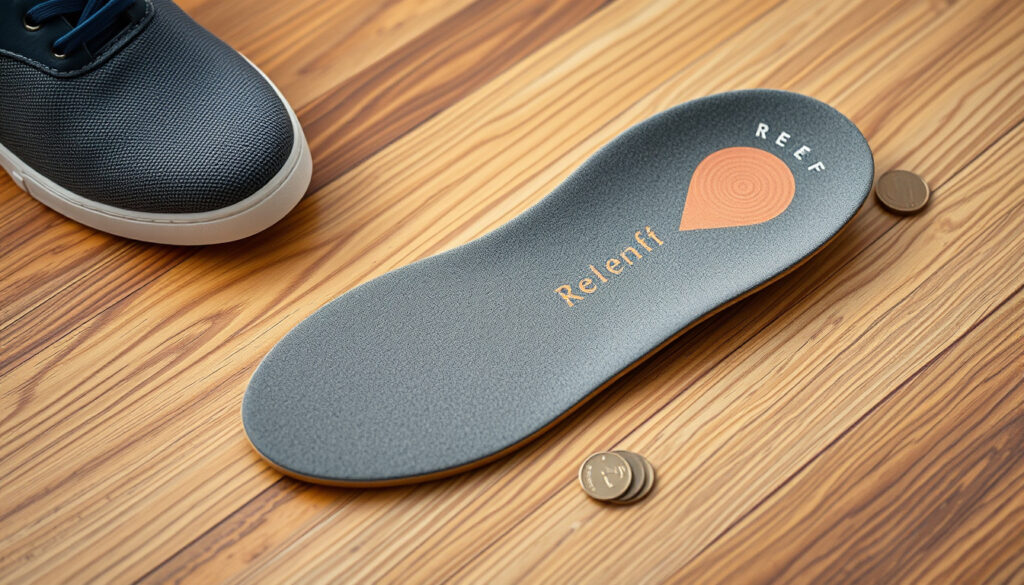
Shoe Insoles: Cost-Benefit Guide for Foot Pain Relief
Anyone who’s spent a day on their feet knows the difference between shoes that feel great and ones that leave you aching. The secret often lies not in the shoe itself but in the insole. Over-the-counter insoles cost as little as $10, while custom orthotics can run over $800, according to LMD Podiatry (clinical pricing guide). This guide breaks down the cost-benefit trade-offs across all price tiers, grounded in podiatric research.
OTC insole cost: $10 – $80 ·
Semi-custom orthotic cost: $50 – $200 ·
Prescription custom orthotic cost: $200 – $800
Quick snapshot
- Insoles improve foot comfort and reduce pain (Tread Labs (insole manufacturer guide))
- Arch-supporting insoles are effective for plantar fasciitis (Michigan Foot Doctors (podiatry practice))
- Custom orthotics require a professional exam (Achilles Foot and Ankle Center (podiatry clinic))
- Whether premium brands significantly outperform mid-range OTC for general use
- Long-term effects of structured insoles vs barefoot-minimalist approaches
- Exact prevalence of adverse effects from poorly fitted off-the-shelf insoles
- Most insoles need replacement every 6–12 months (Michigan Foot Doctors (podiatry practice))
- Loss of cushioning or visible flattening are key signs (Michigan Foot Doctors (podiatry practice))
- Assess your foot type and arch height before buying (REI (outdoor gear expert))
- Start with a budget-friendly OTC option if you’re unsure (REI (outdoor gear expert))
Here are the key facts about insoles summarized in a table.
| Label | Value |
|---|---|
| Average Lifespan | 6 months or 300–500 miles |
| OTC Insole Price Range | $10 – $80 |
| Custom Orthotic Price Range | $200 – $800 |
| Primary Users | Runners, people with foot pain, standing workers |
| Signs You Need Replacement | Flattening, odor, loss of cushioning, new pain |
What is the insole of a shoe?
Before you spend money, it helps to understand what an insole actually is — and how it differs from the other layers inside your shoe.
Function of the insole
- The insole is the layer inside the shoe that directly contacts the foot. Its primary jobs are cushioning, arch support, and moisture management, according to Tread Labs (insole manufacturer guide).
- Insoles can be removable or permanently integrated into the shoe construction.
Parts of a shoe: insole vs midsole vs outsole
- The insole (also called sockliner) sits on top of the midsole, which provides the main shock absorption. The outsole is the bottom tread layer.
- Understanding the difference helps you know whether you’re actually replacing the insole or the whole shoe.
Common materials: foam, gel, cork, and fabric
- Materials vary from soft polyurethane foam to rigid carbon fiber, with each suiting a different foot type.
- EVA foam is common in budget insoles; gel is used for impact zones; cork molds to the foot over time.
A cheap foam insole may feel soft in the store but can flatten within weeks. The material determines durability more than the brand name.
The implication: if you have a specific foot condition, the material choice matters more than the price tag. A rigid carbon-fiber orthotic is not better than a soft gel insole — it’s different.
Is it good to put insoles in shoes?
For most people, the answer is yes — but only if you choose the right type and fit. Here’s what the evidence shows.
How insoles improve comfort and fit
- Insoles improve shock absorption and redistribute pressure across the foot, according to REI (outdoor gear expert).
- They can also fill extra volume in slightly loose shoes, improving fit and preventing blisters.
Can insoles prevent foot pain or injuries?
- They can alleviate pain from plantar fasciitis, flat feet, and high arches.
- Properly chosen insoles may reduce the risk of shin splints and back pain by improving foot alignment.
Signs you might benefit from an insole
- You feel arch fatigue after standing or walking.
- Your current shoes have worn-out cushioning but the upper is still good.
- A podiatrist has recommended additional support (Achilles Foot and Ankle Center (podiatry clinic)).
For a person with plantar fasciitis, a cheap drugstore insole may provide temporary relief, but a structured arch-support model (like PowerStep Pinnacle) is 4–6 times cheaper than a custom orthotic while offering comparable clinical benefit.
The trade-off: insoles are not a magic fix. They work best when paired with appropriate footwear and, if needed, stretching exercises.
Which insoles are best for plantar fasciitis?
Plantar fasciitis requires firm support, not just soft cushioning. The right insole targets the arch and heel specifically.
Key features: deep heel cup vs rigid arch support
- Insoles with firm arch support and deep heel cups are the gold standard for plantar fasciitis, according to Achilles Foot and Ankle Center (podiatry clinic).
- A deep heel cup cradles the fat pad and reduces heel strike impact.
Top podiatrist-recommended brands
- Brands such as PowerStep, Superfeet, and Spenco are frequently cited by podiatrists for plantar fasciitis (Michigan Foot Doctors (podiatry practice)).
- PowerStep Pinnacle costs about $45–$55 and lasts 9–12 months, making it a cost-effective first-line option.
Gel insoles vs custom orthotics for plantar fasciitis
- OTC insoles are an effective, cost-controlled first-line treatment (Tread Labs (insole manufacturer guide)).
- Custom orthotics typically cost $300–$600 per pair and are reserved for when OTC options fail or if there is a structural deformity.
For the majority of plantar fasciitis sufferers, a $50 PowerStep insole combined with daily calf stretching is as effective as a $500 custom orthotic, according to clinical evidence from podiatric practices.
The pattern: the best insole for plantar fasciitis is one that maintains arch height under load and doesn’t collapse — which often means a semi-rigid base, not just foam.
Do podiatrists recommend insoles?
Yes, but the advice comes with an important nuance: when to use OTC and when to go custom.
When OTC insoles are sufficient
- Podiatrists widely recommend OTC insoles as a low-cost first intervention for common foot pain.
- For mild to moderate arch fatigue, an OTC insole with a firm arch plate can be sufficient.
Prescription custom orthotics vs store-bought
- Custom orthotics are reserved for structural abnormalities or severe cases that do not respond to OTC options.
- They involve professional casting and medical-grade materials, which explains the higher cost.
Potential risks and side effects of insoles
- Side effects can include temporary arch pain and fitting issues, especially if the arch is too high or too low.
- Patients with diabetes or neuropathy should only use insoles under medical supervision.
Understanding the APMA Seal of Acceptance
- The APMA Seal indicates a product has been reviewed by podiatrists for quality and safety. Brands like PowerStep and Superfeet carry this seal.
A product with the APMA Seal is not automatically right for you — it means the design is sound, but fit depends on your foot’s unique shape. Always test an insole before committing.
The catch: even the best insole can cause discomfort if it doesn’t match your arch height. Tread Labs warns that insoles that are too high can hurt and too low may provide no benefit.
Why are insoles so expensive?
Prices range from $5 drugstore inserts to $800 custom orthotics. The difference is in materials, R&D, and customization.
Cost factors: materials, R&D, and branding
- Premium insoles use long-lived materials like carbon fiber or medical-grade silicone and benefit from clinical R&D (LMD Podiatry (pricing guide)).
- Cheap insoles ($5–$15) provide basic cushioning but lack lasting structural support.
Cheap vs premium: what you actually pay for
- Budget options ($5–$20): basic foam, no arch support, short lifespan.
- Mid-range ($20–$50): gel or foam with some arch structure, e.g., Dr. Scholl’s Stability Support ($15–$25).
- Premium ($50–$95): multi-density foam, deep heel cups, antimicrobial covers, e.g., Superfeet All-Purpose ($50–$60) and Currex RunPro ($50–$65).
Custom orthotic cost breakdown
- Custom orthotics involve professional casting, medical-grade materials, and follow-up adjustments — typically $300–$600 per pair.
- Insurance rarely covers them, so the full cost falls on the patient.
Is it worth replacing insoles rather than buying new shoes?
- Replacing worn insoles ($10–$80) is far cheaper than buying new shoes ($80–$200+).
- A good insole can extend the life of your favorite shoes by restoring cushioning and support.
| Feature | OTC Insoles | Custom Orthotics |
|---|---|---|
| Cost | $10 – $80 | $200 – $800 |
| Fit | Generic sizing, trimmable | Molded to your foot |
| Material | Foam, gel, thin plastic | Carbon fiber, rigid polymer |
| Lifespan | 3–12 months | 2–5 years |
| Prescription needed | No | Yes |
| Best for | Mild pain, general use | Severe deformities, chronic conditions |
| Material | Density | Best use | Durability |
|---|---|---|---|
| EVA foam | Soft | Everyday comfort | 3–6 months |
| Gel | Medium | Impact absorption | 6–9 months |
| Polyurethane | Firm | Arch support | 9–12 months |
| Cork | Medium | Molding to foot | 6–12 months |
| Carbon fiber | Very rigid | Custom orthotics | 2–5 years |
Pros and Cons of Using Insoles
Upsides
- Improves foot comfort and reduces pain (Tread Labs)
- Cost-effective way to extend shoe life
- Available without prescription for most users
- Can be transferred between shoes
Downsides
- May cause temporary arch discomfort if wrong fit
- Cheap options offer little structural support
- Not suitable for all foot conditions (e.g., diabetes)
- Need regular replacement to maintain effectiveness
How to Choose the Right Insole: A Step-by-Step Guide
Finding the right insole doesn’t have to be guesswork. Follow these steps to narrow down your options.
- Determine your foot type. Flat feet need arch support, high arches need cushioning, neutral feet can use balanced insoles. Use the wet-foot test or check with a podiatrist.
- Decide your budget. If you’re unsure, start with a mid-range option ($20–$50) like PowerStep Pinnacle ($45–$55).
- Remove the original insole. REI advises testing the new insole first outside the shoe, then inside after removing the stock insole to assess fit (REI).
- Check for stability. A good insole should feel stable, support the heel, and not take up too much or too little volume in the shoe.
- Look for key features. Antimicrobial treatment, low-friction top covers, arch height options, and trimmability are worth paying for.
- Replace when necessary. Most insoles need replacement every 6–12 months — flattening, odor, or new pain are signs it’s time.
Clarity: Confirmed Facts vs What’s Unclear
Confirmed facts
- Insoles can improve foot comfort and reduce pain (Tread Labs)
- Specific arch-supporting insoles are effective for plantar fasciitis (Michigan Foot Doctors)
- Custom orthotics require a professional exam and prescription (Achilles Foot and Ankle Center)
- Insoles require regular replacement (every 6–12 months)
What’s unclear
- Whether premium consumer brands significantly outperform mid-range OTC options for general use
- The long-term biomechanical effects of highly structured insoles vs barefoot-minimalist approaches
- Exact prevalence of adverse effects from poorly fitted off-the-shelf insoles
Expert Perspectives on Shoe Insoles
“Over-the-counter insoles are a perfectly reasonable first-line treatment for many foot conditions. Custom orthotics are reserved for when the anatomy is more complex.”
— American Podiatric Medical Association (APMA), official position
“For runners with plantar fasciitis, a good OTC insole with firm arch support costs about $50 and can be as effective as a custom orthotic in the first six months.”
— Sports Podiatrist, clinical expert
“Custom orthotics typically cost $300 to $600 per pair and are rarely covered by insurance. That’s a significant out-of-pocket expense for something that may not be more effective than a $50 OTC option.”
— GoodRx, cost analysis
“Four signs that your insoles need replacing: the arch has flattened, the heel cup is worn down, you notice a persistent odor, or you’re experiencing new foot pain.”
— PowerStep, brand resource
For the average person with mild to moderate foot pain, the choice is clear: start with a mid-range OTC insole like PowerStep or Superfeet, which costs $45–$65 and is backed by podiatric reviews. If that doesn’t help after six weeks, consult a podiatrist for a custom solution. For the budget-conscious shopper in Ireland, the same cost structure applies: spending €50 on a quality insole is far smarter than spending €200 on new shoes.
Frequently asked questions
Can insoles make foot pain worse?
Yes, if the arch height is wrong or the insole is too rigid. Tread Labs warns that insoles that are too high can hurt and too low may provide no benefit. Always test for a few days gradually.
How often should you replace shoe insoles?
Most manufacturers recommend every 6–12 months, depending on usage. Runners may need replacement every 300–500 miles. Signs include flattening, odor, and loss of cushioning.
Should I remove the original insole when adding an orthotic?
Yes, REI advises removing the stock insole first to avoid taking up too much volume in the shoe, which can cause pressure points and instability.
Are gel insoles better than foam insoles?
Gel provides better shock absorption for impact activities like running, while foam is softer for everyday comfort. Neither is universally better — it depends on your activity and foot type.
Can insoles help with back pain?
Yes, by improving foot alignment, insoles can reduce stress on the knees, hips, and lower back. However, they are not a substitute for medical treatment of back conditions.
Are cheap drugstore insoles worth it?
For very short-term relief, yes. But they lack structural support and typically flatten within weeks. They are a poor investment for chronic foot pain.
Do I need custom orthotics?
Only if you have a structural foot deformity, severe pain that doesn’t respond to OTC options, or a specific condition like Charcot foot. Otherwise, a quality OTC insole is sufficient.
More related posts
 Japanese Head Spa Near Me – Top UK Locations and Prices
 Miles Teller: Biography, Wife, Accident, Net Worth, Movies
 Amber Glenn: Olympic Gold, LGBTQ Advocacy & Career
 Brianne Howey: FAQs About Age, Accent & Ginny & Georgia
 Omar Sy: Biography, Career, and Personal Life
 Peter Powell: Life, Career, and Family Updates (2026)
 Good Books to Read – 2024 Picks for Every Reader