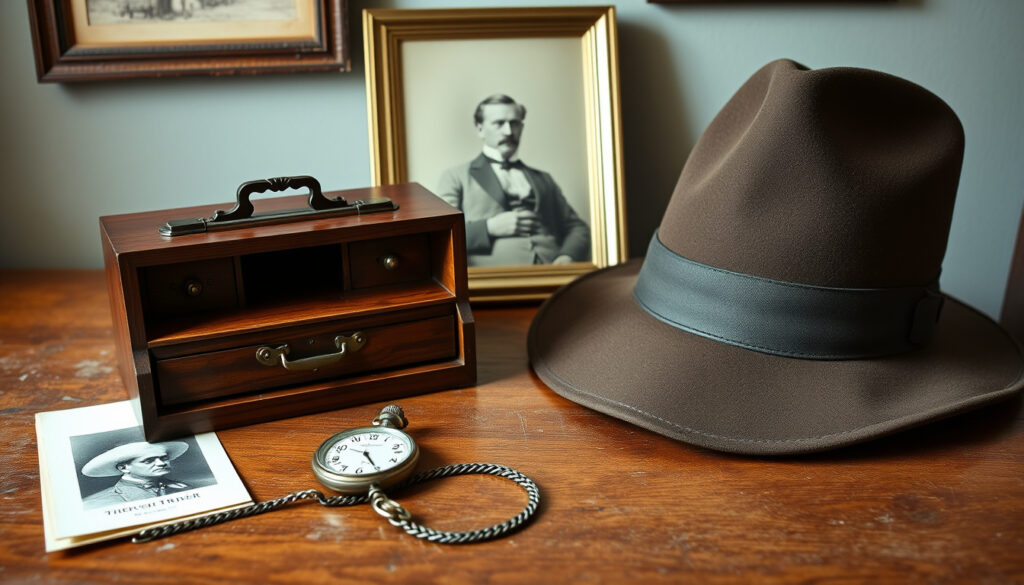
Theodore Roosevelt: Facts, Death, and Family History
Anyone who has typed “Theodore Roosevelt assassinated” into a search box has bumped into a historical mix-up: the 26th president was shot in 1912, but he survived, finished his speech, and died at home in 1919. The confusion is understandable — his own larger-than-life record, his cousin Franklin’s death in 1945, and a century of recycled quotes blur the boundary, but this profile sorts the documented record from the rumor mill, from the Milwaukee shooting to the last words that may never have been spoken.
Presidential number: 26th · Presidential term: 1901-1909 · Age at inauguration: 42 · Nobel Peace Prize: 1906 · Shooting attempt: October 14, 1912
Quick snapshot
- Roosevelt was the 26th president, serving 1901-1909 after William McKinley’s assassination (White House Historical Association archive (presidential history)).
- He was shot once in the chest on October 14, 1912, and survived (National Park Service (official biography)).
- He died on January 6, 1919, at Sagamore Hill — not from assassination (National Park Service (official biography)).
- The exact last words are reported in more than one version; none is definitively verified.
- Whether Roosevelt knew he was dying is not documented with certainty.
- No verified Donald Trump quote about Roosevelt appeared in the research record for this profile.
- October 14, 1912 — shot in Milwaukee shortly before a campaign speech (National Park Service (official biography)).
- February 14, 1884 — his wife Alice and his mother died the same day (PBS American Experience (documentary archive)).
- January 6, 1919 — died at Sagamore Hill (National Park Service (official biography)).
- Check the speaker and the year before repeating any Roosevelt quote.
- For “was Roosevelt assassinated” queries, the accurate answer is: attempted, survived, died at home in 1919.
- For world-leader reactions, sort by 1919 versus 1945 — those are two different presidents.
Eight rows, one pattern: every headline Roosevelt fact — birth, presidency, Nobel, shooting, death — is more precisely dated than popular memory suggests.
| Field | Value |
|---|---|
| Full name | Theodore Roosevelt Jr. (Theodore Roosevelt Presidential Library (family archive)) |
| Born | October 27, 1858, New York City (National Park Service (official biography)) |
| Died | January 6, 1919, Sagamore Hill, New York (National Park Service (official biography)) |
| Presidency | 1901-1909 (White House Historical Association archive (presidential history)) |
| Political party | Republican; later Progressive (Bull Moose) (Theodore Roosevelt Association (historical association)) |
| Nobel Peace Prize | 1906, for mediating the Russo-Japanese War (White House Historical Association archive (presidential history)) |
| Education | Harvard College, graduated magna cum laude in 1880 (PBS American Experience (documentary archive)) |
| 1912 shooting | October 14, 1912, Milwaukee, Wisconsin (National Park Service (official biography)) |
What is Theodore Roosevelt best known for?
Roosevelt’s reputation rests on a presidency that ran from 1901 to 1909, between the assassination of his predecessor and his own third-party charge in 1912. The White House archive places him among the youngest and most energetic men ever to hold the office (White House Historical Association archive (presidential history)).
What were Theodore Roosevelt’s major achievements?
- 26th president, 1901-1909 — took office at 42 after McKinley’s assassination, the youngest president up to that time (White House Historical Association archive (presidential history)).
- Won the 1906 Nobel Peace Prize for mediating an end to the Russo-Japanese War (White House Historical Association archive (presidential history)).
- Built a domestic legacy around trust-busting, conservation, and the Panama Canal (White House Historical Association archive (presidential history)).
The achievements list makes Roosevelt sound like a force of nature, which is the point. He had been a sickly, asthmatic child with weak eyes, and his father pushed him into physical exercise to rebuild his body (PBS American Experience (documentary archive)). The self-makeover story matters: Roosevelt treated his own life as a project of will, which is why his public energy reads as deliberate rather than accidental.
He entered Harvard in 1876 and graduated magna cum laude four years later (PBS American Experience (documentary archive)). The reform impulse that followed — the trust-busting and conservation agenda — came from a conviction that concentrated power needed a counterweight.
Was Theodore Roosevelt the youngest president?
“Youngest president” usually means youngest at inauguration up to that time. For Roosevelt, the label stuck because energy was his brand — so the age became part of the myth.
The White House archive’s phrasing is more precise: he was not quite 43 when he became president (White House Historical Association archive (presidential history)). By then he had already packed in more public roles than most presidents hold in a lifetime, which is why the age detail keeps showing up.
What did Trump say about Theodore Roosevelt?
- No verified quote from Donald Trump about Theodore Roosevelt appeared in the record reviewed for this profile.
- Claims that circulate online typically lack a dated interview, transcript, or archive link.
An absent quote is a finding of its own. Rather than fill the gap with a plausible-sounding line, the honest answer is that no direct Trump-Roosevelt statement surfaced in the materials. The same rule governs every quotation in this profile: documented lines are labeled, and popular attributions are labeled too.
The pattern: Roosevelt’s fame rests on a real record — a reform presidency, a Nobel Prize, a conservation legacy — not on a single soundbite.
The implication: the archive outranks the anecdote.
Are Theodore and Franklin Roosevelt related?
Yes — and the connection is closer than most people guess.
How are Theodore and Franklin Roosevelt related?
- Theodore Roosevelt Jr. and Franklin D. Roosevelt were fifth cousins (Theodore Roosevelt Presidential Library (family archive)).
- The families merged when Franklin married Theodore’s niece, Eleanor Roosevelt (Theodore Roosevelt Presidential Library (family archive)).
- Theodore’s formal name was Theodore Roosevelt Jr.; his father was Theodore Roosevelt Sr. (Theodore Roosevelt Presidential Library (family archive)).
The fifth-cousin link explains why the two presidents shared a surname but belonged to different political eras. Theodore built the presidency of the Progressive Era; Franklin governed through the Depression and World War II. Same family tree, different centuries.
Is the Roosevelt family still wealthy?
- The current wealth of the extended Roosevelt family is not documented as a single public figure.
- The family name carried political power rather than a single private fortune.
The wealth question usually comes from online forums where prominence and cash get conflated. What the archives document is a political dynasty: two presidents, a First Lady in Eleanor, and a long public footprint.
The implication: when someone says “Roosevelt” today, ask which century they mean — Theodore and Franklin are separated by more than a generation.
Why was Theodore Roosevelt assassinated?
He wasn’t. The question is one of the most persistent false premises in American history searches, and correcting it is the fastest way to understand his final years.
How many times was Teddy Roosevelt shot?
Bullets fired: 1 · Bullets that hit him: 1 · Date: October 14, 1912 · Location: Milwaukee, Wisconsin
The 1912 attempt is remembered as a triumph of will, but it was also a lesson in contingency — a folded essay and an eyeglasses case stood between John Schrank and the president.
On October 14, 1912, shortly before he was scheduled to deliver a campaign speech in Milwaukee, Roosevelt was shot once in the chest (National Park Service (official biography)). The bullet passed through his folded speech manuscript and eyeglasses case before entering his body (National Park Service (official biography)). The shooter, John Schrank, was arrested at the scene (Theodore Roosevelt Association (historical association)).
Roosevelt delivered the speech anyway (Theodore Roosevelt Association (historical association)). The bullet lodged near his right lung and was never removed, because surgeons judged the operation more dangerous than leaving it in place (Smithsonian Magazine (history coverage)).
What did Teddy Roosevelt say after getting shot?
“It takes more than that to kill a Bull Moose.”
— Theodore Roosevelt, as reported during the 1912 campaign (Theodore Roosevelt Association (historical association))
The line is reported, not recorded. Roosevelt was running that year as the Progressive Party’s “Bull Moose” candidate (Theodore Roosevelt Association (historical association)), and the bravado matched the campaign. Whether the words were exact or polished in retelling, the scene — a bleeding candidate finishing a major speech — is the part that survives.
The pattern: the myth of an assassinated Roosevelt collapses into something more unusual — an assassination attempt that failed because a speech manuscript stopped a bullet.
The consequence: six more years of public life followed the shooting, so the wrong verb is “assassinated.”
What did Teddy Roosevelt say when his wife died?
The sentence is among the most quoted lines in American grief literature, yet it was never intended for the public.
What happened to Theodore Roosevelt’s first wife?
- Alice Hathaway Lee Roosevelt died on February 14, 1884, two days after giving birth to the couple’s daughter, Alice (PBS American Experience (documentary archive)).
- Roosevelt’s mother, Martha Bulloch Roosevelt, died of typhoid fever on the same day (PBS American Experience (documentary archive)).
- Roosevelt had married Alice on his 22nd birthday (Theodore Roosevelt Presidential Library (presidential archive)).
Two deaths in the same house, on the same day, while a newborn was in the next room — the double blow runs through every biography of Roosevelt’s early life. He was still in his twenties.
What did Roosevelt write in his diary on the day his wife died?
“The light has gone out of my life.”
— Theodore Roosevelt, private diary entry, February 14, 1884 (Theodore Roosevelt Presidential Library (presidential archive))
That line was private grief, written in a diary, not a public statement — which is why it reads differently from his campaign prose.
What this means: the quote people search for is real, but its genre matters. A private diary entry and a campaign quote carry different evidentiary weight.
Did Roosevelt know he was dying?
There is no documented account of Theodore Roosevelt acknowledging that death was near. He died at Sagamore Hill on January 6, 1919 (National Park Service (official biography)), and his death was generally attributed to a heart attack or coronary embolism (National Park Service (official biography)). He died in his sleep, which is part of the reason the question has no recorded answer.
What did Churchill say about Roosevelt’s death?
- Churchill’s and Hitler’s reactions to “Roosevelt’s death” almost always refer to Franklin D. Roosevelt, who died in 1945 — not Theodore, who died in 1919.
- Search results that quote world leaders on a Roosevelt death are usually quoting reactions to the death of the 32nd president.
The sorting rule is simple: check the year. Churchill’s eulogies and Hitler’s response belong to Franklin D. Roosevelt’s death during World War II, 26 years after Theodore’s final illness.
What was Hitler’s reaction to Roosevelt’s death?
- Hitler’s recorded comments about an American president’s death concern Franklin D. Roosevelt in 1945, not Theodore Roosevelt in 1919.
- Theodore Roosevelt died in January 1919 — more than a decade before Hitler became German chancellor.
Churchill and Hitler “reactions” to a Roosevelt death are about Franklin D. Roosevelt’s 1945 death. Anyone using them for Theodore is quoting the wrong president.
The mix-up is a search artifact: ask a search engine about Hitler and Roosevelt and the algorithm returns 1945 material. The answer then gets attached to the better-known Roosevelt — Franklin — and the confusion spreads.
The trade-off: answering “Did Roosevelt know he was dying?” honestly requires admitting that the most emotional version of the story is usually about the wrong man.
What did Roosevelt say before he died?
Last words are the least documented part of many famous lives, and Roosevelt’s are no exception.
Are Theodore Roosevelt’s last words verifiable?
- The most commonly reported version is “Please put out that light.”
- Other historical accounts phrase the last words differently.
- Roosevelt died in his sleep, so a definitive eyewitness account of his final conscious sentence does not exist.
The structural problem is the sleep detail: if he died in his sleep, there is no witness who can testify to the final sentence (National Park Service (official biography)). The “light” version circulated through memoirs and aggregated quote lists, but historians treat it as reported rather than verified — he may have said it; the record cannot prove it.
The catch: the search for final words says more about the impulse to give death a tidy ending than about Roosevelt. The documented ending — sudden, at home, in his sleep — is the one the archives support.
Theodore Roosevelt timeline
Six dates anchor every Roosevelt profile; each is documented in the sources cited throughout this article.
- — Born in New York City (National Park Service).
- — His wife Alice and his mother died on the same day (PBS American Experience).
- — Became president after William McKinley’s assassination (White House Historical Association archive).
- — Awarded the Nobel Peace Prize for mediating the Russo-Japanese War (White House Historical Association archive).
- — Shot in the chest in Milwaukee, Wisconsin, before a campaign speech (National Park Service).
- — Died at Sagamore Hill (National Park Service).
Why this matters: these six dates correct the most common search-engine errors about Roosevelt in a single pass.
What we know — and what we don’t
Roosevelt was not assassinated; he died on January 6, 1919, at Sagamore Hill.
— National Park Service (official biography)
Confirmed facts
- Roosevelt was the 26th president, serving 1901-1909 (White House Historical Association archive (presidential history)).
- He was not assassinated; he died on January 6, 1919 (National Park Service (official biography)).
- He was shot once on October 14, 1912, and survived (National Park Service (official biography)).
- Theodore and Franklin Roosevelt were fifth cousins; Franklin married Theodore’s niece Eleanor (Theodore Roosevelt Presidential Library (family archive)).
- Alice Hathaway Lee Roosevelt died on February 14, 1884, two days after giving birth (PBS American Experience (documentary archive)).
What’s unclear
- Exact last words are reported in more than one version; none is definitively verified.
- Whether Roosevelt knew he was dying is not documented with certainty.
- The “Bull Moose” line after the shooting is widely reported but not audio-recorded.
- A specific Donald Trump quote about Roosevelt: none appeared in the research record, so none is repeated here.
- World-leader “reactions” to a Roosevelt death usually belong to Franklin D. Roosevelt’s 1945 death, not Theodore’s 1919 death.
The pattern: the confirmed list is long because presidential archives are thorough; the unclear list is short because some questions — last words, private knowledge of death — are structurally unanswerable.
The quotes that follow him
Three quotations carry most of Roosevelt’s popular image, and each carries a different level of certainty.
- “It takes more than that to kill a Bull Moose.” — Theodore Roosevelt, reported during the 1912 campaign (Theodore Roosevelt Association (historical association)).
- “The light has gone out of my life.” — Theodore Roosevelt, private diary, February 14, 1884 (Theodore Roosevelt Presidential Library (presidential archive)).
- “Speak softly and carry a big stick.” — Attributed to Theodore Roosevelt as a summary of his foreign policy (White House Historical Association archive (presidential history)).
The first is reported, the second is diary, the third is attributed. Knowing which is which is the difference between quoting Roosevelt and quoting a meme.
The record and the noise
Theodore Roosevelt packed more verified drama into one life than most fictional characters get in a series — and then the mythmaking added a false assassination and borrowed world-leader eulogies. The myths around him — the “assassinated” premise, the tidy last words, the FDR-era reactions — come from treating a complicated record as a set of memes. For anyone writing about Roosevelt, the choice is clear: quote the archives and label reported lines as reported, or keep repeating a myth the sources never supported.
Frequently asked questions
When was Theodore Roosevelt born?
October 27, 1858, in New York City.
Why did Theodore Roosevelt run as a third-party candidate in 1912?
After leaving the White House in 1909, he split with the Republican mainstream and ran on the new Progressive (“Bull Moose”) ticket. The campaign was interrupted on October 14, 1912, when he was shot in Milwaukee.
What was the relationship between Theodore and Franklin Roosevelt?
Theodore Roosevelt Jr. and Franklin D. Roosevelt were fifth cousins, and Franklin married Theodore’s niece, Eleanor Roosevelt.
Was Theodore Roosevelt assassinated?
No. He was shot once in 1912 and survived; he died on January 6, 1919, at Sagamore Hill.
How did Theodore Roosevelt’s first wife die?
Alice Hathaway Lee Roosevelt died on February 14, 1884, two days after giving birth to the couple’s daughter.
What were Theodore Roosevelt’s last words?
The most commonly reported version is “Please put out that light,” but accounts vary and Roosevelt died in his sleep, so no final sentence is definitively verified.
The same rule runs through every answer: label the documented record, label the reported line, and check the year before attributing a Roosevelt death reaction.
Related reading
Two profiles elsewhere on ReportDesk explore the same themes of political legacy and historical myth:
- Benjamin Franklin’s presidency myth — another case of a founding-era figure being credited with a role he never held.
- Mao Zedong’s political legacy — how a long political afterlife reshapes a leader’s record.
Both profiles test the same boundary between documented record and inherited myth.
More related posts
 Penn Badgley’s Real Story: Family, Faith, and Career
 Richard Keys: Controversy, Wife Lucie Rose, Net Worth and Career
 Ronnie Corbett: Death, Wife, Daughters, and Net Worth
 Simon Armitage: Poet Laureate, Biography, Poems, and Net Worth
 Ian Wright – Net Worth, Family, Career and Biography
 Roy Lichtenstein: Pop Art Pioneer and His Iconic Works
 Maya Jama: Love Island Host, Net Worth, Dating History
 Beth Behrs: Biography, Net Worth, Husband, Kids, 2 Broke Girls