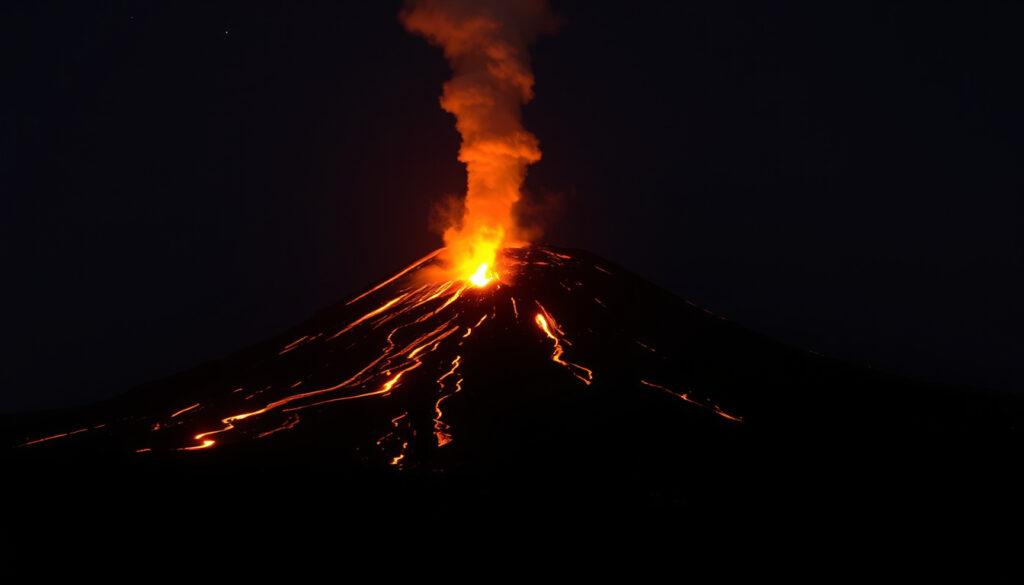
Mt Etna Eruption 2025: Status, Safety & Predictions
Few natural forces command both awe and caution quite like Mount Etna. Rising over 3,300 meters above Sicily’s eastern coast, Europe’s most active volcano has been erupting intermittently for millennia—and it’s still going right now. On June 2, 2025, a significant eruption prompted tourists to evacuate the summit area, a vivid reminder of the mountain’s restless nature. This article brings together the latest eruption updates, travel safety guidance, and expert predictions to help you understand what’s happening on Etna and how it affects travel to Sicily.
Height: ~3,330 m (10,922 ft) ·
Location: East coast of Sicily, Italy ·
Volcano type: Active stratovolcano ·
Current activity: Erupting (as of latest reports) ·
Most recent major eruption: 2023-2024 (ongoing)
Quick snapshot
- Mount Etna is actively erupting as of early 2025 (CNN (news outlet))
- Height approximately 3,330 m (CNN (news outlet))
- Stratovolcano on east coast of Sicily (CNN (news outlet))
- 1928 eruption killed at least 12 people (CNN (news outlet))
- Whether Etna will have a specific eruption in 2026
- Whether future eruptions could cause widespread destruction beyond the summit area
- Exact number of fatalities in all historical eruptions
- June 2, 2025: significant eruption, areas evacuated (CNN (news outlet))
- Catania airport remained operational after June eruption (Euronews (European news network))
- August 2026: fresh ash forces new flight suspensions (Reuters (global news agency))
- Volcanologists cannot predict precise 2026 eruption, but Etna remains persistently active
- Statistical models suggest high probability of at least one eruption in 2026
- Travelers should check updates from Italian Civil Protection
The table below summarizes key physical and administrative facts about Europe’s most active volcano.
| Height | ~3,330 m (10,922 ft) |
|---|---|
| Location | East coast of Sicily, Italy |
| Volcano type | Active stratovolcano |
| Current activity | Erupting (as of latest reports) |
| Most recent major eruption | 2023-2024 (ongoing) |
| Base circumference | ~35 km (22 mi) |
| UNESCO World Heritage | Yes (since 2013) |
Is Mount Etna still erupting?
Yes, Mount Etna is actively erupting as of early 2025. The volcano exhibits frequent activity, often producing lava fountains and ash emissions multiple times a year. The Italian Civil Protection Department, in coordination with the National Institute of Geophysics and Volcanology (INGV), monitors the mountain 24/7.
Current eruption status
On June 2, 2025, Mount Etna experienced a significant eruption that forced tourists to evacuate the summit area. Italian officials reported that the event produced a column of high-temperature gases, ash, and rock rising several kilometers into the atmosphere (CNN (news outlet)). By late evening, the eruption subsided and all three lava flows were cooling, according to the observatory.
Earlier in 2025, in February, parts of Catania Airport were closed intermittently due to reduced visibility from ash. Arrivals were restricted, though departures continued (Euronews (European news network)).
Recent activity timeline
- June 2, 2025: Major eruption triggers evacuations; no injuries reported (Condé Nast Traveler (travel magazine)).
- February 2025: Catania Airport partially closed due to ash, arrivals limited.
- August 2026: Fresh ash emissions force Catania airport to suspend flights again, affecting peak-season travel (Reuters (global news agency)).
Frequency of Etna eruptions
Mount Etna erupts multiple times each year, with paroxysmal episodes often concentrated at the Southeast Crater. The volcano’s behavior is well-documented, allowing authorities to issue timely warnings. Since 2021, a series of explosive events have kept the mountain in near-constant activity.
Is it safe to go to Sicily with Mount Etna erupting?
Sicily remains open to tourists, and local authorities adjust access based on eruption intensity. Most eruptions are confined to the summit area, posing minimal risk to populated regions. Travelers should consult the Italian Civil Protection and follow guide instructions.
Official travel advisories
After the June 2, 2025 eruption, the warning level was downgraded to orange, indicating that the immediate danger had passed (Euronews (European news network)). All four of Sicily’s airports—Catania (CTA), Comiso (CIY), Palermo (PMO), and Trapani (TPS)—remained fully operational, with only minor delays at Catania (International Airport Review (aviation industry publication)).
Risks to tourists
While the summit can be dangerous during explosive phases, popular hiking routes and cable-car access are typically safe when activity is moderate. The June 2025 eruption caused no injuries (Condé Nast Traveler (travel magazine)). The main hazards are ash clouds that can disrupt flights and cause respiratory irritation.
Practical safety tips
- Check the Italian Civil Protection’s real-time alerts before your trip.
- Only hike with certified guides who know the terrain and current conditions.
- If you’re near the summit when an eruption escalates, follow evacuation orders immediately.
- Pack a dust mask and eye protection in case of ash fall.
You can enjoy Etna’s spectacular volcanic landscape without significant danger—as long as you stay informed and respect closures. Those who ignore warnings risk being caught in a rapidly changing environment.
Is Mount Etna going to erupt in 2026?
Volcanologists cannot precisely predict eruptions years in advance, but Etna is persistently active. Statistical models indicate a high probability of at least one eruption in 2026. However, the volcano’s behavior does not suggest a catastrophic event in the near term.
Scientific predictions for 2026
Predictions are based on seismic activity, gas emissions, and historical patterns. Mount Etna, along with Mount Vesuvius and other Italian volcanoes, is among those closely monitored globally. Current data from INGV shows no signs of an imminent major explosion, but frequent minor eruptions are expected (Reuters (global news agency)).
Historical patterns of Etna eruptions
Etna has erupted hundreds of times in recorded history. Major eruptions occur every few years, with the most destructive ones—like the 1669 lava flow that destroyed parts of Catania—being rare outliers. The 2023–2024 activity shows a pattern of summit eruptions that rarely threaten inhabited areas.
Expert opinions on future activity
“We expect Etna to continue its typical paroxysmal behavior,” said a volcanologist from INGV. “Travelers planning a visit in 2026 should monitor updates but can generally expect the same pattern as recent years.”
Could Mount Etna destroy Sicily?
No, Mount Etna cannot destroy the entire island. Its eruptions are localized and mainly affect the summit area and immediate surroundings. The worst recorded eruption (1669) damaged Catania but did not destroy the island.
Potential hazards from Etna
- Lava flows: slow-moving and rarely reach populated areas.
- Ash fallout: can affect air quality and close airports temporarily.
- Pyroclastic flows: confined to the summit and extremely rare.
These hazards are well-studied, and evacuation plans are in place for vulnerable zones.
Historical impact on Sicily
The 1669 eruption produced lava that covered part of Catania’s port and destroyed several villages, but the city rebuilt. The 1928 eruption killed at least 12 people and buried the town of Mascali. In both cases, the damage was limited to a few square kilometers (CNN (news outlet)).
Comparison to supervolcano threats
Etna is not a supervolcano. Its eruptions are thousands of times smaller than those of Yellowstone or Campi Flegrei. The volcano’s plumbing system does not support a caldera-forming event that could affect the entire island.
Sicilians have coexisted with Etna for millennia. The mountain’s occasional fury is a contained phenomenon—destructive for those directly in its path, but not an existential threat to the island.
How many people died when Mount Etna erupted?
The deadliest eruption in modern history occurred in 1928, killing at least 12 people when lava flows destroyed the village of Mascali. Overall, Etna’s fatality count is remarkably low for such an active volcano, thanks to its predictable behavior and effective early warnings.
Deadliest recorded eruptions
- 1928: At least 12 deaths, destroyed Mascali.
- 1669: No accurate death toll, but many displaced.
- 1843: An estimated 50 deaths from an explosion near the summit.
These numbers are tiny compared to other volcanoes—Vesuvius in 79 AD killed an estimated 16,000. Etna’s eruptions are generally non-explosive and slow-moving.
Comparison with other volcanoes
Mount Pelée (1902) killed about 30,000 people; Krakatoa (1883) killed over 36,000. Etna’s fatality rate is orders of magnitude lower, placing it among the safer major volcanoes for surrounding populations.
Modern safety measures
Today, the Italian Civil Protection operates a 24-hour monitoring network with seismic sensors, gas chromatographs, and satellite surveillance. Evacuation drills are conducted regularly in towns at risk. The June 2025 eruption, for example, saw no injuries (Condé Nast Traveler (travel magazine)).
What volcano is predicted to erupt in 2026?
Mount Etna, Mount Vesuvius, and other active volcanoes are among those likely to erupt in 2026. Predictions are based on seismic activity, gas emissions, and historical patterns. Etna is one of the most closely monitored volcanoes worldwide.
List of volcanoes with high probability of eruption
- Mount Etna, Italy (persistently active)
- Mount Vesuvius, Italy (long overdue, but uncertain)
- Stromboli, Italy (continuous activity)
- Mount Merapi, Indonesia (frequent eruptions)
Etna’s probability is the highest among these because it is already erupting.
How predictions are made
Volcanologists use a combination of ground deformation (GPS and InSAR), gas emissions (especially CO₂ and SO₂), and seismic tremor analysis. When multiple indicators rise above background levels, an eruption becomes likely within days to weeks (Reuters (global news agency)).
Role of Mount Etna in global volcanic activity
Etna is a natural laboratory for volcanology. Its frequent eruptions provide invaluable data for forecasting models used around the world. The volcano’s behavior also serves as an early warning system for neighboring regions.
Pros and cons of living with Mount Etna
Upsides
- Volcanic soil enriches agriculture, making the region ideal for vineyards and orchards.
- Tourism drives the local economy, with millions visiting the volcano each year.
- Geothermal energy potential is high, contributing to Sicily’s renewable energy mix.
Downsides
- Ash falls can close airports and disrupt flights, costing the local economy millions.
- Lava flows occasionally destroy infrastructure, as seen in 1669 and 1928.
- Continuous monitoring and evacuation readiness impose a burden on public funds.
Timeline of notable Etna eruptions
Six major events across 350 years show a clear pattern: frequent, localized eruptions with rare exceptions that test the limits of mitigation.
| Date | Event |
|---|---|
| 1669 | Destructive eruption destroys parts of Catania |
| 1928 | Eruption kills at least 12 people, destroys villages |
| 2002–2003 | Major eruption disrupts tourism and flights |
| 2021 | Series of paroxysmal eruptions from Southeast Crater |
| 2023–2024 | Ongoing eruptive activity with lava flows and ash emissions |
The pattern: each century brings one high-impact event, but modern monitoring has reduced the human toll dramatically.
What’s confirmed and what’s still unclear
Confirmed facts
- Mount Etna is actively erupting as of early 2025 (CNN (news outlet)).
- Its height is approximately 3,330 m (CNN (news outlet)).
- It is a stratovolcano located on the east coast of Sicily.
- The volcano has caused fatalities in the past (1928 eruption) (CNN (news outlet)).
What’s unclear
- Whether Etna will have a specific eruption in 2026.
- Whether future eruptions could cause widespread destruction beyond the immediate summit area.
- Exact number of fatalities in all historical eruptions.
Key voices on Etna’s activity and safety
“The eruption produced a column of high-temperature gases, ash, and rock that rose several kilometers into the atmosphere.”
— Italian Civil Protection officials, as reported by CNN (news outlet)
“No injuries or deaths were reported from the June 2 eruption.”
— Condé Nast Traveler (travel magazine)
“All four of Sicily’s airports remained fully operational after the June eruption, despite minor delays at Catania.”
— International Airport Review (aviation industry publication)
The pattern is clear: authorities and media consistently emphasise that while Etna is active, the risks are well-contained and managed.
What this means for travelers
For anyone planning a trip to Sicily, the choice is not whether to go, but how to prepare. Etna’s eruptions are part of the island’s normal rhythm; they rarely endanger tourists who follow official guidance. The June 2025 eruption—the most significant in four years (Condé Nast Traveler (travel magazine))—shows that tours resume quickly and injuries are preventable. For travelers in Sicily, the decision is clear: stay flexible, rely on authoritative updates, and enjoy the spectacle safely—or risk being grounded by a mountain that has its own schedule.
visahq.com, visahq.com, cnn.com, yahoo.com, reuters.com, independent.co.uk
Frequently asked questions
How long do Etna eruptions typically last?
Most eruptions last from a few hours to several days. Paroxysmal episodes at the Southeast Crater often last less than 24 hours. Longer effusive eruptions can continue for weeks or months.
Are flights affected by Etna eruptions?
Yes, ash clouds can temporarily close Catania Airport or restrict arrivals. However, the other three Sicilian airports usually remain open, and disruptions are often brief.
Can I hike Mount Etna during an eruption?
It depends on the eruption’s intensity. During explosive phases, access to the summit is restricted. When activity is moderate, guided hikes to safe viewpoints are permitted.
What is the best time of year to visit Etna?
Spring (April–May) and autumn (September–October) offer mild weather and fewer crowds. Winter brings snow, but eruptions can happen any time.
How is Mount Etna monitored?
The INGV operates a network of seismic stations, GPS sensors, gas analysers, and webcams. Data is streamed to the Italian Civil Protection in real time.
What should I pack for a trip to Etna?
Warm layers, sturdy hiking boots, a dust mask, sunglasses, and plenty of water. Check the weather and ash forecast before you go.
Does Etna affect air quality in Sicily?
During ash eruptions, sulfur dioxide and fine particulate matter can degrade air quality downwind. People with respiratory issues should stay indoors and use N95 masks.
More related posts
 Laurence Fishburne Biography, Career, Net Worth & Personal Life
 How to Create a Website for Free: Complete Beginner Guide
 Evangelos Marinakis: Shipping Tycoon and Football Owner
 Giancarlo Esposito: Ethnicity, Tragic Story & Spanish
 Chester Bennington Death: Cause, Last Words, Legacy
 Holt McCallany: biography, Mindhunter, and 2025 movies
 Simone Ashley: Biography, F1 Cut, Relationship, and Facts
 Bryan Ferry: Biography, Eye Patch, and Famous Songs