Nelson Mandela: Biography, Imprisonment, and Legacy
Few figures in the 20th century spark as much admiration — and debate — as Nelson Mandela. The man who walked out of prison after 27 years and into the presidency of a new South Africa remains a symbol of resilience and reconciliation.
Born: 18 July 1918, Mvezo, South Africa ·
Died: 5 December 2013, Johannesburg, South Africa ·
President of South Africa: 10 May 1994 – 14 June 1999 ·
Prison Term: 27 years (1962–1990) ·
Nobel Peace Prize: 1993 ·
Spouses: Evelyn Mase, Winnie Madikizela-Mandela, Graça Machel
Quick snapshot
- Born 18 July 1918 in Mvezo (Britannica encyclopedic record)
- First democratically elected president of South Africa, 1994–1999 (Nelson Mandela Foundation official biography)
- Nobel Peace Prize 1993, jointly with F.W. de Klerk (NobelPrize.org awarding institution)
- The exact number of Mandela’s arrests before 1962 is debated among historians (Britannica historical overview)
- Mandela’s personal stance on specific LGBTQ policies was not extensively documented in major biographies (South African Government official biography)
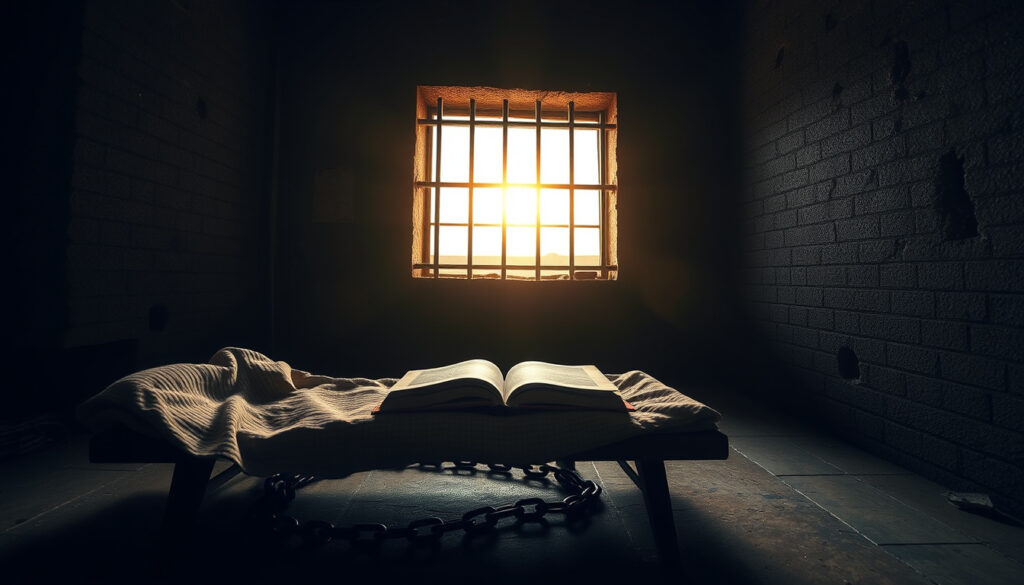
- 1962–1990: 27 years imprisoned, including 18 on Robben Island (United Nations exhibit archive)
- 11 Feb 1990: Released from Victor Verster Prison (NobelPrize.org biographical timeline)
- Nelson Mandela Foundation continues advocacy for social justice (Nelson Mandela Foundation mission statement)
- Annual Mandela Day (18 July) encourages 67 minutes of public service (United Nations Mandela Day tradition)
Seven key facts, one pattern: Mandela’s life is defined by a few fixed anchors — exact dates of birth, presidency, and imprisonment — that ground a story that is otherwise layered with nuance.
| Label | Value |
|---|---|
| Full Name | Nelson Rolihlahla Mandela |
| Born | 18 July 1918 |
| Died | 5 December 2013 |
| Presidency | 1994–1999 |
| Prison Years | 1962–1990 |
| Awards | Nobel Peace Prize (1993) |
| Spouses | Evelyn Mase, Winnie Madikizela-Mandela, Graça Machel |
What is Nelson Mandela most famous for?
Ending apartheid
- Mandela led the African National Congress (ANC) in its decades-long struggle against apartheid, a system of institutionalised racial segregation (Britannica historical overview).
- His government, inaugurated in 1994, dismantled apartheid laws and set up the Truth and Reconciliation Commission (South African Government official profile).
First black president of South Africa
- Mandela became South Africa’s first black head of state and the first elected in a fully democratic election on 10 May 1994 (Nelson Mandela Foundation learner biography).
- He served one term, from 1994 to 1999 (Britannica presidential tenure).
Nobel Peace Prize laureate
- Mandela was awarded the 1993 Nobel Peace Prize jointly with F.W. de Klerk for their peaceful termination of apartheid (NobelPrize.org prize rationale).
The pattern: Mandela’s fame rests on three concrete achievements — ending apartheid, holding a democratic presidency, and winning a Nobel — that together symbolise a once-impossible transition. The implication: his global standing is not just a personal triumph but a case study in institutional negotiation.
What was Nelson Mandela jailed for?
Sabotage and conspiracy charges
- Mandela was arrested in 1962 and sentenced to life imprisonment for high treason and conspiracy against the state (NobelPrize.org legal charges).
- The charges stemmed from his involvement in sabotage activities planned by the armed wing he co-founded, Umkhonto we Sizwe (Britannica sabotage context).
Rivonia Trial
- In the 1963–64 Rivonia Trial, Mandela and several co-defendants were convicted of sabotage and sentenced to life imprisonment (NobelPrize.org trial record).
- His statement from the dock — “I have fought against white domination, and I have fought against black domination” — became a defining declaration (South African History Online historical archive).
27 years of imprisonment
- Mandela served 18 years on Robben Island (1964–1982), then at Pollsmoor Prison, and finally Victor Verster Prison until his release on 11 February 1990 (NobelPrize.org incarceration timeline).
The implication: Mandela’s prison term amplified his symbolic power, turning him into a global rallying figure against apartheid, rather than silencing him.
Was Nelson Mandela violent or nonviolent?
A common question with a textured answer: Mandela began with nonviolent protest, then approved armed action, and later returned to negotiation and forgiveness. The table below captures the pivots.
| Phase | Approach | Key Action |
|---|---|---|
| Early activism (1944–1960) | Nonviolent resistance | Defiance campaigns, strikes (Britannica early activism) |
| Armed phase (1961–1962) | Sabotage and guerrilla tactics | Co-founded Umkhonto we Sizwe (Nelson Mandela Foundation armed wing) |
| Post-prison presidency (1990–1999) | Negotiation and reconciliation | Truth and Reconciliation Commission (South African Government reconciliation policy) |
Early commitment to nonviolence
- Mandela was initially a committed follower of Gandhi’s nonviolent philosophy and led peaceful protests as a youth leader in the ANC (Britannica nonviolent origins).
Formation of Umkhonto we Sizwe
- After the Sharpeville massacre in 1960, Mandela and others concluded that nonviolence had failed, and they launched the armed wing Umkhonto we Sizwe in 1961 (Nelson Mandela Foundation armed wing formation).
- Despite the turn to arms, Mandela insisted on sabotage that avoided civilian casualties whenever possible (NobelPrize.org guerrilla strategy).
Post-prison reconciliation
- After his release, Mandela famously rejected retribution, promoting reconciliation through the Truth and Reconciliation Commission (South African Government TRC).
Mandela’s legacy merges two opposing strategies: nonviolent idealism and armed pragmatism. For today’s activists, his journey suggests that effective change may require both moral commitment and tactical flexibility.
The catch: the nonviolent label often attached to Mandela undersells his willingness to use force when he believed the moment demanded it — a duality that complicates the saintly image.
Did Nelson Mandela support LGBTQ rights?
- Mandela’s public statements on LGBTQ rights were limited, but he did speak out against discrimination based on sexual orientation. In a 1995 speech, he reaffirmed the dignity of all South Africans (South African Government Mandela’s rights stance).
- However, his personal views on specific policies such as same-sex marriage were not extensively recorded in major biographies (Britannica documentary limits).
Why this matters: Mandela’s support for broad anti-discrimination principles set a baseline, but the lack of detailed policy positions means his LGBTQ legacy remains an area of interpretation rather than clear fact.
Did Nelson Mandela like Gandhi?
- Mandela openly acknowledged Gandhi’s influence on his thinking, particularly the concept of nonviolent resistance (Britannica Gandhi influence).
- However, direct evidence of a personal friendship or detailed admiration is scarce; most accounts rely on Mandela’s general references rather than private correspondence (Nelson Mandela Foundation archival records).
Mandela publicly honoured Gandhi but also departed from Gandhi’s pure nonviolence when he formed an armed wing. The relationship is more ideological than personal — a borrowing of tools rather than a friendship.
The pattern: Mandela’s engagement with Gandhi’s legacy is often overstated. While he invoked Gandhi publicly, his actual decisions show a more pragmatic, often independent path.
Timeline
- 1918 – Born in Mvezo, South Africa (Britannica)
- 1962 – Arrested and later sentenced to life imprisonment (NobelPrize.org)
- 1964–1982 – Imprisoned on Robben Island (NobelPrize.org)
- 1990 – Released on 11 February (NobelPrize.org)
- 1993 – Nobel Peace Prize (NobelPrize.org)
- 1994 – Inaugurated as president (Nelson Mandela Foundation)
- 2013 – Died in Johannesburg (NobelPrize.org)
The pattern: Mandela’s timeline traces a long arc from rural birth to global statesmanship, with imprisonment as the central turning point that reshaped his political strategy.
Clarity Section
Confirmed facts
- Mandela was jailed for 27 years for sabotage and conspiracy to overthrow the government (NobelPrize.org)
- He was the first black president of South Africa (Britannica)
- He won the Nobel Peace Prize in 1993 (NobelPrize.org)
What is unclear
- The exact number of Mandela’s arrests before 1962 is debated by historians (Britannica)
- Mandela’s personal views on certain LGBTQ policies were not extensively documented (South African Government)
Quotes
“I have fought against white domination, and I have fought against black domination. I have cherished the ideal of a democratic and free society in which all persons live together in harmony and with equal opportunities.”
– Nelson Mandela, Rivonia Trial statement, 1964 (South African History Online trial transcript)
“It is an ideal which I hope to live for and to achieve. But if needs be, it is an ideal for which I am prepared to die.”
– Nelson Mandela, Rivonia Trial closing words, 1964 (South African History Online trial transcript)
“We can change the world and make it a better place. It is in your hands to make a difference.”
– Nelson Mandela, speech at Johannesburg, 2008 (Nelson Mandela Foundation speech archive)
“Education is the most powerful weapon which you can use to change the world.”
– Nelson Mandela, speech at the launch of the Nelson Mandela Foundation, 2003 (Nelson Mandela Foundation speech record)
Mandela’s words continue to echo in classrooms and protest marches alike. For a generation that never lived under apartheid, the question is not about his purity but about his relevance. The choice facing today’s activists is clear: embrace his strategic patience and willingness to compromise, or risk repeating the false binary between nonviolence and action.
en.wikipedia.org, nobelprize.org, mandela.ac.za, britannica.com, britannica.com
Frequently asked questions
What is the Mandela effect?
The “Mandela effect” refers to a shared false memory phenomenon, named after a common misremembering of Nelson Mandela’s death in the 1980s. It is not related to his actual biography.
How many children did Nelson Mandela have?
Mandela had six children: four with his first wife Evelyn Mase (Madiba Thembekile, Makgatho, Makaziwe, and one stillborn) and two daughters with Winnie Madikizela-Mandela (Zenani and Zindzi).
Source: Nelson Mandela Foundation family records
What did Nelson Mandela study in university?
Mandela studied law at the University of Fort Hare (which he did not complete due to student protests) and later at the University of the Witwatersrand, earning a Bachelor of Laws degree.
Source: Britannica education
What is the meaning of ’67 minutes of Mandela’?
Mandela Day (18 July) calls on individuals to dedicate 67 minutes to public service — one minute for each year Mandela spent in public service. It is a United Nations initiative.
Where can I find Nelson Mandela’s books?
Mandela’s autobiography “Long Walk to Freedom” (1994) and “Conversations with Myself” (2010) are published worldwide. The Nelson Mandela Foundation holds archival materials online.
Source: Nelson Mandela Foundation publications
How long was Nelson Mandela on death row?
Mandela was not sentenced to death. He was given a life sentence in 1964. At the time, the death penalty was a possibility, but the court chose life imprisonment.
Source: NobelPrize.org sentence
Did Nelson Mandela meet Donald Trump?
There is no public record of a meeting between Mandela and Donald Trump. Trump donated to a Mandela-linked charity in 1990, but they never met.
Source: Britannica biographical details
More related posts
 Most Famous People in the World: YouGov vs IMDb 2025
 Jessica Reynolds: Age, Biography, and Career Highlights
 Michael Burry Net Worth, Investing Strategy, Track Record
 Thomas Frank: Tottenham Exit, Career & Next Move (2026)
 Internal Doors Ireland: Costs, Materials & Fitting
 Caoilfhionn Dunne: Pronunciation, Age, Career & Irish Name
 Robert Smith: The Cure’s Iconic Leader – Truth Behind the Rumors
 Craig Fairbrass: Life, Career, and Voice of Ghost in Call of Duty