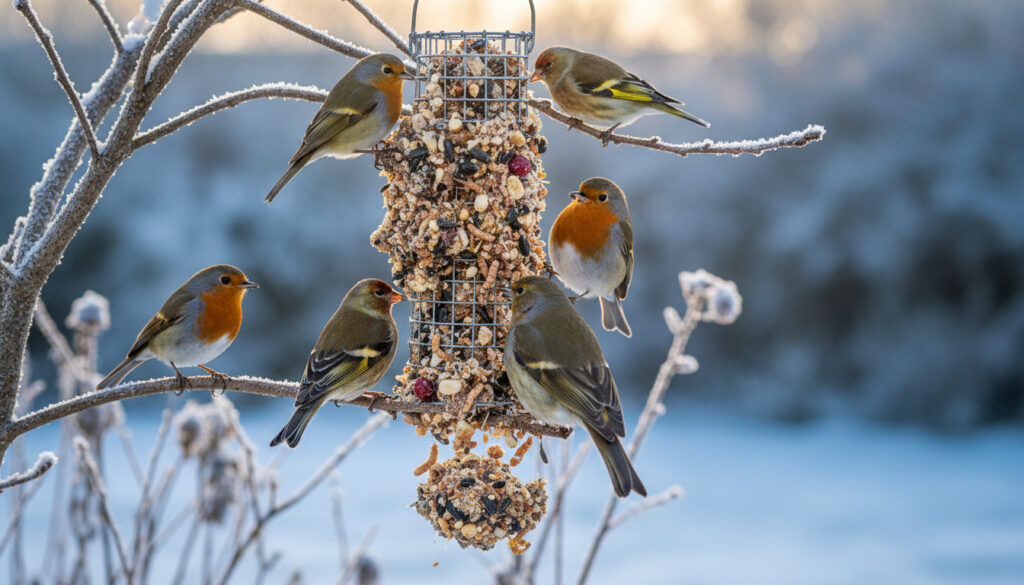
Fat Balls for Birds – Essential Guide to Making and Feeding
Fat balls, also called suet fat balls, serve as concentrated energy sources for wild birds, delivering essential calories, fats, proteins, and vitamins during periods of food scarcity. These spherical treats blend suet or solidified fats with seeds, nuts, and grains, providing critical nutritional support when natural forage becomes unavailable.
Gardeners across the United Kingdom deploy these high-energy supplements particularly during winter months, when small songbirds can lose up to ten percent of their body weight overnight struggling to maintain body heat. Beyond individual survival, fat balls attract diverse species from blue tits to woodpeckers, enhancing local biodiversity and supporting ecosystem health through reliable food provision.
This guide examines the composition of quality fat balls, demonstrates safe homemade preparation methods, and evaluates feeding practices throughout the seasons. Understanding proper ingredients, storage protocols, and species-specific needs ensures these supplements benefit rather than harm visiting wildlife.
What Are Fat Balls for Birds?
Fat balls contain primarily suet or fats blended with seeds and grains, creating digestible energy packets that sustain wild birds when insects and berries disappear. Each ball delivers concentrated calories necessary for thermoregulation, particularly during freezing nights when metabolic demands peak.
- Deliver concentrated energy critical for thermoregulation during cold nights
- Support species including blue tits, great tits, and greenfinches
- Ground feeders such as hedgehogs benefit from fallen fragments
- Avoid palm oil-based fats which present safety hazards
- Risk of melting during summer heat requires careful placement
- Contain proteins and vitamins absent in seed-only diets
| Attribute | Specification |
|---|---|
| Primary Ingredients | Beef suet, lard, or tallow mixed with seeds and nuts |
| Caloric Density | Up to 500 calories per ball |
| Optimal Season | Autumn through winter (October to March) |
| Target Species | Robins, blue tits, sparrows, starlings, woodpeckers |
| Prohibited Ingredients | Bacon fat, cooked pork fat, seasoned fats |
| Storage Life | 1-2 weeks ambient; months when frozen |
| Ecological Impact | Biodegradable when made with natural components |
How to Make Fat Balls for Birds at Home
Selecting Safe Fats
Beef suet remains the gold standard for homemade preparations, though high-quality lard or raw meat tallow provide suitable alternatives. These pure fats supply necessary lipids without the chemical additives found in processed cooking fats. Quality fat balls avoid cheap fillers like wheat flour alone, which reduce nutritional value and may harm avian health.
Basic Recipe Method
Basic preparation involves gently melting the chosen fat—never boiling—then stirring in a mixture of sunflower seeds, millet, rapeseed, and chopped peanuts. Pour the blend into molds or coconut shells, allowing complete cooling until solid. Raw unseasoned fats prevent dehydration and kidney failure risks associated with salted alternatives.
Never incorporate bacon fat, cooked pork fat, or any seasoned fats into bird recipes. These contain high salt levels, preservatives, and chemicals that cause severe dehydration and kidney damage in wild birds.
Enhancing Nutritional Value
RSPB-formulated products demonstrate optimal compositions, utilizing suet, wheat flour in moderation, peanuts, millet, rapeseed, and linseed without harmful fillers. Spirulina additions support de-worming and fertility, while insect-enriched variants provide essential proteins for fledgling development.
Are Fat Balls Good for Birds?
Nutritional Benefits
Fat balls provide substantial benefits when manufactured correctly. They deliver up to 500 calories per ball, enabling small birds to maintain body heat during freezing nights and fuel demanding activities such as foraging and nesting. This concentrated energy source proves particularly vital during winter months, breeding seasons, and migration periods.
Potential Risks
However, quality varies significantly. Cheap fillers including excess wheat or low-nutrient grains diminish health benefits and may cause harm. Spoilage presents another risk; heat and humidity foster mold and bacterial growth. Social media recommendations suggesting inappropriate fats can endanger bird populations when hobbyists follow unverified advice.
Summer Feeding Guidelines
Replace uneaten balls weekly during warm weather and position feeders in shaded areas to prevent rancidity. Insect-enriched variants provide essential proteins for fledgling development during breeding seasons, though opt for smaller portions to ensure rapid consumption before spoilage occurs.
How to Feed Fat Balls to Birds
Feeder Compatibility
Specialized hanging feeders or mesh bags accommodate fat balls effectively, allowing clinging species such as woodpeckers and nuthatches to access the food while deterring larger mammals. Position feeders at varying heights to accommodate different feeding behaviors—tits prefer hanging mechanisms while robins often favor table platforms.
Storage Protocols
Proper storage extends usability and prevents waste. Refrigerate or freeze homemade batches, thawing only required quantities. Commercial products stored in cool, dry conditions maintain integrity for one to two weeks at room temperature, though frozen reserves last significantly longer. Inspect daily for softening, off-odors, or mold development, particularly during summer months.
Freeze fat balls in small batches and thaw as needed. This prevents rancidity and ensures fresh offerings throughout the year, especially during unexpected cold snaps.
Ground Feeding Benefits
Fragments that fall to the ground feed hedgehogs, squirrels, and ground-foraging birds, creating a diverse feeding ecosystem within your garden. Species attracted include robins, blue tits, house sparrows, starlings, woodpeckers, and magpies.
Fallen pieces support ground feeders like hedgehogs and squirrels, extending nutritional benefits beyond avian species to local mammal populations.
When Should You Feed Fat Balls Throughout the Year?
- Autumn Preparation (September-October): Manufacture or purchase fat balls before temperatures drop, establishing feeding stations as natural food sources decline.
- Winter Peak (November-February): Deploy fresh balls daily, providing essential energy as small birds lose body heat rapidly during extended nighttime hours.
- Spring Breeding (March-May): Continue offering insect-enriched variants to support nesting parents and growing fledglings requiring high protein intake.
- Summer Maintenance (June-August): Reduce quantities, replace weekly to prevent spoilage, and utilize shaded feeder positions to avoid fat melting.
- Year-round Rotation: Maintain frozen reserves regardless of season to address unexpected weather extremes or food shortages.
What Is Certain and Uncertain About Fat Balls?
| Well-Established Information | Areas Requiring Further Clarity |
|---|---|
| Beef suet and lard provide safe, nutritious bases approved by wildlife organizations | Precise shelf life varies significantly based on specific ingredient ratios and ambient humidity levels |
| Fat balls deliver approximately 500 calories per ball, supporting thermoregulation | Regional variations in species preferences for specific seed compositions remain anecdotal |
| Bacon fat and seasoned fats cause kidney damage and dehydration | Optimal ball size for different feeder designs lacks standardized research |
| Summer heat causes spoilage within one week if uneaten | Long-term impacts of supplementary feeding on wild bird migration patterns require additional study |
Why Do Fat Balls Matter for Wildlife?
Winter months create lethal conditions for small passerines. A blue tit might lose ten percent of its body mass overnight attempting to maintain core temperature when ambient temperatures plummet. Fat balls bridge the caloric deficit created by insect scarcity and frozen ground conditions that prevent natural foraging.
Unlike loose seeds which scatter and spoil quickly, suet-based balls provide weather-resistant energy packets. The fat content metabolizes slowly, providing sustained warmth compared to carbohydrate-rich alternatives. Where Is Your Appendix – Position, Pain, Variations illustrates how biological systems require specific conditions to function; similarly, avian metabolism depends on precise nutritional inputs during stress periods.
Garden feeding stations function as micro-ecosystems. When woodpeckers extract fragments from hanging balls, the debris sustains ground-dwelling hedgehogs and squirrels, creating nutritional webs that support biodiversity beyond avian species. This interconnected dependency highlights the responsibility of maintaining high-quality, uncontaminated food sources.
What Do Experts Recommend?
Suet balls are a great energy source for birds.
Avoid fat balls in hot weather to prevent spoilage.
High-quality fat balls promote garden biodiversity by drawing diverse species and reducing environmental impact when made with biodegradable, natural ingredients.
— Rural Supplies Online
Key Points on Fat Balls for Birds
Fat balls provide critical caloric support for wild birds during winter scarcity and breeding seasons, with beef suet, lard, or tallow forming the safest base ingredients. Avoiding bacon fat, cheap fillers, and spoiled products prevents harm while proper storage in cool or frozen conditions maintains nutritional integrity. Precise measurements in wildlife care mirror other technical accuracies such as 175cm in Feet and Inches – Exact Conversion Guide, emphasizing the importance of careful preparation in supporting garden biodiversity.
Common Questions About Fat Balls
What specific birds eat fat balls?
Tits, robins, sparrows, starlings, woodpeckers, and magpies regularly consume fat balls. Ground-feeding species like hedgehogs benefit from fallen fragments.
How long do fat balls last?
Commercial fat balls last one to two weeks at room temperature. Homemade versions store for months when frozen. Discard immediately if moldy, soft, or rancid.
Can you use bacon fat in homemade fat balls?
Never use bacon fat, cooked pork fat, or seasoned fats. These contain high salt levels and chemicals that cause severe dehydration and kidney damage in wild birds.
More related posts
 2025 Cost of Living Payments – DWP Confirms None Planned
 Citroen Dispatch: Reliability, Common Problems & Price
 Billie Piper: Custody, Debt, Relationships – Full Profile
 John Parrott: Net Worth, Children, Retirement & Everton Connection
 Made in Chelsea Season 30 – Episodes Cast Release Guide
 Cast of Kabhi Khushi Kabhie Gham… – Full Cast and Child Actors Guide
 Nelly Korda: Verified Facts on Net Worth, Relationship & Career
 Donna Summer: Cause of Death, Hit Songs, and Legacy