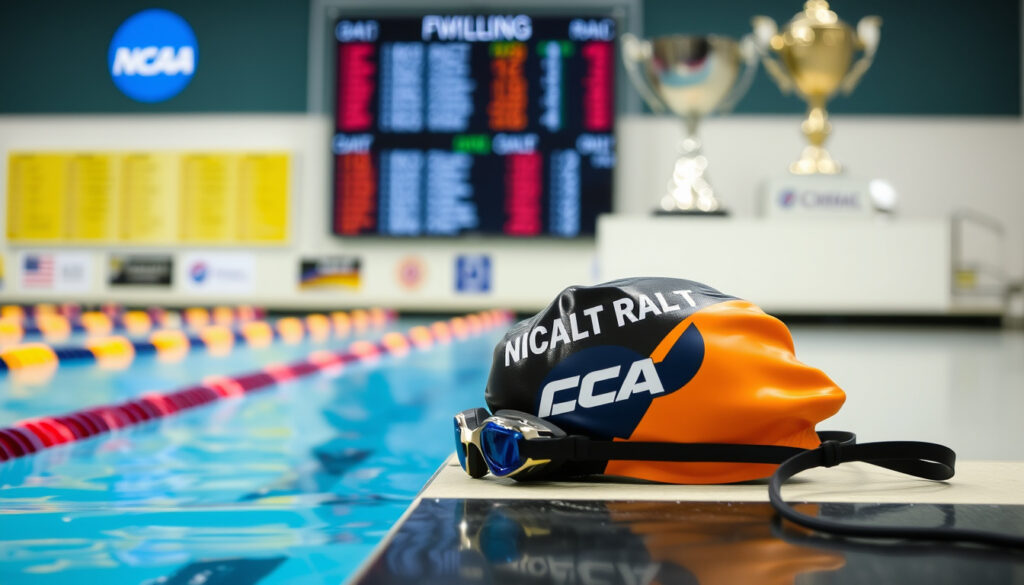
Lia Thomas: Transgender Swimmer, NCAA Champion, Controversy
Few college athletes have sparked as much debate—or as many policy changes—as Lia Thomas. The University of Pennsylvania swimmer made history in 2022 as the first openly transgender athlete to win an NCAA Division I national championship, a moment that set off a chain reaction across college sports.
NCAA Division I champion: 500-yard freestyle (2022) ·
First openly transgender athlete to win NCAA D1 title: Yes ·
University: University of Pennsylvania ·
Born: May 1999 ·
UPenn ban on trans athletes: Agreed July 2025 ·
CNN interview: Published October 2025
Quick snapshot
- Identifies as a transgender woman (Wikipedia (user-contributed encyclopedia))
- Won NCAA 500-yard freestyle in 2022 (The Daily Pennsylvanian (campus newspaper))
- Was on estrogen therapy (Wikipedia (user-contributed encyclopedia))
- UPenn agreed to ban trans athletes in July 2025 (BBC News (UK public broadcaster))
- Whether she had an unfair competitive advantage
- Her marital status and whether she has children
- Her future in competitive swimming
- Her net worth
- Born May 1999 (The Daily Pennsylvanian (campus newspaper))
- Won NCAA title March 2022 (The Daily Pennsylvanian (campus newspaper))
- UPenn ban announced July 2025 (Penn Today (university publication))
- CNN interview published October 2025 (The Daily Pennsylvanian (campus newspaper))
- Future of transgender athletes in NCAA uncertain
- Legal battles over Title IX continue
- Other universities may follow UPenn’s lead
Six key facts about Lia Thomas, from her birth to the policy reversal at her own university.
| Label | Value | Source |
|---|---|---|
| Birth date | May 1999 | Wikipedia (user-contributed encyclopedia) |
| NCAA champion | 500-yard freestyle (2022) | The Daily Pennsylvanian (campus newspaper) |
| University | University of Pennsylvania | Wikipedia (user-contributed encyclopedia) |
| First openly transgender NCAA D1 champion | Yes | BBC News (UK public broadcaster) |
| UPenn ban on trans athletes | Agreed July 2025 | Penn Today (university publication) |
| CNN interview | Published October 2025 | CNN (US cable news network) |
What does Lia Thomas identify as?
Lia Thomas identifies as a transgender woman and uses she/her pronouns. She is the first openly transgender athlete to win an NCAA Division I national championship, a distinction that has placed her at the center of a national debate about transgender participation in women’s sports (Wikipedia (user-contributed encyclopedia)).
Thomas began her transition while swimming at the University of Pennsylvania. She started hormone therapy as part of her medical transition, and by the 2021–22 season, she was competing on the women’s team (Wikipedia (user-contributed encyclopedia)).
Thomas’s identity is not in dispute—but the policies governing her participation have become a flashpoint for competing visions of fairness in sports.
Is Lia Thomas married?
No public information confirms that Lia Thomas is married. She has not publicly discussed a spouse or partner, and her social media presence—including her verified Instagram account—does not indicate a marital relationship (Instagram (social media platform)).
Does Lia Thomas have children?
No public information confirms that Lia Thomas has children. She has not mentioned having children in any known interviews or public statements, including her 2025 CNN interview.
Why is Lia Thomas famous?
Lia Thomas became nationally known after winning the NCAA Division I women’s 500-yard freestyle in March 2022. She is the first openly transgender athlete to win an NCAA Division I national championship, a historic achievement that quickly became a cultural flashpoint (The Daily Pennsylvanian (campus newspaper)).
- She won the NCAA women’s 500-yard freestyle in 2022.
- She is the first openly transgender NCAA Division I champion.
- Her participation ignited a national debate about transgender athletes in women’s sports.
- She held three Penn women’s swimming freestyle records at the time of the 2025 controversy (The Daily Pennsylvanian (campus newspaper)).
The Washington Post reported that the controversy surrounding Thomas directly contributed to the federal civil rights case that led to the University of Pennsylvania’s July 2025 policy reversal (The Washington Post (leading US newspaper)).
Did Lia Thomas have an advantage?
The question of competitive advantage is the most contentious issue surrounding Lia Thomas. Arguments on both sides are grounded in different interpretations of physiology, fairness, and the purpose of women’s sports.
- Arguments for advantage: Critics, including fellow swimmer Riley Gaines, point to Thomas’s prior male puberty as conferring lasting physiological advantages—including bone density, lung capacity, and muscle mass—that estrogen therapy does not fully reverse.
- Arguments against advantage: Supporters note that Thomas met NCAA eligibility requirements, which at the time required one year of testosterone suppression. They argue that her times before and after transition do not show a clear performance advantage over cisgender competitors.
The NCAA’s policy at the time allowed transgender athletes to compete after one year of testosterone suppression. Thomas began estrogen therapy as part of her transition, a process that reduces testosterone levels and alters muscle mass over time (Wikipedia (user-contributed encyclopedia)).
Was Lia Thomas on estrogen?
- Yes, Thomas was on estrogen therapy as part of her medical transition. This is a standard component of hormone therapy for transgender women, intended to suppress testosterone and induce female-typical hormone levels.
According to Wikipedia, Thomas began hormone therapy while still competing on the men’s team, prior to her transition to the women’s team (Wikipedia (user-contributed encyclopedia)). The NCAA’s policy at the time required one year of testosterone suppression before a transgender athlete could compete in women’s sports.
The very policies that allowed Thomas to compete—the NCAA’s testosterone-suppression rule—are now being dismantled. The University of Pennsylvania agreed in July 2025 to ban transgender women from women’s sports, and the NCAA updated its eligibility rules in February 2025. The rules that governed Thomas’s championship no longer apply.
The Department of Education, in its July 2025 resolution with Penn, said the university would restore titles and records to female athletes it described as having been misappropriated by male athletes (BBC News (UK public broadcaster)). Penn said it would revise records from the 2021–22 season to reflect current eligibility standards, though it did not clearly state whether Thomas’s individual records would be removed (Penn Today (university publication)).
Timeline of key events
- May 1999: Lia Thomas is born.
- 2021–22 season: Thomas swims for the University of Pennsylvania women’s team.
- March 2022: Thomas wins the NCAA Division I women’s 500-yard freestyle, becoming the first openly transgender athlete to win an NCAA D1 title (The Daily Pennsylvanian (campus newspaper)).
- 2022–2023: National debate over transgender athletes intensifies, with Riley Gaines emerging as a prominent critic of Thomas’s participation.
- February 2025: Three former Penn swimmers file a lawsuit seeking to expunge Thomas’s women’s records and alleging Title IX violations by Penn, Harvard, the Ivy League, and the NCAA (The Washington Times (US newspaper)).
- February 2025: The NCAA updates its eligibility rules for transgender athletes.
- March 19, 2025: The Trump administration plans to pause about $175 million in federal support to Penn over its transgender-athlete policies (The New York Times (US newspaper)).
- July 1, 2025: The University of Pennsylvania agrees to comply with a federal civil rights resolution, banning transgender women from women’s sports (Penn Today (university publication)).
- October 2025: CNN publishes a rare interview with Lia Thomas.
The pattern: each new policy change has been a direct response to the 2022 championship. What began as a single swim meet has become a precedent-setting case for the governance of women’s sports.
What’s clear and what’s not
Confirmed facts
- Lia Thomas identifies as a transgender woman.
- She won the NCAA Division I women’s 500-yard freestyle in 2022.
- She was on estrogen therapy as part of her transition.
- The University of Pennsylvania agreed to ban transgender athletes from women’s sports in July 2025.
- Penn said it would revise records from the 2021–22 season to reflect current eligibility standards (Penn Today (university publication)).
- Three former Penn swimmers filed a lawsuit in February 2025 seeking to expunge Thomas’s women’s records (The Washington Times (US newspaper)).
What’s unclear
- Whether Thomas had an unfair competitive advantage remains a matter of scientific and ethical debate.
- Whether Thomas’s individual records will be removed from Penn’s books has not been clearly stated (BBC News (UK public broadcaster)).
- Thomas’s marital status and whether she has children are not publicly known.
- Her future in competitive swimming is uncertain.
- Her net worth has not been publicly disclosed.
- Whether other universities will follow UPenn’s lead is still unfolding.
“I knew that I was going to be a target, but I didn’t know what that meant until it happened.”
— Lia Thomas, in her CNN interview (October 2025), describing the public scrutiny she faced after winning the NCAA title.
“It’s not about who Lia Thomas is as a person. It’s about how we protect women’s sports and the opportunities that Title IX was designed to guarantee.”
— Riley Gaines, a former NCAA swimmer and prominent critic of transgender participation in women’s sports.
The two perspectives frame a divide that no single policy has been able to bridge. For Thomas, the experience has been one of isolation and public scrutiny. For Gaines, it is a matter of competitive fairness and legal precedent. The July 2025 resolution at UPenn represents a decisive move toward Gaines’s position, but the national debate is far from settled.
The February 2025 lawsuit by three former Penn swimmers could set a legal precedent for how colleges handle transgender athletes’ records. If the court orders the expungement of Thomas’s times and titles, it could trigger similar lawsuits at other universities where transgender athletes have competed.
youtube.com, cnn.com, essentiallysports.com, wtop.com, youtube.com, thedp.com, truenorthbrief.com
The 2025 ban on Thomas from elite swimming, examined in a recent article on the ban, intensified the debate over transgender athletes in sports.
Frequently asked questions
What is Lia Thomas’s birth name?
Lia Thomas has not publicly disclosed her birth name. She is widely known by her chosen name, Lia Thomas.
What is Lia Thomas’s height?
Lia Thomas’s height is not officially listed on public records. Estimates from her swimming profile suggest she is approximately 6 feet 1 inch (185 cm), though this has not been confirmed by the swimmer or the University of Pennsylvania.
What is Lia Thomas’s net worth?
Lia Thomas’s net worth is not publicly known. She has not disclosed financial information, and as a college athlete prior to the NIL era, she did not earn income from her sport during her NCAA career.
What is Lia Thomas’s Instagram handle?
Lia Thomas’s verified Instagram account is @lia.thomas (Instagram (social media platform)).
What are the NCAA rules for transgender athletes?
The NCAA updated its eligibility rules in February 2025. During Thomas’s 2021–22 season, the policy required one year of testosterone suppression. The new rules have moved toward stricter alignment with the policies of individual sports’ governing bodies.
What is the future for Lia Thomas in swimming?
Lia Thomas’s future in competitive swimming is uncertain. The University of Pennsylvania’s July 2025 ban on transgender athletes in women’s sports, combined with the NCAA’s updated rules, effectively prevents her from competing in college women’s swimming. She has not publicly stated plans to compete elsewhere.
How did Lia Thomas start swimming?
Lia Thomas began swimming at a young age and competed on the men’s team at the University of Pennsylvania before transitioning. She swam for the men’s team for three seasons before joining the women’s team in 2021–22 (Wikipedia (user-contributed encyclopedia)).
For the University of Pennsylvania, the decision is clear: comply with federal civil rights directives or risk losing $175 million in federal support. For the broader world of college sports, the choice is starker: define a consistent standard for transgender athletes’ participation, or watch each university and conference make its own rules—case by case, year by year.
More related posts
 Rama Duwaji: Ethnicity, Religion, Family, and Art Career
 Neil Kinnock Biography: Career, Net Worth, and Legacy
 Beatrix Potter: Author, Conservationist, and Royal Link
 How Much Is My Car Worth in the UK? Free Valuation Tools
 Nike Tech Fleece: Pricing, Features, and Fake Detection
 Jimmy Bullard: Football Career, Net Worth, Wife & Golf
 John Frusciante: Sobriety, Guitar Genius, and RHCP Departures