Cruise Ship Codes, Rules, and Safety Questions Answered
Planning a cruise is easy until someone asks why the ship skips deck 17, or what the crew means by a “code brown” call. The answers that circulate online tend to swing between hard fact and tall tale, so this guide separates the two using official maritime and public-health sources. One reliable anchor: SOLAS, the international safety treaty, applies to passenger ships carrying more than 12 people on international voyages. The rest — from banned carry-ons to the reputed “one word” you shouldn’t say — needs the same level of proof.
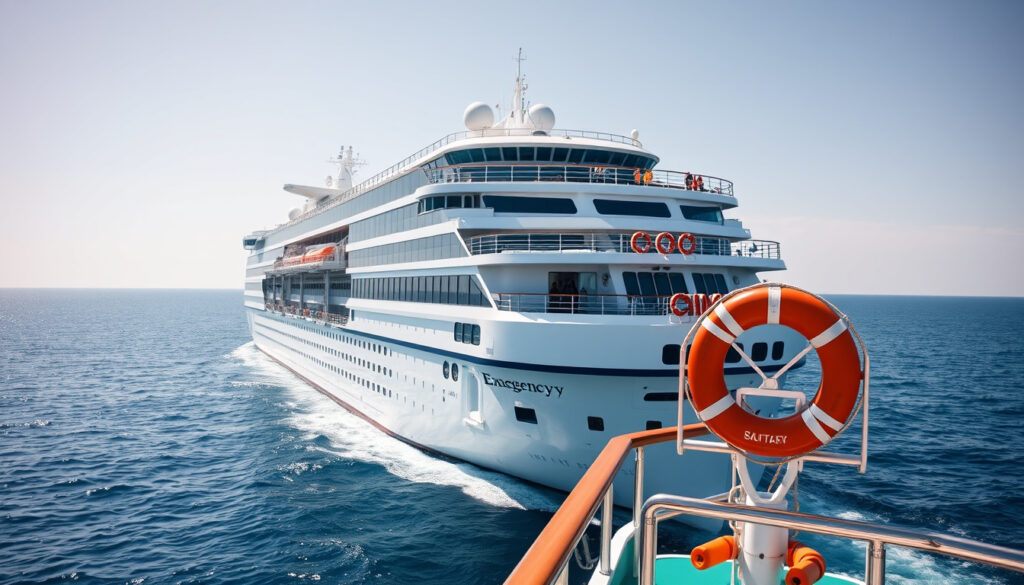
Length of world’s largest cruise ship (2026): 364 meters · Decks on world’s largest cruise ship: 20 · Guest capacity: 5,610 · Crew capacity: 2,350 LadBible’s 2026 ship tour
Quick snapshot
- IMO adopts the ISM Code in 1993 (Congress.gov testimony).
- In 1998, SOLAS Chapter IX makes the ISM Code mandatory for passenger ships and tankers (EPA cruise ship white paper).
- The exact origin of a “no deck 17” rule has no single official source.
- Code words like “code brown” have no standardized official glossary.
- Current Iran War itinerary effects change by sailing; live advisories are required.
- 1993 — IMO adopts the ISM Code (Congress.gov testimony).
- 1998 — ISM Code becomes mandatory for passenger ships (EPA cruise ship white paper).
- Ongoing — passenger policies vary by line; there is no one global list. (Congress.gov testimony)
- Check the ship’s deck plan and muster station before booking.
- If a Middle East itinerary is on your list, monitor official travel advisories.
- Read the cruise line’s current prohibited-items list, not last year’s blog post.
Key facts at a glance
Eight rows, one pattern: official safety rules are international, while passenger-facing policies are per-line.
| Label | Value | Reference |
|---|---|---|
| World’s largest cruise ship (2026) | Royal Caribbean Legend of the Seas | LadBible’s 2026 ship tour |
| Size and capacity | 20 decks · 364 meters · 5,610 guests · 2,350 crew | LadBible’s 2026 ship tour |
| ISM Code adopted | 1993, as the international standard for safe ship management | Congress.gov testimony |
| ISM Code mandatory | 1998 for passenger ships and tankers, via SOLAS Chapter IX | EPA cruise ship white paper |
| Crew training | STCW includes crowd-management training for passenger-ship crew | IMO passenger-ship safety standards |
| CDC VSP scope | Inspects ships, monitors illness data, reviews design and construction plans | CDC Vessel Sanitation Program |
| Isolation rule | Symptomatic passengers isolated at least 24 hours after symptoms resolve | CDC VSP standards |
| State Dept baseline | Keep balcony and cabin doors locked; exercise normal precautions | U.S. State Department cruise guidance |
The pattern: the international layer is stable; the passenger-facing layer shifts by line and sailing date.
What does code brown mean on a cruise ship?
Code brown is crew shorthand, not a legal term. In the informal code used on many ships, it means a sanitation incident involving human waste, usually in a public restroom or cabin. The public-health side is what matters: cruise lines are expected to contain the incident, disinfect surfaces, and isolate anyone showing symptoms.
- Passengers usually notice little: a closed restroom, a crew member with a cleaning cart, and no public announcement.
- Give the crew room to work. The faster they contain the spill, the faster the area reopens.
What does “wife on board” mean on a cruise ship?
- In crew slang, “wife on board” notifies the team that a crew member’s spouse is sailing as a guest. It is an informal radio and crew-room shorthand, not a passenger-service code.
- For passengers, the practical effect is minimal: crew with family aboard may ask for schedule changes, but the line’s safety routines do not change.
What does Charlie Charlie mean on a cruise ship?
- “Charlie Charlie” shows up in cruise forums and crew chatter, but it has no single standardized meaning across lines. Sometimes it is phonetic, sometimes situational, sometimes just a joke.
- If a story gives it a supernatural origin, treat it as entertainment. There is no official IMO or STCW reference for “Charlie Charlie.”
Codes like “code brown” are local, not legal. The part public-health regulators measure is the cleanup: containment, disinfection, and isolation.
The implication: don’t get spooked by the code words. Watch how the crew responds, and follow their directions.
Why is there no floor 17 on a cruise ship?
Deck-numbering on cruise ships mixes marketing, engineering, and superstition. Many lines skip 13; some ships skip 17, where the number has cultural baggage in parts of Europe. But there is no global “no deck 17” mandate.
- SOLAS doesn’t regulate deck labels. The international safety treaty governs lifeboats, drills, and stability — not numerology.
- The real answer is in the deck plan. If a ship has facilities on physical deck 17, the line can name it “17,” “17 – Pool,” or skip a number entirely.
When a deck plan jumps from 16 to 18, the missing number is usually superstition or marketing — not an engineering gap.
The pattern: if a missing deck 17 matters to you, search the actual deck plan. A general rule will send you to the wrong cabin.
What is the one word you can’t say on a cruise ship?
The word that comes closest is usually “fire.” The reason is not magical; it’s crowd control. A public-address message containing “fire” can trigger panic, and panic in a crowded dining room can cause more injuries than the original emergency. That is why crew use coded wording and why SOLAS requires muster drills before sailing.
- For crew: STCW training includes crowd-management skills for passenger ships, according to IMO passenger-ship safety standards.
- For passengers: if you hear a calm, generic announcement, move to the muster station as instructed. It’s not an overreaction.
Panic is the multiplier. A small fire can be contained; a stampede cannot. That is exactly why crew rehearse crowd management before every season.
The takeaway: a single banned word is not the real issue. The real issue is how a ship moves thousands of people without panic.
What is forbidden to bring on a cruise?
There is no one global list. Each line publishes its own prohibited-items list, and past passengers have seen irons, candles, drones, power strips, and weapons refused at security. The U.S. State Department cruise guidance points travelers to their line’s rules and to sensible precautions once aboard.
- If it heats up, flies, or could be used as a weapon, assume it’s banned until the line says otherwise.
- Security screening exists at the terminal. Contraband is usually confiscated or held until debarkation.
Can I bring an unopened bottle of water on a cruise ship?
- Some lines allow a sealed case of water at embarkation; others restrict all outside beverages. The only reliable answer is the line’s own FAQ or boarding policy.
- If water is allowed, it is usually limited to sealed bottles in carry-on, not loose bottles in checked luggage.
A 12-pack of water can save you money — until terminal security decides otherwise. Read the line’s policy and accept that the gangway has the final call.
The pattern: the more specific the line’s written policy, the fewer surprises at the security scanner.
Why not eat scrambled eggs on a cruise ship?
The warning is not about the egg itself; it’s about the buffet line. Bulk scrambled eggs can sit in a steam pan, get stirred, and stay warm enough for bacteria to multiply. Made-to-order eggs skip the long hold.
- Order from a station where eggs are cooked in front of you, if the ship has one.
- Check the temperature. Hot buffet food should be steaming, not just warm. CDC Vessel Sanitation Program standards are the benchmark for how cruise kitchens manage that risk (CDC VSP standards).
You don’t have to swear off scrambled eggs on cruises. You have to choose made-to-order, or at least make sure the pan is hot.
What this means: a breakfast line can be a food-safety test. Choose the station where the cook is standing.
What is the crappiest cruise line in the world?
“Crappiest” is a verdict, not a fact. Cruise-line quality changes by ship, sailing date, and your own priorities. A line one passenger hates may be another family’s favorite, and online reviews skew toward extremes.
- Compare reviews for the exact ship and route you’re considering, not just the brand.
- Weigh what matters to you: food, service, value, children’s programs. A “worst line” headline is a snapshot of someone else’s priorities.
Do cruise workers know if you remove gratuities?
- Gratuities are typically pooled and tracked through the ship’s onboard system, so a removal is recorded. Whether an individual crew member is told varies by line.
- If you want a specific person to benefit, hand them cash in an envelope. That is the cleanest way to bypass the pool.
The pattern: quality and gratuity policies are not universal. Check the exact ship and the exact policy, not the rumor mill.
Are cruises affected by the Iran War?
They can be. Cruise itineraries near conflict zones change when risk rises, and lines can reroute or cancel ports. The U.S. State Department cruise guidance is the baseline; the line’s live updates for your sailing are the final word.
- Before booking a Middle East itinerary, check the State Department advisory level for each port.
- Once onboard, watch the line’s app and announcements. A reroute is disappointing, but safety decisions are not negotiable.
What is the riskiest part of a cruise ship?
- Location risk is usually motion and noise: lower midship cabins feel the least movement, while cabins above the propellers or under public decks can be noisy.
- Health risk is usually close quarters: buffet lines and crowded muster areas are where norovirus spreads fastest. The CDC’s Vessel Sanitation Program tracks these patterns through regular inspections.
The “riskiest” cabin is the one you booked without checking the deck plan. The “riskiest” moment is often the buffet line, not the open ocean.
The implication: risk on a cruise ship is rarely where the folklore puts it. It lives in temperature logs, cabin location, and live itinerary decisions.
Timeline signal
Three dates explain how today’s cruise-ship safety rules took shape, plus where 2026’s size record fits in.
- — IMO adopts the ISM Code, the international standard for safe ship management (Congress.gov testimony).
- — SOLAS Chapter IX makes the ISM Code mandatory for passenger ships and tankers (EPA cruise ship white paper).
- — Passenger muster drills and enclosed-space drills become mandatory (IMO press briefing).
- — LadBible tours Royal Caribbean Legend of the Seas and reports 20 decks, 364 meters, and 5,610 guest capacity (LadBible’s 2026 ship tour).
- Ongoing — CDC’s Vessel Sanitation Program keeps inspecting ships and monitoring illness data (CDC Vessel Sanitation Program).
The pattern: every safety jump followed a casualty or a public-health crisis. The 2026 size race is real, but the safety clock is still driven by regulations, not marketing.
What we know and what’s still unclear
Some cruise lore checks out; some doesn’t. The split is clearer when you label it.
Confirmed facts
- The ISM Code was adopted in 1993 (Congress.gov testimony).
- Passenger muster drills have been mandatory since 1 Jan 2015 (IMO press briefing).
- CDC VSP standards require symptomatic passengers to isolate at least 24 hours after symptoms resolve (CDC VSP standards).
What’s unclear
- The exact origin of a “no deck 17” rule is not documented by one official source.
- “Code brown,” “wife on board,” and “Charlie Charlie” are crew slang with no standardized official glossary.
- Iran War itinerary effects change by sailing date; no static answer works without live advisories.
The division is useful: confirmed safety rules come from regulators; unclear lore comes from blogs and crew-room jokes.
Cruise-ship guidance in their own words
Three authoritative voices say more than a dozen forum threads.
Remain alert, exercise normal precautions, and keep balcony and cabin doors locked.
U.S. State Department cruise guidance
Symptomatic passengers should remain isolated in their cabins for at least 24 hours after symptoms resolve.
CDC VSP standards
The Passenger Ship Safety initiative focuses on improving standards for passenger ship safety, informed by lessons from major casualties.
IMO passenger-ship safety standards
The common thread: official guidance is less dramatic and more practical than the internet version.
The takeaway
Most cruise-ship fears are actually answerable in one search if you check the right sources. The real risks are mundane: buffet-temperature eggs, an unsecured balcony door, a cabin picked for price without reading the deck plan. For a traveler booking a 2026 sailing, the choice is clear: read the line’s official policies and the State Department’s live advisories before you pack, or accept that the ship’s rules — not your assumptions — will decide what you bring and where you go.
Frequently asked questions
Are cruise gratuities optional or automatic?
Most mainstream cruise lines add an automatic daily gratuity to your onboard account. You can usually adjust it, but the change is recorded. If you want a specific crew member to benefit directly, cash in an envelope is the surest route.
Can I bring my own alcohol on a cruise?
Most lines allow a bottle or two of wine at embarkation; hard liquor is almost always restricted. Check the line’s prohibited-items list before you pack, because terminal security has the final call.
What happens if a cruise itinerary changes?
Cruise lines can alter or cancel ports due to weather, security, or operational needs. The U.S. State Department’s cruise-ship guidance advises passengers to stay informed and follow line updates.
Do cruise ships have onboard medical staff?
Most oceangoing cruise ships carry medical staff, but no government agency officially regulates their practice. The CDC’s Yellow Book explains the consensus guidelines that fill that gap.
How do cruise lines announce emergencies without alarming passengers?
Crew are trained in crowd management under STCW, and muster drills are required by SOLAS. That is why announcements use calm, coded language rather than alarm words.
What should I do if I feel seasick?
Lower midship cabins reduce motion, and over-the-counter medication helps many people. If seasickness is severe, the ship’s medical team can help. The crew would rather you ask than suffer quietly.
More related posts
 Spain vs Germany Today Match: Score, Result & Highlights
 Annabel Scholey: Husband, Harry Potter, EastEnders, and More
 Melvyn Bragg: Family, Net Worth, and Recent Career Changes
 Liam Payne Death: Balcony Fall, Charges & Inheritance
 Mam Tor Walk Guide: Difficulty, Route & Tips
 ASAP Rocky 2025: Net Worth, Legal Cases & Family
 Gina Yashere: Biography, Partner, Net Worth, and More
 Bryan Johnson: Longevity Protocol, Net Worth, and Age Reversal