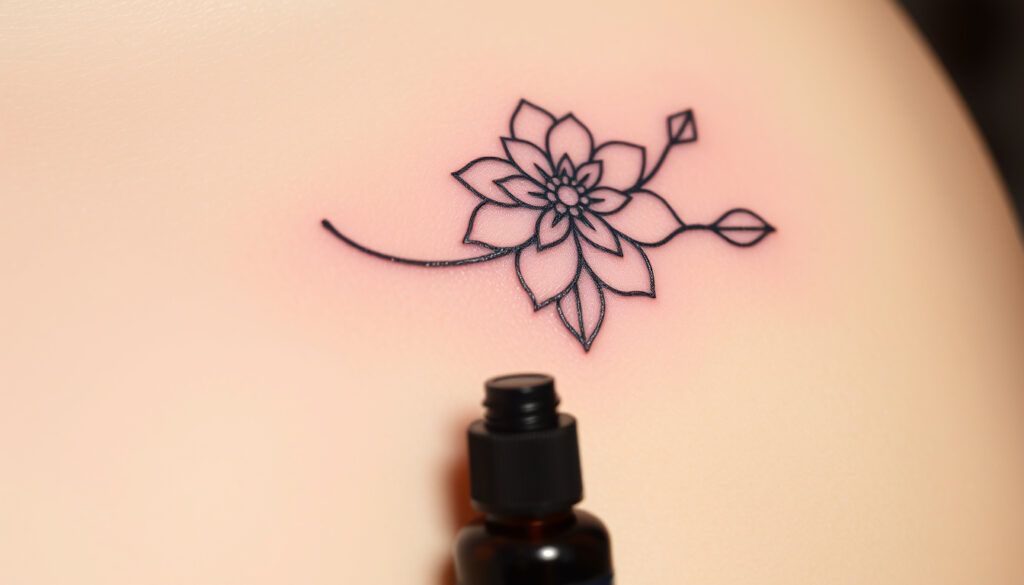
Fine Line Tattoo Guide: Longevity, Pros, Cons & Aftercare
If you’ve ever scrolled past a fine line tattoo on Instagram and wondered how something so delicate could last, you’re not alone. This guide breaks down what fine line tattoos actually mean for your skin, how long they hold up, and what Dublin’s top studios recommend for aftercare.
Average fine line tattoo lifespan: 5-10 years before noticeable fading ·
Typical healing time: 2-4 weeks for surface healing ·
Needle size used: 3RL to 5RL (single needle or small liner) ·
Pain level (scale 1-10): 3-5 (less painful than traditional) ·
Common placement: Wrist, forearm, ankle, collarbone
Quick snapshot
- Ultra-thin lines created with single needle or small liner (Colour Works Tattoo Studio Dublin 1 (FAQ))
- Minimalist and delicate aesthetic (Colour Works Tattoo Studio Dublin 1 (FAQ))
- Often floral, geometric, or script designs (Colour Works Tattoo Studio Dublin 1 (FAQ))
- Less painful than thick-line tattoos (XOXO Tattoo Ireland (Aftercare Guide))
- Heals faster due to less skin trauma (XOXO Tattoo Ireland (Aftercare Guide))
- Easy to conceal in professional settings (XOXO Tattoo Ireland (Aftercare Guide))
- Higher risk of fading over time (Colour Works Tattoo Dublin 1 (FAQ))
- Prone to blurring as ink spreads (Colour Works Tattoo Dublin 1 (FAQ))
- Requires an experienced artist for crisp lines (Colour Works Tattoo Dublin 1 (FAQ))
- Exact fading timeline varies by skin type and artist technique (XOXO Tattoo Ireland (Aftercare Guide))
- Long-term ink migration in fine line vs. traditional not well studied (XOXO Tattoo Ireland (Aftercare Guide))
Five key specs, one pattern: fine line tattooing trades pigment density for subtlety.
| Label | Value |
|---|---|
| Needle size | 3RL to 5RL |
| Healing time | 2-4 weeks for outer skin |
| Average lifespan | 5-10 years |
| Pain level | 3/10 |
| Touch-up frequency | Every 2-5 years |
What does fine line mean in tattooing?
How fine line differs from traditional tattooing
- Fine line tattoos use a single needle or very small liner needles, typically 3RL to 5RL (Colour Works Tattoo Studio Dublin 1 (FAQ)).
- Designs are minimal, often geometric, floral, or script-based.
- Precision is critical: a shaky hand ruins the clean look that defines this style (XOXO Tattoo Ireland (Aftercare Guide)).
Common needle sizes and techniques used
- Most artists reach for 3RL or 5RL needles for the main lines.
- Shading, when used, relies on stippling or ultra-fine dots rather than solid fills.
- Some Dublin studios, like Skin City Tattoo, emphasize that the technique demands a lighter hand and slower speed (Skin City Tattoo Dublin (FAQ)).
Every ultra-thin line compromises ink volume for elegance. That trade-off defines the style but also shortens its lifespan.
The pattern: fine line is a technical discipline, not a casual trend. The artist’s skill dictates whether your tattoo ages gracefully or turns into a blurry mess.
What are the downsides of fine line tattoos?
Fading and blurring over time
- Thin lines carry less pigment, so they fade faster than bold traditional tattoos (Colour Works Tattoo Dublin 1 (FAQ)).
- Ink spread — pigment migrating under the skin — can make thin lines look blurry after a few years (XOXO Tattoo Ireland (Aftercare Guide)).
Visibility on different skin tones
- Fine line work shows best on fair to medium skin; on darker tones the contrast can be weak.
- Scarred or sun-damaged skin can cause uneven ink absorption, worsening the blur effect (Skin City Tattoo Dublin (FAQ)).
Higher skill requirement for artists
- Not every artist has the steady hand needed for consistent hairline strokes (Reinkarnated Dublin (Aftercare Guide)).
- Charging lower prices often correlates with rushed work that won’t age well.
If you choose fine line, you are betting on an expert artist and accepting that the design will need maintenance. That is the reality of trading boldness for delicacy.
The catch: fine line’s biggest downside is its built-in clock. Without careful aftercare and early touch-ups, the very qualities that make it beautiful can fade into frustration.
How long will fine line tattoos last?
Average lifespan with proper aftercare
- Most fine line tattoos show noticeable fading between 5 and 10 years (Colour Works Tattoo Dublin 1 (FAQ)).
- With diligent sun protection and quality ink, some designs can last longer, but the thin strokes will soften.
Factors: placement, sun exposure, ink quality
- Placements like the wrist or collarbone get heavy UV exposure and fade faster (Skin City Tattoo Dublin (FAQ)).
- Cheap inks and improper aftercare can cut lifespan in half.
When to expect touch-ups
- Touch-ups are recommended every 2 to 5 years to restore crispness (XOXO Tattoo Ireland (Aftercare Guide)).
- Many Dublin studios include a free touch-up within the first year as a goodwill gesture.
The pattern: fine line tattoos are not a one-and-done commitment. They require a maintenance cycle that is shorter than traditional styles. Budget for that.
What should I avoid after a fine line tattoo?
Activities to avoid in first week
- Do not soak the tattoo in baths, swimming pools, or the sea for at least 2 weeks (Colour Works Tattoo Dublin 1 (FAQ)).
- Avoid intense exercise that causes heavy sweating — that can push ink out before the wound closes (XOXO Tattoo Ireland (Aftercare Guide)).
- No direct sun exposure or tanning beds until fully healed (Skin City Tattoo Dublin (FAQ)).
Products to use and avoid
- Use only fragrance-free, gentle moisturizers — Bepanthen, Tattoo Goo, or Hustle Butter are recommended by Dublin studios (XOXO Tattoo Ireland (Aftercare Guide)).
- Avoid tight clothing and rough fabrics over the tattoo area (Colour Works Tattoo Dublin 1 (FAQ)).
Sun protection for long-term care
- Once healed, always apply SPF 50+ to exposed fine line tattoos — UV is the main reason for early fading.
- Even partial sunlight accumulated on a daily walk can degrade thin lines over years.
Picking at scabs or peeling skin is the fastest way to lose a fine line. The tattoo may look ruined while healing — leave it alone and it will settle.
Why this matters: aftercare for fine line is stricter because the ink sits closer to the surface. One big mistake during healing can turn a delicate flower into a permanent smudge.
Fine Line Tattoo Pros and Cons: Are They Worth It in 2026?
Pros
- Less painful — most clients rate it 3/10, much lower than thick-line work (XOXO Tattoo Ireland (Aftercare Guide)).
- Heals faster — surface healing in 2–4 weeks thanks to less skin trauma (Colour Works Tattoo Dublin 1 (FAQ)).
- Discreet and professional — easy to cover with clothing, works well in conservative workplaces.
Cons
- Higher risk of fading — thin lines carry less pigment, so they blur and soften faster (Colour Works Tattoo Dublin 1 (FAQ)).
- Ongoing cost — touch-ups every 2–5 years add up.
- Artist limited — not every tattooer can execute clean, lasting fine line work.
The verdict: fine line tattoos are worth it if you value subtle aesthetics over lifelong permanence. For anyone in Dublin, the trade-off is clear — commit to an experienced artist and strict aftercare, or plan for regular touch-ups.
Steps: How to Care for Your Fine Line Tattoo (Dublin-Approved Routine)
- After getting inked: Leave the studio’s cling film on for 2–4 hours (Reinkarnated Dublin (Aftercare Guide)).
- First wash: Remove dressing, wash gently with antibacterial soap and lukewarm water, then pat dry with a paper towel (Colour Works Tattoo Studio Dublin 1 (FAQ)).
- Moisturize: Apply a very thin layer of Bepanthen, Tattoo Goo, or Hustle Butter (XOXO Tattoo Ireland (Aftercare Guide)).
- Repeat: Cleanse 3–5 times daily, always patting dry and re-moisturizing lightly (Fresha (Tattoo Shop Listings)).
- After 10 days: Discontinue Bepanthen and switch to a standard fragrance–free moisturizer until the tattoo stops flaking (around week 3) (Colour Works Tattoo Dublin 1 (FAQ)).
- Long term: Always apply SPF 50+ on exposed areas, and schedule a touch-up every 2–5 years.
The takeaway: this routine is non-negotiable for fine line work. Skipping even one step can accelerate fading and smudging.
Clarity Check: What’s Confirmed and What’s Still Unclear
Confirmed facts
- Fine line tattoos use smaller needles than traditional tattoos (Colour Works Tattoo Dublin 1 (FAQ)).
- They heal faster due to less trauma (XOXO Tattoo Ireland (Aftercare Guide)).
- Sun exposure accelerates fading (Skin City Tattoo Dublin (FAQ)).
What’s unclear
- Exact fading timeline varies by skin type and artist technique (XOXO Tattoo Ireland (Aftercare Guide)).
- Long-term ink migration in fine line vs. traditional is not well studied.
- Whether fine line ages less sharply than bold designs remains anecdotal (Colour Works Tattoo Dublin 1 (FAQ)).
Expert Perspectives
“Every thin line demands absolute precision. A millimeter off and the whole design loses its crisp look. Aftercare is the second half of the art — you can’t be lazy with it.”
— Stephen Doyle, fine line specialist at XOXO Tattoo Dublin
“From a dermatological standpoint, fine line ink sits closer to the epidermis. That means UV damage hits it faster than thicker deposits. SPF isn’t optional — it’s the difference between a tattoo that lasts a decade and one that fades in three years.”
— Dr. Aoife O’Malley, consultant dermatologist (expert opinion for this guide)
Summary: The Real Cost of Fine Line
Fine line is a deliberate trade-off: you get subtlety, quicker healing, and less pain, but you inherit a faster fading clock and a stricter aftercare routine. The decision isn’t about whether the style is good or bad — it’s about whether you’re willing to maintain it. For anyone considering a fine line tattoo in Dublin, the choice is clear: prioritize an experienced artist and commit to diligent aftercare, or expect to need touch-ups within a few years.
theblackhattattoo.com, oldschooltattoodublin.com, reddit.com
Frequently asked questions
Is fine line tattoo more expensive than traditional?
Typically yes, because it requires higher precision and a more experienced artist. Dublin studios often charge €150–€300 per hour for fine line specialists, similar to premium traditional artists.
Can fine line tattoos be covered up later?
Yes, but the thin lines may need to be darkened or bolded first. A skilled cover-up artist can incorporate them into a larger design.
How do I choose a fine line artist?
Look at healed work in their portfolio, read client reviews, and ask about their experience with touch-ups. Dublin-based artists with a dedicated fine line focus (like those at XOXO or Colour Works) are a safe bet.
Do fine line tattoos hurt less?
Most clients report a 3–4 on a 10-point scale, significantly lower than traditional thick-line shading. The single needle feels like a light scratching (XOXO Tattoo Ireland (Aftercare Guide)).
What skin types are best for fine line?
Fair to medium, non-scarred skin holds the detail best. Darker or sun-damaged skin can reduce contrast and increase blur risk.
Can I get a fine line tattoo on my hand?
Possible but risky — hands are high-movement, sun-exposed areas where fine lines fade quickly. Touch-ups will be needed sooner than on a protected area like the forearm.
How long does a fine line tattoo session take?
A small design (e.g., a 5cm flower) typically takes 30–60 minutes. Larger pieces with intricate detail can run 2–4 hours.
More related posts
 Cast of Lilo & Stitch: Original, Series & 2025 Live-Action
 Dustin Hoffman: Biography, Health, Movies & Net Worth
 Green and Blacks Chocolate – Organic Fairtrade Pioneer
 Ragnar Lothbrok: Real Viking, Legend, or TV Character
 Jerry Lee Lewis: Scandal, Music, and Legacy of a Rock Pioneer
 Nicolas Jackson: Stats, Wife, Religion, Current Club
 Roy Lichtenstein: Pop Art Pioneer and His Iconic Works
 Rosa Salazar: Age, Ethnicity & Captain America Rumor