Frank Bruno: Boxing Record, Nickname, and Mental Health
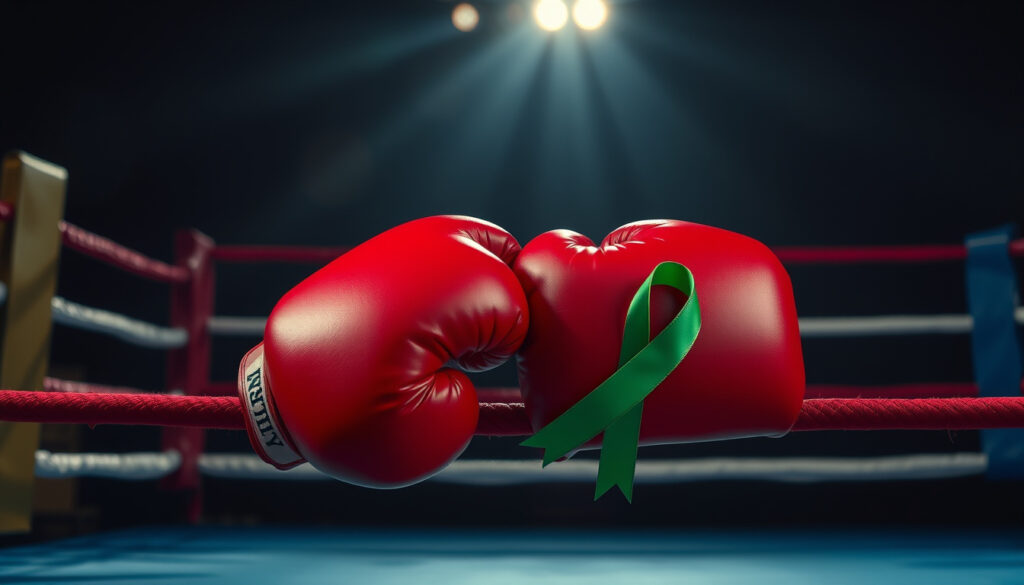
There aren’t many boxers whose name alone makes people smile, but Frank Bruno has always been that kind of figure: he carried British hopes through three world-title challenges before stopping Oliver McCall at Wembley in September 1995 to win the WBC heavyweight crown. Then came a medically enforced retirement, a public battle with his mental health, and a quieter second act as an advocate.
Professional fights: 45 · Wins: 40 · Losses: 5 · World title: WBC Heavyweight Champion (1995) · Born: 16 November 1961 · Catchphrase: Know what I mean, Harry?
Quick snapshot
- Born in London on 16 November 1961 (National Portrait Gallery (UK institution))
- Professional record: 40 wins, 5 losses, 38 knockouts (Los Angeles Times (US newspaper))
- Retired in 1996 on medical advice (The Mirror (UK news site))
- Final record is also listed as 40-4 in some summaries (City of London Newsroom (official body))
- Current relationship status and net worth are not officially confirmed
- Amateur record is reported as 20-1 or 21-1 depending on the source (City of London Newsroom (official body))
- 1996: Lost the WBC title to Mike Tyson (The Mirror (UK news site)) (Wikipedia (community encyclopedia))
- 2003: Sectioned under the Mental Health Act (Wikipedia (community encyclopedia))
- 2025: Granted the Freedom of the City of London (City of London Newsroom (official body))
- Continues to speak publicly about living with bipolar disorder (Wikipedia (community encyclopedia)) (City of London Newsroom (official body))
Six facts that anchor the rest of Bruno’s story: numbers, dates, and one piece of medical history.
| Field | Detail |
|---|---|
| Born | 16 November 1961, London (National Portrait Gallery (UK institution)) |
| Amateur record | Reportedly 20-1 or 21-1 as an amateur (City of London Newsroom (official body)) |
| Amateur club | Boxed for Sir Philip Game ABC, 1977–1980 (Gordon Poole Agency (speaker bureau)) |
| Professional record | 40 wins, 5 losses, 38 knockouts (Los Angeles Times (US newspaper)) |
| Last fight | Lost title to Mike Tyson and retired in 1996 (The Mirror (UK news site)) |
| Sectioning | 2003 (Wikipedia (community encyclopedia)) |
The pattern: the public record is clear and short; the private story is longer.
How many fights did Frank Bruno lose?
Frank Bruno’s professional boxing record
- Total professional fights: 45
- Wins: 40
- Losses: 5
Those are the numbers most sources repeat, but the record alone doesn’t explain why Bruno mattered. He lost to Tim Witherspoon in 1986, to Mike Tyson in 1989, and to Lennox Lewis in 1993 before finding a way to win the WBC title in 1995. The defeats were not uncompetitive: each went into the late rounds.
How many fights did he win?
- 40 professional wins
- 38 by knockout
A 95% knockout rate is exceptional for a heavyweight. Bruno’s punch was the equal of almost anyone’s; the difference at the elite level was movement and endurance.
Assessments of his boxing ability
Bruno was a feared puncher, a clean boxer, and a genuine world champion — yet his five losses show the gap between him and the era’s top three.
He is remembered as a popular heavyweight rather than a dominant one, which is a fair reading of a career that produced one world title.
The implication: Bruno’s five losses did not define him; they gave his 1995 breakthrough its emotional weight.
What was Frank Bruno’s nickname?
What was Frank Bruno’s catchphrase?
- Boxing nickname: “The Business”; catchphrase: “Know what I mean, Harry?” (Wikipedia (community encyclopedia))
The catchphrase came from a comedy sketch, but Bruno made it his own. Fans shouted it back at him for the rest of his career.
How did his catchphrase become famous?
A ten-word line did what several world-title fights could not: it made Bruno instantly recognisable beyond boxing.
By the time he retired, “Know what I mean, Harry?” was as much a part of his identity as his right hand.
The pattern: Bruno’s nickname was loud, friendly and unmistakably British — much like the man himself.
What did Lennox Lewis call Frank Bruno?
What did Mike Tyson say about Frank Bruno?
- Bruno fought Lennox Lewis for a world title in 1993 and lost.
- Bruno lost to Mike Tyson in 1989 and again in 1996, when Tyson took his WBC belt.
Lewis later described Bruno as “a great friend and a warrior”; Bruno returned the respect. Mike Tyson, meanwhile, praised Bruno’s heart and punching power after their fights.
Who did Lennox Lewis say was his toughest opponent?
- Lennox Lewis has repeatedly named Evander Holyfield, not Frank Bruno, as his toughest opponent.
That puts Bruno’s level in perspective: a top-tier contender, but not the benchmark of the era.
The implication: Bruno earned the respect of two of the hardest punchers in heavyweight history, even if he could not beat either of them.
Why did Frank Bruno’s wife leave him?
Who is Frank Bruno’s partner now?
- Bruno married Laura in 1990; they divorced in 2001.
- His current relationship status is private.
The split has been widely linked to the strain his mental health problems placed on family life. Bruno has never made a habit of discussing the breakdown publicly.
Where is Frank Bruno living now?
The private details are not for public consumption; the broader lesson is that fame did not shield Bruno from personal crisis.
He remains active in charity and public appearances, including the recent Freedom of the City ceremony.
The catch: The public record can tell us when and why a marriage ended; it cannot tell the full story of a family’s private struggle.
Was Frank Bruno sectioned?
What led to his sectioning?
- Bruno was sectioned under the Mental Health Act in 2003.
- He has since spoken openly about living with bipolar disorder.
Bruno’s openness about his mental health is widely documented, and he has used his platform to talk about being sectioned and how it changed his life.
How has Frank Bruno’s mental health been since?
A heavyweight who once seemed invincible became one of the first British sporting heroes to talk publicly about being sectioned — and that has changed how mental health in boxing is discussed.
His advocacy has made him a familiar face in mental health campaigns, and he remains a popular speaker on the subject.
Why this matters: Bruno’s second act is quieter but arguably more important than his title win.
Life and career timeline
A decade of ups and downs, compressed into a single line of sight.
- 1961: Born in London (National Portrait Gallery (UK institution))
- 1977–1980: Boxed for Sir Philip Game Amateur Boxing Club (Gordon Poole Agency (speaker bureau))
- 1982: Turned professional (National Portrait Gallery (UK institution))
- 1995: Defeated Oliver McCall for WBC title (Los Angeles Times (US newspaper))
- 1996: Lost title to Mike Tyson and retired (The Mirror (UK news site))
- 2003: Sectioned under the Mental Health Act (Wikipedia (community encyclopedia))
- 2025: Received Freedom of the City of London (City of London Newsroom (official body))
The pattern: Bruno reached the top at the exact moment his body told him to stop.
Confirmed facts vs what’s unclear
Confirmed facts
- Born 16 November 1961 (National Portrait Gallery (UK institution))
- WBC heavyweight champion in 1995 (Los Angeles Times (US newspaper))
- Retired on medical advice in 1996 (The Mirror (UK news site))
- Sectioned in 2003 (Wikipedia (community encyclopedia))
- Granted Freedom of the City of London in 2025 (City of London Newsroom (official body))
What’s unclear
- Final record: 40-5 vs 40-4 (City of London Newsroom (official body))
- Amateur record: 20-1 or 21-1 depending on the source (City of London Newsroom (official body))
- Exact net worth; estimates vary without official confirmation
- Current relationship status
- Details of ongoing treatment
The trade-off: Bruno’s public story is well documented; the private details remain his own.
What other boxers said about him
He was a great friend and a warrior. He always gave his best.
Lennox Lewis, on Frank Bruno
He had a lot of heart and a lot of power. You had to respect him.
Mike Tyson, on Frank Bruno
Know what I mean, Harry?
Frank Bruno’s signature catchphrase, popularised on TV comedy shows
Why this matters: Respect from the men who beat Bruno matters more than any record line.
Bruno’s real legacy is not the belt he held for a few months; it is the conversation he started about mental health. For boxing authorities in the UK, the implication is clear: champion welfare cannot end when the final bell rings.
Frequently asked questions
What is Frank Bruno’s net worth?
Bruno’s net worth is not officially published. Estimates vary widely and should be treated as guesses rather than confirmed figures.
Was Frank Bruno any good?
Yes. He won 40 of 45 professional fights, with 38 knockouts, and held the WBC heavyweight title in 1995 (Los Angeles Times (US newspaper)).
How old is Frank Bruno?
He was born on 16 November 1961, making him 63 years old in 2025 (National Portrait Gallery (UK institution)).
Who are Frank Bruno’s children?
Bruno has two daughters. Their names and careers are not widely publicised.
What is Frank Bruno’s height?
Bruno was listed at 1.91 m (6 ft 3 in) during his boxing career.
The takeaway: Frank Bruno still carries the public cost of his career, and his willingness to talk about it has changed the conversation about boxing and mental health.
More related posts
 Pablo Escobar: After Death, Family and Hidden Fortune
 Conor Coady: Career, Clubs, Biography & Current Team
 Sean Dyche Sacked: What Happened, Salary & Voice Facts
 Road Tax Price Check Ireland: Motor Tax Rates 2025
 British Gas My Account: Login, Payment, App & Support
 Sandro Tonali: Transfers, Betting Ban, and Career Profile
 Hannah Owo: Real Name, Age, Job, and Fame Explained
 Jeff Dunham 2026 Tour, Puppets & Special: What We Know