Falkland War: Causes, Submarines, and Who Won in 1982
Four decades on, the 1982 Falklands War still surfaces in conversations in Buenos Aires, London, and on the islands themselves. The 74-day conflict ended with a British military victory on 14 June 1982 (Encyclopaedia Britannica (historical reference)), but the sovereignty dispute behind it never closed.
Start date: 2 April 1982 ·
End date: 14 June 1982 ·
Result: British victory; Argentine surrender ·
Fatalities: 255 British military, 649 Argentine military, 3 Falkland Islanders ·
Current status: British Overseas Territory; Argentina still claims sovereignty
Quick snapshot
- Argentina invaded the Falklands on 2 April 1982 and quickly overcame the small Royal Marines garrison at Stanley (Royal British Legion (veterans’ charity)).
- British forces recaptured South Georgia, landed at San Carlos, and accepted the Argentine surrender at Stanley on 14 June (Encyclopaedia Britannica (campaign account)).
- The UK won the military conflict and restored its administration of the islands (National Army Museum (UK military archive)).
- The sinking of General Belgrano outside the exclusion zone remains one of the war’s most debated decisions (Encyclopaedia Britannica (campaign account)).
- The legal clash between Argentina’s sovereignty claim and the islanders’ self-determination is still unresolved (Encyclopaedia Britannica (concise account)).
- Whether diplomacy could have prevented the invasion is counterfactual (Wikipedia’s background account).
- UN Security Council Resolution 502 demanded withdrawal and a diplomatic solution on 3 April 1982 (Wikipedia’s background account).
- The British task force sailed on 5 April and made the 8,000-mile journey south (National Army Museum (UK military archive)).
- HMS Conqueror sank the cruiser ARA General Belgrano on 2 May 1982, killing 323 people (Royal British Legion (veterans’ charity)).
- The islands remain a British Overseas Territory, and Argentina continues to press its claim (Encyclopaedia Britannica (historical reference)).
- The UK says the islanders’ right to self-determination is decisive (Encyclopaedia Britannica (historical reference)).
- Argentina still calls the islands Islas Malvinas, so even the name of the territory is contested (Encyclopaedia Britannica (historical reference)).
Key facts at a glance
Seven rows capture the essentials, and the pattern is the real story: the war lasted 74 days, but the dispute behind it did not end with the surrender.
| Label | Value |
|---|---|
| Conflict | Falklands War, called the Malvinas War in Argentina (Encyclopaedia Britannica (historical reference)) |
| Start | 2 April 1982 (Encyclopaedia Britannica (historical reference)) |
| End | 14 June 1982 (National Army Museum (UK military archive)) |
| L | Falkland Islands, South Georgia, and the surrounding South Atlantic (Encyclopaedia Britannica (historical reference)) |
| Combatan ts | United Kingdom vs Argentina (National Army Museum (UK military archive)) |
| Fatalities | 255 British military, 649 Argentine military, 3 Falkland Islanders (Royal British Legion (veterans’ charity)) |
| Result | British victory and Argentine surrender; the sovereignty claim by Argentina remains (Royal British Legion (veterans’ charity)) |
Why did Britain fight over the Falklands?
The short answer is that a military government in Buenos Aires invaded, and London refused to let the immigration stand. The longer answer involves a claim Argentina had pressed for more than a century.
What was the sovereignty dispute about?
- Argentina had claimed the Falkland Islands since the early nineteenth century; Britain seized them in 1833 and rejected the claim (Encyclopaedia Britannica (historical reference)).
- The dispute had been the subject of prolonged diplomatic negotiations before 1982 (Encyclopaedia Britannica (concise account)).
- The invasion was not a first resort; it came after those talks had failed to produce a settlement (Wikipedia’s background account).
The Argentine junta that ordered the invasion was in deep political trouble. Economic mismanagement and human-rights criticism had eroded its standing, and the junta calculated that reclaiming the islands would generate patriotic support (Encyclopaedia Britannica (historical reference)).
The immediate trigger was small: a dispute on South Georgia involving Argentine salvage workers who raised the Argentine flag. That flashpoint gave Buenos Aires a pretext to escalate into a full military landing (Encyclopaedia Britannica (historical reference)).
Why did the Falkland Islands matter to Britain?
- The islands were a British Overseas Territory with a population that identified as British, and the British government treated the invasion as an illegal occupation (National Army Museum (UK military archive)).
- The islanders’ British identity and their right to self-determination were central to Britain’s stated reason for action (Encyclopaedia Britannica (historical reference)).
- A task force sailed on 5 April 1982, near 8,000 miles, using Ascension Island as a staging point (National Army Museum (UK military archive)).
That distance is the part most people underestimate. Britain was not defending a nearby colony; it was projecting force across the entire South Atlantic to protect a small island community.
For London, the stakes were also political. A failure to respond would have told other governments that British territory could be taken without consequence, and it would have destroyed the government’s credibility at home (National Army Museum (UK military archive)).
What did Margaret Thatcher say about the Falklands War?
Thatcher’s public line stayed consistent: the islands were British, the islanders wanted to stay British, and aggression had to fail. The war was framed as a test of that principle, not a colonial land grab.
Her most quoted moment of the war came late in April. When South Georgia was recaptured on 25 April, she told reporters outside Downing Street: “Rejoice, rejoice.” (Encyclopaedia Britannica (campaign account)). In Parliament, she described the invasion as an attack on British territory and its people, and insisted the islands would be restored to British administration (National Army Museum (UK military archive)).
The pattern: a dictatorship under domestic pressure chose a foreign adventure, and a British government with its own reasons to resist called the bet. That mix produced a war neither side had fully prepared to fight.
Was Argentina the aggressor in the Falklands War?
What happened on 2 April 1982?
- Argentine military forces landed on the Falkland Islands on 2 April 1982 (Encyclopaedia Britannica (historical reference)).
- The small Royal Marines garrison at Stanley was rapidly overcome (Encyclopaedia Britannica (historical reference)).
- The landing followed decades of dispute, but it was a unilateral military invasion, not an act of self-defense (Encyclopaedia Britannica (historical reference)).
The planning was political, not defensive. The junta used the long-standing sovereignty dispute as the justification, but the decision was made in Buenos Aires and carried out by force.
Did Argentina invade first?
- Yes — the first military move in 1982 was Argentina’s landing on 2 April (Encyclopaedia Britannica (historical reference)).
- Before that, the dispute had been conducted through diplomacy rather than combat (Encyclopaedia Britannica (concise account)).
- The escalation on South Georgia came days earlier, when Argentine workers raised the Argentine flag on British-controlled territory (Encyclopaedia Britannica (historical reference)).
The flag incident is often described as the spark, and the invasion as the fire. Without that small provocation, the junta would have had no immediate pretext for a landing.
What did the UN Security Council do?
- The Security Council adopted Resolution 502 on 3 April 1982 (Wikipedia’s background account).
- It called for an immediate end to hostilities, the withdrawal of Argentine forces, and a diplomatic solution (Wikipedia’s background account).
- The vote gave Britain a legal foundation for describing the invasion as aggression and for sending the task force (Encyclopaedia Britannica (historical reference)).
The speed of the UN vote mattered. Resolution 502 was adopted one day after the invasion, which left Argentina diplomatically isolated and Britain able to frame its military response as enforcement of an international demand.
Who rightfully owns the Falklands?
Are the Falklands British or Argentine?
- The Falkland Islands are currently a British Overseas Territory (Encyclopaedia Britannica (historical reference)).
- Argentina still calls them Islas Malvinas and claims sovereignty (Encyclopaedia Britannica (historical reference)).
- The UK says the islanders’ right to self-determination is decisive; Argentina stresses territorial integrity and anti-colonial principles (Encyclopaedia Britannica (concise account)).
The disagreement is older than the war. Argentina’s claim dates from the early nineteenth century, while Britain’s occupation dates from 1833, and neither side has ever changed the other’s mind (Encyclopaedia Britannica (historical reference)).
What did the Falkland Islands referendum show?
- In 2013, the islanders voted overwhelmingly to keep the Falklands as a UK Overseas Territory (Encyclopaedia Britannica (historical reference)).
- The result strengthened London’s argument that the people who live there want to remain British (Encyclopaedia Britannica (historical reference)).
Argentina rejected the referendum as a UK-run exercise, arguing that sovereignty cannot be decided by a local vote alone. That is the core of the dispute today: one side says the islanders decide, the other says territorial integrity overrides local preference (Encyclopaedia Britannica (concise account)).
What’s happening in the Falklands today?
- The islands remain under British administration with a locally elected government (Encyclopaedia Britannica (historical reference)).
- Argentina continues to press its claim diplomatically, including at the UN (Encyclopaedia Britannica (historical reference)).
- London’s position is that the islanders’ wishes are the only test that matters (Encyclopaedia Britannica (concise account)).
The war settled who controls the islands, but it did not settle who holds a legitimate claim to them. That is why the question still appears in news headlines whenever Argentina’s politics shift.
Who won the Falkland War?
How did Britain retake the Falklands?
- British forces recaptured South Georgia on 25 April 1982, securing a forward base (Encyclopaedia Britannica (campaign account)).
- Troops landed at San Carlos Water on 21 May and then fought across East Falkland (Royal British Legion (veterans’ charity)).
- The land campaign ended with the encirclement and surrender of the Argentine garrison at Stanley (National Army Museum (UK military archive)).
The campaign was not a quick win. After the landing at San Carlos, Argentine aircraft and missiles attacked the fleet, and ground battles such as Goose Green were close-run events before British forces reached Stanley (National Army Museum (UK military archive)).
Why did Argentina lose the Falklands War?
- Argentine forces on the islands could not be resupplied once British submarines and ships enforced the exclusion zone (Encyclopaedia Britannica (campaign account)).
- The Argentine navy withdrew from the conflict after the loss of General Belgrano, leaving the garrison isolated (Encyclopaedia Britannica (campaign account)).
- British forces had the training and logistics to advance across rough terrain and surround the defenders at Stanley (National Army Museum (UK military archive)).
Geography also worked against Argentina. The islands sit close to the Argentine mainland, but the garrison was far from reliable supply lines and could not sustain a long campaign.
When did Argentina surrender?
- Argentina surrendered on 14 June 1982 (Encyclopaedia Britannica (campaign account)).
- The surrender was signed by Argentine commander General Mario Menéndez (Encyclopaedia Britannica (campaign account)).
- The conflict effectively ended with British forces in control of Port Stanley (National Army Museum (UK military archive)).
The surrender came 74 days after the invasion — a short war by any standard, but one that produced decisive political consequences for both governments.
What were the casualties in the Falklands War?
- 255 British military personnel died (Royal British Legion (veterans’ charity)).
- 649 Argentine military personnel died (Royal British Legion (veterans’ charity)).
- 3 Falkland Islanders were killed (Royal British Legion (veterans’ charity)).
The single largest loss of life came on 2 May, when HMS Conqueror sank the cruiser ARA General Belgranowith the deaths of 323 sailors (Royal British Legion (veterans’ charity)). The worst British loss was HMS Sheffield, struck by an Argentine Exocet missile on 4 May, killing 20 crew members (Royal British Legion (veterans’ charity)).
The count that matters: more than 900 people died in ten weeks, and the war they died in did not end the argument it was fought over.
The pattern: Britain achieved a clear military outcome, but the unresolved sovereignty question ensures the war’s legacy remains contested.
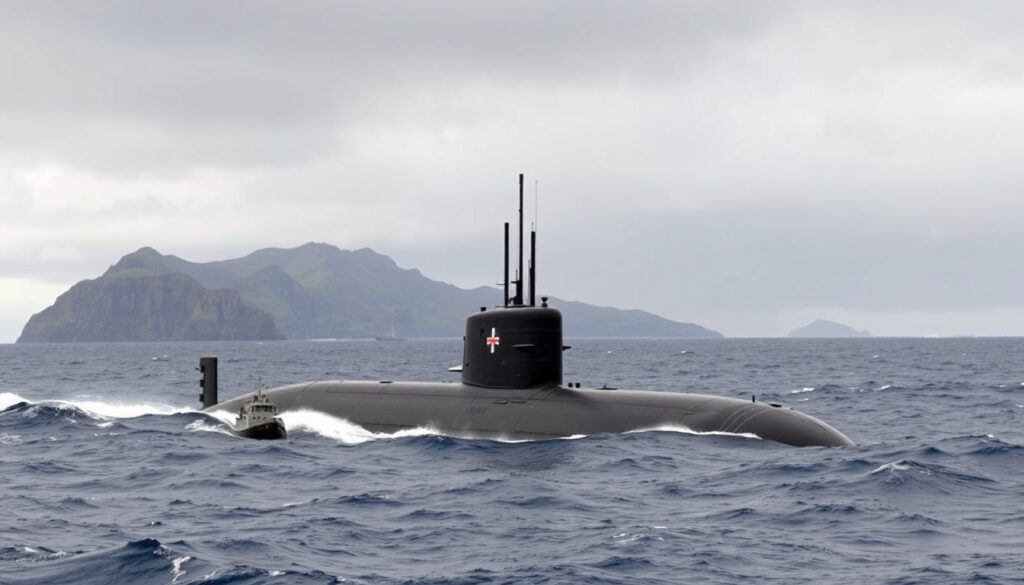
Which submarines were in the Falklands War?
What role did British submarines play?
- Royal Navy nuclear-powered submarines enforced the maritime exclusion zone around the Falklands (Encyclopaedia Britannica (campaign account)).
- They were deployed to cut off Argentine naval movements and protect the approaching task force (Encyclopaedia Britannica (campaign account)).
- British boats included HMS Conqueror, HMS Spartan, HMS Splendid, and HMS Valiant (Encyclopaedia Britannica (campaign account)).
Submarines gave Britain a way to threaten the Argentine navy before ground forces arrived. A surface fleet could be tracked by aircraft; a nuclear submarine could not.
Why was the ARA General Belgrano sunk?
- HMS Conqueror sank the cruiser ARA General Belgrano on 2 May 1982, killing 323 people (Royal British Legion (veterans’ charity)).
- The sinking happened outside the British-declared exclusion zone, and it remains one of the war’s most disputed decisions (Encyclopaedia Britannica (campaign account)).
- The strategic effect was real: the Argentine surface fleet effectively withdrew from the campaign (Encyclopaedia Britannica (campaign account)).
The dispute is not about whether the ship was a military target; it was a warship. The dispute is about whether it was a justified target at that moment, in that position, given the human cost.
The Belgrano decision is the war’s hardest judgment. Britain gained naval control of the South Atlantic, but at the price of the war’s largest single loss of life and a controversy Argentina still cites today.
Did Argentina’s submarines see action?
- Argentina operated conventional diesel-electric submarines, including ARA San Luis (Encyclopaedia Britannica (campaign account)).
- ARA San Luis launched torpedoes against British ships but scored no confirmed sinking (Encyclopaedia Britannica (campaign account)).
- The contrast in propulsion mattered: Britain’s nuclear boats could stay submerged for long periods, while Argentina’s conventional boats had to surface or snorkel, making them easier to detect (Encyclopaedia Britannica (campaign account)).
Argentina’s submarine force was a threat but not a decisive one. The war at sea was dominated by British submarines, Argentine aircraft, and the Exocet missile.
Why did NATO not defend the Falklands?
What is NATO’s Article 5?
- NATO’s Article 5 is the alliance’s collective-defense clause: an armed attack on one member is treated as an attack on all members (Wikipedia’s background account).
- The clause applies within NATO’s defined treaty area, and the Falklands are in the South Atlantic, far outside it (Wikipedia’s background account).
- As a result, NATO as an organization took no part in the conflict.
The distinction matters because Britain was a NATO member. The alliance’s abstention did not mean Britain was alone; it meant the war fell outside NATO’s rules and outside its command structure.
Did the UK receive help from the US?
- The United States initially tried to mediate the dispute (Encyclopaedia Britannica (campaign account)).
- When mediation failed, Washington provided material and intelligence support to Britain (Encyclopaedia Britannica (campaign account)).
- That support did not make NATO a participant, but it gave Britain a decisive edge in logistics and targeting.
The US role is a reminder that alliance mechanics and alliance politics are different. NATO stayed out of the war, while Britain’s closest NATO ally quietly helped it win.
NATO’s shields did not extend to the Falklands, yet the United States — the alliance’s most important member — ended up supporting Britain anyway. For Argentina, the lesson was that formal neutrality could still mean strategic defeat.
Who helped Argentina in the Falklands War?
- Argentina received no military coalition like the British task force (Wikipedia’s background account).
- Its support was mainly diplomatic, with expressions of sympathy from governments that shared its claim to the Malvinas (Wikipedia’s background account).
- No outside military force joined the fighting on Argentina’s side.
The asymmetry was total. Britain assembled a naval task force, used Ascension Island as a base, and received support from the United States. Argentina fought with its own military and its own conviction, but without allies that could change the balance of the war.
Why this matters: the NATO question is really about what the war was not. It was not a Cold War proxy fight, not an alliance quarrel, and not a conflict NATO could frame as its own. It was a bilateral sovereignty war with global bystanders.
The implication: NATO’s institutional limits did not prevent the US from tilting the balance, highlighting the gap between alliance rules and political alignment.
Could the UK have lost the Falklands War?
How close was the war?
- The task force was nearly 8,000 miles from home and had to operate without continuous air cover during the landings (Encyclopaedia Britannica (campaign account)).
- Argentine aircraft attacked the fleet repeatedly, and Exocet missiles proved capable of sinking modern British warships (Royal British Legion (veterans’ charity)).
- British commanders had no guarantee of resupply at that distance; the campaign depended on ships that could be lost (National Army Museum (UK military archive)).
The margin was real. If the landings at San Carlos had been stopped on the beach, or if the Argentine air force had concentrated its attacks differently, the campaign could have stalled.
What British ships were lost?
- HMS Sheffield was struck by an Exocet on 4 May 1982; 20 crew members died (Royal British Legion (veterans’ charity)).
- HMS Coventry was sunk during the campaign, and the container ship Atlantic Conveyor was also lost with vital helicopters aboard (Royal British Legion (veterans’ charity)).
The loss of Atlantic Conveyor was strategically painful because it carried helicopters needed to move troops and supplies across East Falkland. British commanders had to adjust the plan, but they did not stop the advance.
What would a British defeat have meant?
- Argentine forces would have remained in control of the islands, at least for the immediate term (Encyclopaedia Britannica (campaign account)).
- A failed campaign would have been a political disaster for the Thatcher government and a triumph for the Argentine junta (Encyclopaedia Britannica (historical reference)).
- The sovereignty dispute would have continued, but from a very different balance of power (Encyclopaedia Britannica (concise account)).
A British defeat would not have ended the argument; it would have inverted it. Argentina would have held the islands by force and by victory, and the international pressure to negotiate would have fallen on London instead of Buenos Aires.
For the British task force, the risk of failure was not theoretical. A navy operating 8,000 miles from home, short of air cover and losing ships to Exocets, could have been stopped at several points. The victory was real; so was the uncertainty that came with it.
Falklands War timeline
The sequence below runs from invasion to surrender, with the dates that still anchor every account of the conflict.
- — Argentina invades the Falkland Islands (Encyclopaedia Britannica (historical reference)).
- — UN Security Council adopts Resolution 502 demanding withdrawal (Wikipedia’s background account).
- — Britain sends the naval task force to the South Atlantic (National Army Museum (UK military archive)).
- — British forces recapture South Georgia (Encyclopaedia Britannica (campaign account)).
- — HMS Conqueror sinks ARA General Belgrano (Royal British Legion (veterans’ charity)).
- — British forces land at San Carlos Water (Royal British Legion (veterans’ charity)).
- — Battle of Goose Green ends in a British victory (National Army Museum (UK military archive)).
- — Argentine forces surrender at Stanley; the conflict ends (Encyclopaedia Britannica (campaign account)).
The pattern: in eleven weeks, the conflict moved from invasion to UN condemnation to naval blockade to ground war to surrender. Diplomacy had failed for decades; force settled the question in 74 days.
What’s confirmed and what’s still disputed
What’s confirmed
- Argentina invaded the Falklands on 2 April 1982 (Encyclopaedia Britannica (historical reference)).
- Argentina surrendered on 14 June 1982 (Encyclopaedia Britannica (campaign account)).
- The UK won the military conflict and restored British administration (National Army Museum (UK military archive)).
- The islands are today a British Overseas Territory (Encyclopaedia Britannica (historical reference)).
What’s still disputed
- Some details of U.S. intelligence support to Britain remain only partially documented (Encyclopaedia Britannica (campaign account)).
- The legal weight of Argentina’s sovereignty claim versus the islanders’ self-determination is unresolved (Encyclopaedia Britannica (concise account)).
- The sinking of General Belgrano outside the exclusion zone is still debated as a decision (Encyclopaedia Britannica (campaign account)).
- Whether diplomacy could have prevented the war is counterfactual (Wikipedia’s background account).
- Argentina continues to regard the islands as Islas Malvinas, so even the name of the territory is contested (Encyclopaedia Britannica (historical reference)).
What this means: the confirmed list is short and consistent across sources; the disputed list is where the politics still live.
Voices from the Falklands War
An immediate cessation of hostilities and the immediate withdrawal of all Argentine forces from the Falkland Islands.
UN Security Council Resolution 502, adopted 3 April 1982, as summarized by Wikipedia’s background account.
Rejoice, rejoice.
Margaret Thatcher, British prime minister, on the recapture of South Georgia, 25 April 1982, as recorded in Encyclopaedia Britannica (campaign account).
The islands are British, the islanders want to remain British, and an illegal occupation cannot be allowed to stand.
British government’s stated position in 1982, as summarized by National Army Museum (UK military archive).
The Malvinas are Argentine, and their recovery is a matter of national honour.
Position of Argentina’s military government, as summarized by Encyclopaedia Britannica (historical reference).
The voices above show how far apart the two sides were — and still are.
Where the war left the Falklands
The 1982 war gave Britain a decisive military victory, the islands a settled security situation, and Argentina a wound that never fully healed. For the islanders, the result meant a future as a British Overseas Territory with self-government and protection — a future they have since voted to keep. For Argentina’s government, the road ahead is narrow: press the sovereignty claim again and face the same islander majority and the same British resolve, or accept the 1982 outcome and the referendum that confirmed it — a choice between keeping the dispute alive and closing it for good.
Frequently asked questions
How long did the Falklands War last?
The conflict lasted 74 days, from 2 April 1982 to 14 June 1982 (Encyclopaedia Britannica (historical reference)).
Where are the Falkland Islands located?
They sit in the South Atlantic Ocean, roughly 8,000 miles from the United Kingdom (Encyclopaedia Britannica (campaign account)).
What is the capital of the Falkland Islands?
Stanley, on East Falkland, is the capital and the main settlement; it was the site of the Argentine surrender in 1982 (Encyclopaedia Britannica (campaign account)).
What weapons were used in the Falklands War?
Argentine Exocet anti-ship missiles sank British ships, British nuclear-powered submarines enforced the exclusion zone, and the surface fleet carried the invasion force across the Atlantic (Royal British Legion (veterans’ charity)).
Did the Falklands War involve nuclear weapons?
No. The only nuclear element was propulsion: Britain’s submarines were nuclear-powered, but neither side used nuclear weapons in the conflict (Encyclopaedia Britannica (campaign account)).
Have the UK and Argentina fought over the Falklands since 1982?
No. There has been no new war, but Argentina still claims sovereignty and the dispute remains diplomatically active (Encyclopaedia Britannica (historical reference)).
What was the Falklands War called in Argentina?
It is called the Malvinas War, in reference to the Islas Malvinas, the Argentine name for the Falkland Islands (Encyclopaedia Britannica (historical reference)).
What happened to Argentina’s military junta after the war?
The defeat discredited the military government and accelerated Argentina’s return to democracy (Encyclopaedia Britannica (historical reference)).
More related posts
 KT Tunstall: Biography, Partner, Net Worth & Chinese Heritage
 Kylie Page death: Fentanyl overdose confirmed at age 28
 Chester Bennington Death: Cause, Last Words, Legacy
 Maiden Names: Definition, Examples, and How They’re Used
 Cast of Lilo & Stitch: Original, Series & 2025 Live-Action
 Stephanie Niznik: Life, Everwood Role, and Untimely Death
 Dirk Bogarde: Life, Love, and Legacy
 Loft Beds Ireland: Complete Buyer’s Guide for Adults