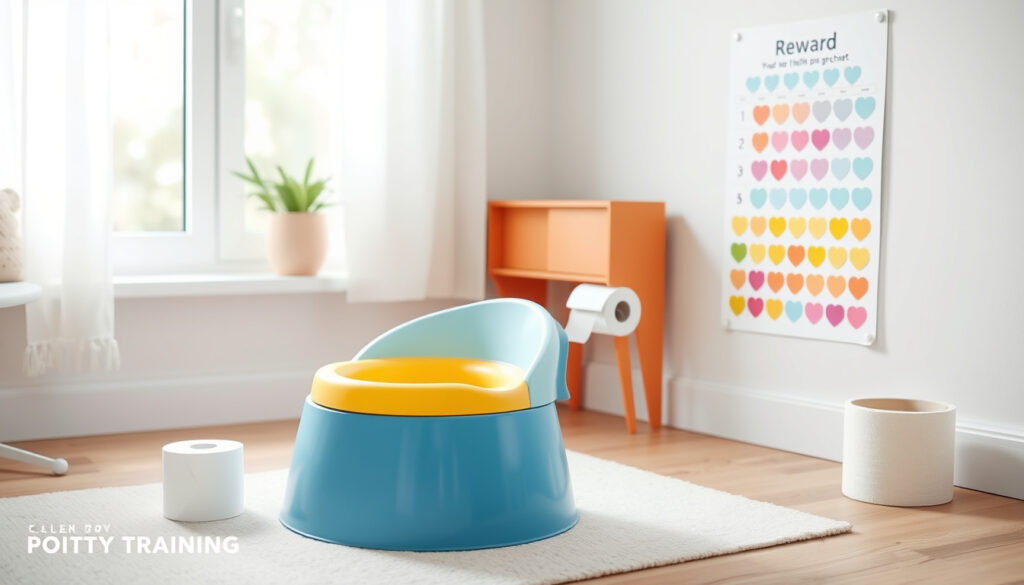
Potty Training: Age, Methods, and Essential Tips
Anyone who has watched a toddler insist on the exact same blue cup for three straight days already suspects that potty training isn’t really about the toilet. It’s about readiness — a constellation of physical, behavioral, and emotional cues that tell you when your child is actually prepared to learn. Most children signal that readiness somewhere between 18 and 24 months, though the range stretches wider than many parents expect, and understanding those signals can be the difference between a smooth transition and a frustrating standoff.
Readiness window: 18–24 months (Mayo Clinic) ·
Popular method: 3-day intensive approach ·
Alternative method: 10-10-10 rule ·
Gender difference (avg): Girls finish 2–3 months earlier than boys
Quick snapshot
- Children show readiness between 18–24 months (Mayo Clinic Press)
- Staying dry for 2+ hours is a key readiness sign (American Academy of Pediatrics)
- Girls typically finish training 2–3 months earlier than boys (Johns Hopkins Medicine)
- Optimal age varies by child’s individual development (Raising Children Network)
- No universally superior method exists (Mayo Clinic)
- Walk to and sit on potty, stay dry up to 2 hours, pull pants down and up (Mayo Clinic Press)
- Interest in toilet, asking for diaper change, copying adults (Johns Hopkins Medicine)
- Choose method based on child’s readiness and family schedule (Mayo Clinic)
- Expect hardest days around day 2 or 3 of intensive training (American Academy of Pediatrics)
Key facts from the evidence summarise the essentials.
| Metric | Detail |
|---|---|
| Training duration | 3–4 days |
| Average start age | 18–24 months |
| Gender difference | Girls 2–3 months earlier |
| Red flags | Pain, fear, resistance |
| Hardest day | Day 2 or 3 |
| Dryness readiness signal | Stays dry for 2+ hours |
| Bowel movement readiness | Regular, soft, formed stools |
| Physical readiness | Can walk, sit, pull pants up/down |
What age is best to potty train?
Pediatric experts agree that age alone is a poor starting point. The American Academy of Pediatrics (AAP) through its HealthyChildren.org portal emphasises that children should not be forced to start before they show readiness signals. Those signals — staying dry for at least two hours during the day, following simple instructions, showing discomfort with wet diapers — typically emerge between 18 and 24 months, but the timing varies significantly.
Pushing a 16-month-old who isn’t ready can backfire into power struggles that last months longer than necessary. The AAP’s core warning — don’t start before the signs are there — is the single most evidence-backed piece of advice in the entire potty training conversation.
At what age should a toddler be fully potty trained?
- Most children achieve full daytime training by age 3 (National Diaper Bank Network)
- The average potty-training age range falls between 18 months and 3 years (National Diaper Bank Network)
- Developmental readiness — including staying dry for up to two hours and pulling pants down independently — is a better predictor than calendar age (Mayo Clinic Press)
The pattern across major health authorities is consistent: the “right” age is when the child is ready, not when a chart says so. Raising Children Network, a government-funded Australian parenting resource, notes that some children show readiness as early as 18 months and others not until after age 2, and both are within the normal range.
Is age 3 too late to potty train?
- Starting at age 3 is not too late — many children are fully trained by this age (National Diaper Bank Network)
- A child who hasn’t shown readiness by age 3 may simply need more time or a different approach (American Academy of Pediatrics)
- Later starters sometimes train faster because they have better physical and cognitive control (Mayo Clinic)
The implication: Age 3 is not a deadline — it’s well within the typical finishing window. Parents who wait until age 3 aren’t behind; they’re actually aligned with the broader developmental norm.
What is the 3 day potty training rule?
Pediatric guidance from multiple authorities converges on a short list of clear principles. The NHS Tayside continence service advises giving encouragement and praise for efforts, staying calm when accidents happen, and avoiding prompting too often — because hovering creates anxiety.
What is the 10, 10, 10 rule for potty training?
- 3-day method involves intensive focus on potty training over three consecutive days (Mayo Clinic)
- 10-10-10 rule suggests 10 minutes on potty, 10 minutes off, 10 minutes play (Raising Children Network)
- Success depends on child’s readiness and consistency (Mayo Clinic)
What is the most successful way to potty train?
- Praise-based approaches outperform punitive methods across all major studies (Raising Children Network)
- Consistency — the same routine every time — matters more than which routine is chosen (Johns Hopkins Medicine)
The trade-off: The 3-day method demands high short-term intensity; the 10-10-10 rule offers structure but can feel robotic. Neither is “best” in a vacuum — the family’s schedule and the child’s temperament are the real variables.
A parent who picks the 3-day method but can’t actually stay home for three consecutive days sets both themselves and the child up for failure. The Mayo Clinic is clear: the best method is the one the family can execute consistently.
The pattern: All major health authorities converge on praise, consistency, and removing pressure. The choice of technique matters far less than the commitment to follow it.
What is a red flag for potty training?
Not every struggle is a red flag, but certain signs warrant a step back. The Johns Hopkins Medicine pediatric team identifies pain, fear, or persistent resistance as signals that the child may not be ready or that something deeper is going on. Physical discomfort during urination or bowel movements, especially if the child starts holding stool, can quickly lead to constipation cycles.
What’s the hardest day of potty training?
- Day 2 or day 3 is often the hardest — the novelty has worn off and the reality of the routine sets in (American Academy of Pediatrics)
- Accidents peak during this window, which can test parental patience (Raising Children Network)
How to potty train an unwilling child?
- Stop and wait a few weeks or months before trying again (American Academy of Pediatrics)
- Use positive reinforcement for any small success (Raising Children Network)
- Let the child see older siblings or parents using the toilet — modeling is a powerful tool (Johns Hopkins Medicine)
What this means: Resistance isn’t failure — it’s information. A child who says no loudly is telling you they’re not ready, not that they’re being difficult. The most evidence-backed response is to pause, not push.
Do and don’ts of potty training?
Pediatric guidance from multiple authorities converges on a short list of clear principles.
| Do | Don’t |
|---|---|
| Use praise and positive language for every attempt (Raising Children Network) | Punish or shame accidents — they are part of the learning process (American Academy of Pediatrics) |
| Stay consistent with the same routine every time (Mayo Clinic) | Start before the child shows readiness signs (American Academy of Pediatrics) |
| Offer small rewards for successful toilet use (Johns Hopkins Medicine) | Start multiple methods at once — pick one and commit (Mayo Clinic) |
The pattern: Every major health source — from the AAP through to NHS Tayside — converges on the same two principles: create safety with praise and consistency, and remove pressure entirely. The do’s build confidence; the don’ts protect against setbacks.
Which gender is easier to potty train?
The question is one of the most common in parenting forums, and the data offers a nuanced answer. Johns Hopkins Medicine notes that girls often train earlier than boys, by an average of 2 to 3 months. But the Mayo Clinic cautions that individual variation is larger than the gender difference — a boy who is ready at 22 months may train faster than a girl who isn’t ready until 28 months.
- Girls typically finish training 2–3 months earlier on average (Johns Hopkins Medicine)
- The range within each gender is wider than the gap between them (Mayo Clinic)
- Approach should be tailored to the individual child, not the gender (Raising Children Network)
What this means: The gender gap is real but small compared to the range of normal development. The trap is using it as a prediction — a boy who struggles at 22 months may be perfectly ready at 26 months. The approach should always fit the child, not the statistics.
Potty training methods compared
Three approaches dominate the guidance from pediatric authorities. One pattern emerges: they all work for different families, and none works for everyone.
| Method | Duration | Best for | Key risk |
|---|---|---|---|
| 3-day intensive method | 3 consecutive days | Families with a free weekend and high availability (Mayo Clinic) | Burns out parent and child if readiness isn’t solid (AAP) |
| 10-10-10 rule | Ongoing with structured intervals | Children who respond well to routine and repetition (Raising Children Network) | Can feel mechanical; child may lose interest (Johns Hopkins Medicine) |
| Gradual / child-led approach | Weeks to months | Families who prefer low pressure and flexible pacing (AAP) | Lacks structure; may drag on if not reinforced consistently (Mayo Clinic) |
The catch: The 3-day method wins on speed but loses on flexibility. The gradual approach wins on gentleness but can lose momentum. Families should choose based on their specific schedule and their child’s temperament, not on which method has the best marketing.
Step-by-step potty training plan
The following steps synthesise guidance from the AAP, Mayo Clinic Press, and Johns Hopkins Medicine into a practical sequence.
- Confirm readiness. Look for 6 key signals: stays dry for 2+ hours, shows interest in the toilet, can follow simple directions, communicates about wet diapers, can walk to and sit on a potty, and shows discomfort with wet or dirty diapers (Mayo Clinic Press).
- Choose your method. Select one approach — 3-day intensive, 10-10-10, or gradual — and commit to it for at least two weeks before evaluating (Mayo Clinic).
- Set up the environment. Place the potty chair in the bathroom or wherever the child spends most of the day. Let them sit on it fully clothed at first to normalise the object (Johns Hopkins Medicine).
- Establish a rhythm. Take the child to the potty at regular intervals — first thing in the morning, after meals, before bath, and before bed. Keep the session to 3–5 minutes at most (Raising Children Network).
- Praise effort, not outcome. Celebrate every attempt — sitting down, pulling pants up, washing hands — not just success on the potty. This builds confidence without creating performance anxiety (NHS Tayside).
- Handle accidents calmly. Say “That’s okay, let’s try again next time” and help clean up without drama. Punishment teaches shame, not skill (American Academy of Pediatrics).
- Transition to underwear. Once the child is consistently using the potty during the day, switch from diapers to big-kid underwear. Expect a spike in accidents for 2–3 days (Raising Children Network).
Why this sequence works: It front-loads readiness assessment (the step most parents skip) and builds routine before expecting results. The order mirrors how pediatric health authorities recommend introducing the skill — starting with comfort, then rhythm, then independence.
What we know and what remains uncertain
Confirmed facts
- The AAP advises starting only after readiness signs are present (AAP)
- Mayo Clinic Press documents that readiness includes staying dry for 2 hours, walking to the potty, and pulling pants up/down (Mayo Clinic Press)
- Praise-based approaches outperform punitive methods across all major studies (Raising Children Network)
- The hardest day of intensive training is typically day 2 or 3 (American Academy of Pediatrics)
What remains unclear
- The optimal age to start varies so widely by child that no single recommendation fits all (Raising Children Network)
- Whether the 3-day method is more effective than gradual approaches hasn’t been settled by peer-reviewed research (Mayo Clinic)
- The claimed 2–3 month gender gap is an average, not a rule — many boys train earlier than many girls (Johns Hopkins Medicine)
- Exact success rates by method are not documented in large-scale studies (Mayo Clinic, Raising Children Network)
“The best approach depends on the child’s readiness and family situation. There is no single universally superior method.”
“Children should not be forced to start before they show readiness signs. Forcing the issue can lead to resistance and longer training times.”
— American Academy of Pediatrics, HealthyChildren.org
“Readiness is a combination of physical, behavioral, and emotional cues — not a specific age. The child’s interest in using the toilet is one of the strongest signals.”
— Mayo Clinic Press
“Give encouragement and praise for efforts, stay calm when accidents happen, and avoid prompting too often — let the child take the lead when they’re ready.”
— NHS Tayside Continence Service
The implication: When evidence is scarce, parents should rely on the consistent principles—praise, timing, and patience—rather than chasing a single “best” method.
Potty training comes down to a single insight that every major pediatric health authority agrees on: readiness is the starting line, not age. For parents navigating this milestone, the choice is straightforward — watch for the signals, pick a method that fits your family’s reality, and commit to consistency without pressure. The evidence is clear that pushing before readiness creates resistance, while following the child’s lead builds confidence that lasts well beyond the toilet. For the family that waits for readiness and commits to one method, the hardest days are just that — days, not weeks. For the family that starts before the signs are there, the training block can stretch into months.
texasdiaperbank.org, gale.care, kiddlyhaven.com, nationaldiaperbanknetwork.org, readbrightly.com, cranwell.lincs.sch.uk, whattoexpect.com
Frequently asked questions
How do I know if my child is ready for potty training?
Look for a combination of signals: staying dry for at least 2 hours during the day, showing interest in the toilet, following simple instructions, and being able to walk to and sit on a potty chair. The Mayo Clinic Press also highlights behavioral cues like imitating others and showing discomfort with wet diapers.
What equipment do I need for potty training?
A potty chair or toilet seat adapter, step stool, training pants or underwear, and cleaning supplies for accidents. The Johns Hopkins Medicine team recommends involving the child in choosing the potty to build ownership.
How long does potty training usually take?
Most children achieve daytime training within 3 to 6 months of starting, but the intensive 3-day method can produce results in a long weekend if the child is truly ready. The National Diaper Bank Network notes the average age range for completion is between 18 months and 3 years.
What if my child refuses to use the potty?
Stop and wait. The American Academy of Pediatrics advises stepping back for a few weeks or months before trying again. Forcing the issue typically backfires into longer training times.
Should I use a potty chair or a toilet seat?
Both work, but the Raising Children Network suggests a potty chair for toddlers because it’s low, stable, and gives them a sense of control. Toilet seat adapters work well for older or taller children who already feel secure on the toilet.
Can potty training cause constipation?
Yes — if a child is anxious or resistant, they may hold stool, leading to constipation. The Johns Hopkins Medicine team advises watching for signs of stool withholding and stopping if the child shows pain or fear.
Is it normal for a child to regress after initial success?
Yes, regression is common, especially during stressful events like a new sibling, moving house, or starting daycare. The Mayo Clinic recommends returning to basics calmly without punishment — regression typically resolves on its own.
More related posts
 Sophie Dahl: From Model to Author and Wife of Jamie Cullum
 Marc Guehi: Biography, Transfer, Religion & Career
 Oliver Stark: Partner, Birthmark, Age, Personal Life
 President of France: Emmanuel Macron’s Biography and Term
 Jade Goody’s Cancer Battle, £3m Trust, and Sons’ Future
 Liam Hemsworth: Bio, Net Worth, and Timeline
 Glasgow to London Flights: Ryanair vs EasyJet from €34
 Billy Joel: Health, Marriages, Fortune, and Music