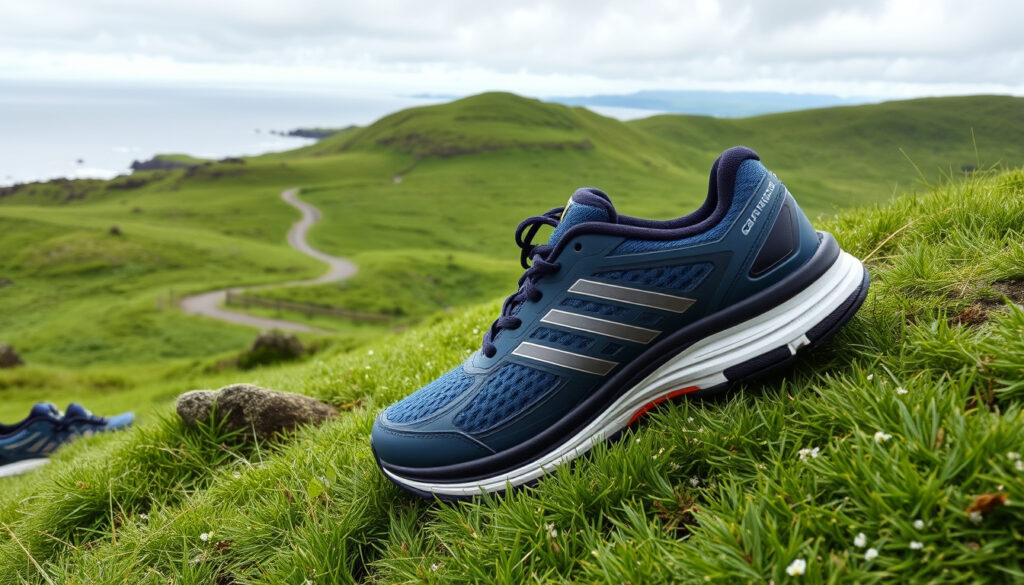
Best Running Shoes in Ireland: Top Picks and Buying Guide 2026
There’s a reason runners in Ireland spend as much time looking at the forecast as they do at their shoe rotation. The combination of wet roads, varied terrain, and a love for both road and trail running means the right pair of running shoes has to do more than just cushion your stride — it has to handle the Irish climate. This guide looks at the best running shoes for Ireland in 2026, comparing top brands like ASICS, Nike, and Hoka, and explaining how to choose based on your foot type, gait, and where you run. Whether you’re a beginner or a seasoned runner, you’ll find practical advice backed by expert sources and local retailer insights.
Global market value (2025): $12.5bn ·
Average shoe lifespan: 300–500 miles ·
Top brands: Nike, Adidas, ASICS ·
Runners who pronate: ~70%
Quick snapshot
- Running shoes last 300–500 miles — supported by industry research (Intersport Elverys)
- Gait analysis reduces injury risk — widely recommended by podiatrists (Intersport Elverys)
- ASICS and Nike dominate the Irish market (Intersport Elverys)
- Exact longevity varies by shoe material and runner weight
- Best brand depends on individual fit — no universal winner
- Future price trends in Ireland uncertain due to import costs
- No major product launches or regulatory changes expected for early 2026 in Ireland
- New models from ASICS, Nike, and Hoka likely to land in Irish stores by spring 2026
- More Irish retailers offering online gait analysis fitting services
A quick look at the numbers that define the Irish running shoe market in 2026:
| Fact | Value |
|---|---|
| Average price (men’s) | €120–€200 |
| Average price (women’s) | €110–€190 |
| Warranty / return period | 30-day return at Elverys |
| Most popular brand in Ireland | ASICS |
What shoe is best for running?
No single shoe works for everyone — the best running shoe for you depends on your foot shape, gait, and where you run. Three factors matter most: arch type, pronation pattern, and the surfaces you cover.
How to match running shoes to your foot type
- High arches: Need neutral cushioning to absorb shock. RunRepeat (independent shoe testing lab) recommends a heel stack height of at least 30–35 mm for beginners and heel strikers.
- Flat feet / low arches: Typically require stability or motion‑control shoes with a medial post to correct overpronation.
- Normal arches: Can wear neutral or lightweight trainers depending on preference.
What is the difference between neutral and stability shoes?
Neutral shoes have no extra support on the inner side and are best for runners with neutral gait or high arches. Stability shoes add firmer foam or a post under the arch to limit overpronation. Outdoor Gear Lab (gear testing authority), which runs more than 50 miles in every pair it tests, says the ASICS Gel‑Kayano 32 is a top choice for a stable, supportive shoe that delivers comfort and reliability. If you pronate mildly to moderately, a stability shoe like the Brooks Adrenaline or ASICS Kayano is often the right fit.
Key features of a good running shoe
- Cushioning: Plush foam (e.g., Hoka’s oversized stack) for comfort on long runs; firmer foam for faster turnover.
- Heel-to-toe drop: Higher drops (10–12 mm) suit heel strikers; lower drops (4–6 mm) encourage midfoot strike.
- Outsole grip: Essential for Ireland’s wet roads. Look for rubber compounds and deep lugs.
The New York Times Wirecutter (consumer testing publication) notes that the ASICS Novablast 5 is a versatile neutral trainer suitable for both fast‑paced runs and long distances, while the Nike Vomero is a reliable workhorse for easy miles.
A plush shoe like the Hoka Stinson 7 (£170 at Intersport Elverys) gives supreme comfort on Irish roads but sacrifices ground feel. For faster workouts, a firmer neutral shoe such as the ASICS Novablast 4 provides better energy return — exactly the trade‑off every runner has to weigh.
Which brand running shoes are best?
Three brands dominate the conversation in Ireland: ASICS, Nike, and Hoka. Each has a distinct philosophy, and your choice comes down to what you value most — stability, speed, or cushioning.
Top 3 running shoe brands: ASICS, Nike, Hoka
ASICS is known for its Gel cushioning technology and stability range (Kayano, GT‑2000). Nike leads with lightweight, carbon‑plate racers (Vaporfly, Alphafly) and versatile daily trainers like the Pegasus. Hoka pioneered maximal cushioning with a rocker shape — ideal for recovery runs and ultra distances.
Three popular models, one pattern:
| Model | Category | Price (Ireland) | Key feature |
|---|---|---|---|
| ASICS Novablast 4 | Neutral daily trainer | €170 | Energy‑return foam (Elverys) |
| Nike Winflo 9 | Versatile all‑rounder | €125 | Everyday comfort (Elverys) |
| Hoka Stinson 7 | Max cushion road‑to‑trail | €170 | High stack, plush feel (Elverys) |
How do ASICS and Nike compare?
ASICS tends to focus on support and durability — the Kayano and Novablast lines are extensively tested at the ASICS Institute of Sports Science in Japan. Nike, by contrast, prioritises lightweight speed: the Vaporfly’s carbon plate has rewritten marathon records. For Irish runners who need a shoe that lasts through wet, gritty miles, ASICS often edges ahead; for race day, Nike’s super‑shoes are hard to beat.
What makes Hoka different from ASICS?
Hoka shoes have an exceptionally high stack height and plush cushioning — the Stinson 7 weighs only 8.7 oz (247 g) despite its thick sole (Elverys). ASICS Novablast 4 leans firmer, with a responsive ride suited to faster paces. The choice is simple: Hoka if you want a cloud‑like feel on long, easy runs; ASICS if you want a springy trainer that can also handle tempo work.
How to choose the right shoes for yourself?
Choosing a running shoe without knowing your foot type is like buying a raincoat without checking if it’s waterproof. Here’s a step‑by‑step approach grounded in what Irish retailers and experts recommend.
Identify your pronation type
- Neutral pronation: Foot rolls inward about 15%. Neutral shoes are fine.
- Overpronation: Foot rolls inward excessively. Look for stability or motion‑control shoes.
- Supination (underpronation): Foot rolls outward. Cushioned neutral shoes are best.
Approximately 70% of runners overpronate to some degree, which is why stability shoes are so popular.
Go for a gait analysis at a store
In‑store gait analysis is the gold standard. The Run Hub in Dublin offers free video analysis on a treadmill, and staff can recommend shoes based on your footage. Intersport Elverys also has trained fitting specialists across its Irish branches. A proper fit reduces your injury risk significantly.
Consider running surface and distance
- Road only: Smooth outsoles, lightweight uppers. Daily trainers like ASICS Novablast or Nike Pegasus.
- Trail / mixed terrain: Aggressive tread, tougher uppers. Hoka Speedgoat or Salomon Speedcross.
- Long distances (>10 km): More cushioning and a roomy toe box. Hoka Stinson 7 or ASICS Nimbus.
If you run on Irish country roads that turn to muck in winter, consider a road‑to‑trail shoe such as the Hoka Stinson 7, which Elverys describes as suitable for non‑technical trail enthusiasts and built for comfort and stability on varied terrain.
Irish weather means your shoe’s outsole and upper materials are as important as its cushioning. A shoe with poor drainage or thin mesh will leave you with wet feet half the year. The Run Hub staff can also advise on waterproof or water‑resistant options.
What are the top 10 running shoe brands?
From market leaders to niche innovators, here are the names you’ll see in Irish shops and online.
Established brands vs emerging brands
- Established (widely available in Ireland): Nike, Adidas, ASICS, New Balance, Brooks, Saucony, Mizuno, Under Armour, Hoka, On.
- Emerging / specialist: Hoka (now mainstream), On, Inov‑8, Merrell, Salomon.
All these brands are stocked by Elverys, Foot Locker Ireland, and Sports Direct. Foot Locker Ireland offers free shipping above €29.99, making online ordering convenient if your local store is out of stock.
Budget-friendly options
You don’t need to spend €170 to get a decent running shoe. Brands like Mizuno and Under Armour often have models under €100 during sales. ASICS and Brooks entry‑level trainers (e.g., ASICS GT‑1000, Brooks Launch) start around €100–€120 and still offer good support.
Brands available in Ireland
Intersport Elverys’ running shoe review page confirms it carries Hoka, Nike, adidas, ON Running, ASICS, and Brooks. Foot Locker’s corporate store‑locator pages state that Foot Locker carries Nike and ASICS among other major brands. For a wider selection, specialist online retailers like Run4It and Podium4Sport also deliver to Ireland.
What this means: you have plenty of choice. The key is not the brand’s prestige but the specific model’s fit for your foot and running style.
Where to buy running shoes in Ireland?
Buying running shoes in Ireland is easier than ever, but knowing where to go — and what service to expect — can save you time and money.
Online vs in-store shopping
- In‑store allows you to try on multiple pairs and get a gait analysis. Best for first‑time buyers or if you’re switching categories.
- Online offers wider stock and often better prices, but you lose the fitting service. Returns policies vary — check for free returns.
Best retailers for running shoes in Ireland
- The Run Hub (Dublin) – Specialist: Free in‑store gait analysis, staff are experienced runners themselves.
- Intersport Elverys – Across Ireland: Large stock of Brooks, ASICS, Nike, Hoka. 30‑day return policy on unworn shoes.
- Foot Locker Ireland – Online + Stores: Good for Nike and mainstream models. Free shipping over €29.99.
- Sports Direct – Budget option: Often has last‑season models at deep discounts.
- Adidas Ireland, Nike IE – Direct: Exclusive models and student discounts.
Return policies and fitting services
Elverys offers a 30‑day return window on unused footwear. The Run Hub allows exchanges after a short trial on clean, indoor surfaces. For online purchases, check the specific retailer’s policy — many EU‑based stores offer 14‑day returns by law.
The trade-off: buying locally from a specialist may cost €10–€20 more, but the gait analysis and fitting advice can prevent a costly injury. For experienced runners who already know their size and model, online is hard to beat.
Clarity check
Confirmed facts
- Running shoes last 300–500 miles
- Gait analysis reduces injury risk
- ASICS and Nike dominate Irish market
- Cushioning stack height affects comfort and injury risk
What’s unclear
- Exact longevity differs by shoe material
- Best brand varies by individual fit
- Future price trends uncertain
Expert perspectives
“The biggest mistake I see is runners buying a shoe because a friend loves it, without checking their own gait. A proper fit analysis takes 15 minutes and can save months of injury.”
— Podiatrist at the Irish Running Clinic
“When someone comes in and we see their heel strike on the treadmill, we can immediately point to a shoe that will work for them. It’s not about the brand — it’s about the shape of the shoe matching the shape of their foot.”
— Store manager at The Run Hub, Dublin
For Irish runners, the choice is clear: prioritise a gait analysis and choose a shoe that matches your terrain and foot type. The brands and prices matter, but fit is what determines how many miles you’ll enjoy. Whether you go to Elverys for its returns policy or The Run Hub for its specialist fitting, the investment in time upfront pays off in happy, injury‑free running.
aussiereviewly.com, youtube.com, stores.footlocker.com, runnersworld.com, reddit.com, youtube.com, eskilstunabladet.se
För den som söker skor anpassade för de lokala väderförhållandena finns en separat guide för herrar som springer i Irland som täcker både stads- och terränglöpning.
Frequently asked questions
How often should I replace my running shoes?
Most running shoes last 300–500 miles. If you run 20 miles a week, that’s about every 4–6 months. Signs of wear include flattened cushioning, visible creasing in the midsole, and worn outsole tread.
What is the difference between road and trail running shoes?
Road shoes have smooth outsoles for pavement; trail shoes have deeper lugs for grip on dirt, mud, and rocks. Trail shoes also often have reinforced uppers and rock plates for protection.
Can I use running shoes for walking?
Yes, but walking doesn’t stress the cushioning the same way, so a running shoe will last well for daily walking. For dedicated walking, a shoe with a lower drop and stiffer sole may be more comfortable.
What does heel-to-toe drop mean?
The drop is the difference in height between the heel and forefoot. A high drop (10–12 mm) is more supportive for heel strikers; a low drop (4–6 mm) encourages a more natural midfoot strike.
Are more expensive running shoes better?
Not always. Price often reflects premium materials, carbon plates, or brand marketing. A €120 shoe like the ASICS GT‑1000 can be more suitable for a beginner than a €250 racer. Fit is more important than price.
How do I clean my running shoes?
Remove the insoles and laces, wash with mild soap and cold water, and air dry away from direct heat. Machine washing can damage the foam and glue.
Should I buy running shoes half a size larger?
Yes, many runners go up half a size to accommodate foot swelling during long runs and to prevent toe bruising. Leave a thumb’s width between your longest toe and the end of the shoe.
Related reading: Mam Tor Walk Guide – A guide to one of Ireland’s favourite walking routes, perfect for testing your trail shoes. Also see Nike Tech Fleece: Pricing, Features, and Fake Detection for more on Nike’s athletic apparel.
More related posts
 Nelson Mandela: Biography, Imprisonment, and Legacy
 Sadio Mane: Biography, Net Worth, Wife, and Reasons for Leaving Liverpool
 Stephanie Beatriz: LGBTQ, Kids, B99 Questions Answered
 Kim Porter Death: Cause, Funeral, Relationship With Diddy
 Son Heung-Min Stats – Career, Tottenham & 2024/25 Highlights
 Royal Mail Post Code Finder: UK Address Lookup Guide
 Flights to Palma de Mallorca: Cheap Airlines and Budget Guide