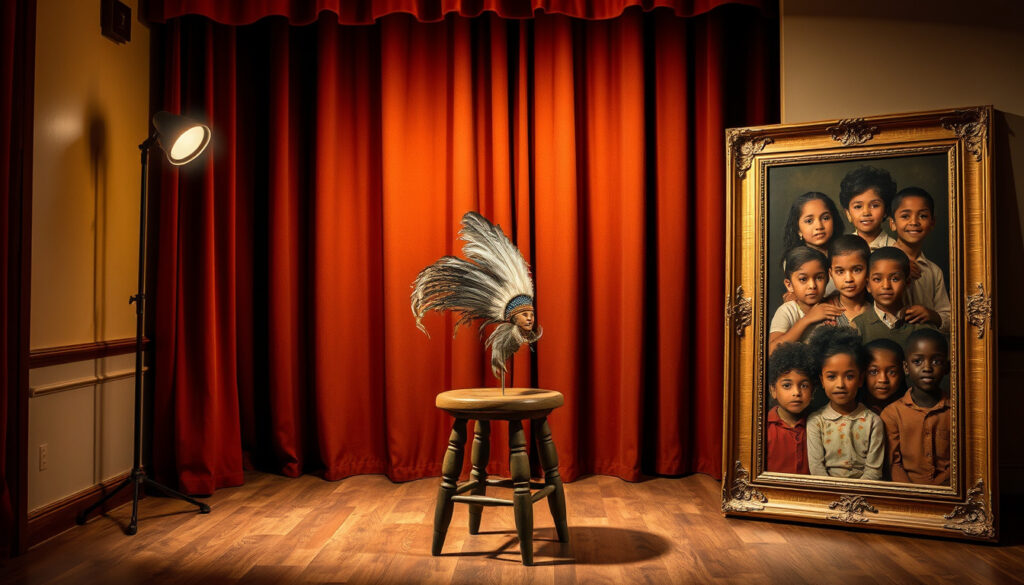
Josephine Baker: Dancer, Spy, Activist, Mother of Rainbow Tribe
Josephine Baker dazzled 1920s Paris with her bold dance moves and infectious energy. But behind the stage lights, she was leading a double life — as a French Resistance spy, recruited by French counterintelligence in 1939.
Born: June 3, 1906, St. Louis, Missouri, USA · Died: April 12, 1975, Paris, France · Known for: Dancer, singer, actress, French Resistance spy, civil rights activist · Adoptive children: 12 (the ‘Rainbow Tribe’) · Notable award: Croix de Guerre, Legion of Honour (France)
Quick snapshot
- Baker was a spy for the French Resistance during WWII (CIA (U.S. intelligence agency))
- She adopted 12 children from different countries (Wikipedia)
- She died of a cerebral hemorrhage on April 12, 1975 (Wikipedia)
- Exact number of romantic partners (Wikipedia)
- Details of some of her marriages beyond basic records (Wikipedia)
- 1939–1945: Active spy work, culminating in declassification in 2020 (CIA)
- Continued scholarly research into her full intelligence network (National WWII Museum)
Her story stretches from St. Louis poverty to the March on Washington, and this article traces the facts, the myths, and the legacy of a woman who refused to be defined by one role. Seven key details, one pattern: Baker’s life was a series of bold reinventions. Here’s the basic snapshot.
| Attribute | Value |
|---|---|
| Full name | Freda Josephine Baker (née McDonald) |
| Birth date | |
| Death date | |
| Nationality | American, French |
| Occupation | Dancer, singer, actress, spy, activist |
| Number of marriages | 4 |
| Number of children | 12 (adopted) |
What was Josephine Baker most famous for?
Her career as a dancer and singer
- Baker was a headline performer at the Folies Bergère in Paris, where her signature “banana dance” became an international sensation (Wikipedia (crowdsourced encyclopedia)).
- She moved to Paris in 1925 and quickly rose to fame, becoming the first Black woman to star in a major film, Zouzou (1934) (Wikipedia).
Her role in the French Resistance
When France declared war on Nazi Germany in , Baker responded by singing and dancing to raise money for the French army (CIA (U.S. intelligence agency)). She then became an “honorable correspondent” for the Deuxième Bureau, French military intelligence (Wikipedia). Using her celebrity as cover, Baker attended diplomatic parties and socialized with Axis bureaucrats, collecting secrets on enemy troop movements and airfields (CIA; National WWII Museum (war history museum)). She smuggled intel by writing notes on her hands and arms and pinning classified documents inside her underwear (National WWII Museum).
Her civil rights activism
- Baker spoke at the March on Washington in 1963, wearing her Free French uniform and standing with Martin Luther King Jr. (CIA).
- She refused to perform for segregated audiences in the U.S., and the FBI monitored her for decades due to her activism (Wikipedia).
Baker was celebrated on French stages but surveilled by the U.S. government — a double standard that shaped her entire activist career.
The implication: Baker turned fame into a weapon for both resistance and civil rights, using her global stardom to open doors that spies and activists could not.
What was the cause of Josephine Baker’s death?
Details of her final days
On April 11, 1975, Baker gave a gala performance at the Bobino theater in Paris, celebrating 50 years in show business. The next morning, she was found unconscious in her Paris apartment (Wikipedia).
Official cause of death
Baker died of a cerebral hemorrhage on April 12, 1975 (Wikipedia (crowdsourced encyclopedia)). She was 68. Her death was sudden and came just days after a triumphant comeback performance.
Her final show was a sellout, but the strain of decades of travel, activism, and raising 12 children may have taken a hidden toll — yet no autopsy details beyond the hemorrhage have ever publicly emerged.
Why this matters: Baker died at the height of her artistic resurgence, underlining how her legacy bridged two continents and a lifetime of causes.
Why did Josephine Baker marry at 13?
Her early life in St. Louis
Baker was born Freda Josephine McDonald on June 3, 1906, in St. Louis, Missouri, into deep poverty (Wikipedia). Her parents struggled to make ends meet, and she worked as a domestic servant from a young age.
The circumstances of her first marriage
In 1919, at age 13, Baker married Willie Wells (Wikipedia). The marriage was reportedly a way to escape her unstable home life, but it ended quickly. She later married three more times, but her first marriage at such a young age shaped her determination to control her own destiny.
The pattern: Early hardship — poverty, forced labor, a rushed marriage — forged the fierce independence that later made her a star and a spy.
Did Josephine Baker have 12 children?
The Rainbow Tribe
Between 1950 and 1964, Baker adopted 12 children from different countries, calling them her “Rainbow Tribe” (Wikipedia (crowdsourced encyclopedia)). The children came from Japan, Finland, Colombia, France, and other nations, representing a living experiment in racial harmony.
Her philosophy on adoption
- Baker raised the children at her Château des Milandes in southwestern France, employing a small army of staff to care for them (Wikipedia).
- She intended the Rainbow Tribe to show the world that children of all races could live together as siblings, a radical idea in the 1950s (A Mighty Girl (educational blog)).
The trade-off: The Rainbow Tribe was a public relations triumph, but it strained Baker’s finances and personal life — she admitted she sometimes struggled to balance motherhood with her performing career.
Why was Josephine Baker controversial?
Her provocative performances
Baker’s signature “banana dance” at the Folies Bergère featured a skirt made of artificial bananas and minimal clothing, which shocked 1920s audiences (Wikipedia). Critics denounced it as overtly sexual, while others hailed it as avant-garde art.
Her activism and FBI surveillance
- Baker used her fame to challenge racial segregation, refusing to perform for segregated audiences in the U.S. (CIA (U.S. intelligence agency)).
- The FBI compiled a 300-page dossier on Baker, monitoring her ties to communist groups and her criticism of U.S. racial policies (Wikipedia).
- Her decision to adopt children from multiple races and openly discuss racial equality made her a target of suspicion during the Cold War.
The very traits that made Baker a hero in France — her boldness, her multiracial family, her integrationism — made her a threat in Cold War America, where the government saw “one world” rhetoric as communist propaganda.
What this means: Baker’s controversies were not simply about dance or personality — they were political collisions between artistic freedom, racial justice, and national security.
Timeline signal
Eight key moments, one pattern: Baker’s life was a series of bold leaps that blurred the lines between art, espionage, and activism.
- : Born in St. Louis, Missouri (Wikipedia)
- : Married Willie Wells at age 13 (Wikipedia)
- : Moved to Paris, debuted at Folies Bergère (Wikipedia)
- –: Worked as a spy for the French Resistance (CIA; National WWII Museum)
- : Adopted 12 children, the “Rainbow Tribe” (Wikipedia)
- : Spoke at the March on Washington (CIA)
- : Died of a cerebral hemorrhage in Paris (Wikipedia)
- : Inducted into the Panthéon in France (Wikipedia)
Confirmed facts and what’s unclear
Confirmed facts
- She was a spy for the French Resistance (CIA; National WWII Museum)
- She adopted 12 children (Wikipedia)
- She died of a cerebral hemorrhage (Wikipedia)
- She married at age 13 (Wikipedia)
What’s unclear
- Exact number of romantic partners (Wikipedia)
- Details of some marriages beyond basic records (Wikipedia)
In their own words
She is the most sensational woman anyone ever saw — the most important arrival in the world of entertainment since the war.
— Ernest Hemingway, as quoted in a 1950s interview (Wikipedia)
I have two loves: my country and Paris.
— Josephine Baker, reflecting on her dual identity (Wikipedia)
Josephine Baker turned every role — dancer, spy, mother, activist — into a public challenge to racial and gender barriers. For anyone studying the 20th century’s intersection of art and politics, the implication is clear: Baker’s choices still resonate, from the Panthéon induction to ongoing declassifications of her intelligence work, and her legacy demands we look beyond the banana skirt to the woman who wore it as armor.
amightygirl.com, prismfl.org, youtube.com, facebook.com, afscv.org, verhaalforum.nl
Readers interested in Josephine Bakers remarkable legacy can find additional depth on her life as a dancer, spy, and activist in this detailed biography.
Frequently asked questions
What was Josephine Baker’s most famous performance?
Her “banana dance” at the Folies Bergère in 1925 became iconic, though she also starred in films like Zouzou and performed at the Bobino theater in 1975.
How did Josephine Baker become a spy?
French counterintelligence officer Jacques Abtey recruited her in 1939 after France entered WWII. She used her celebrity to gather intelligence at social events (CIA).
What awards did Josephine Baker receive?
She received the Croix de Guerre and was made a Chevalier of the Legion of Honour for her wartime service (Wikipedia). In 2021 she was inducted into the Panthéon.
Where is Josephine Baker buried?
She is buried at the Cimetière de Monaco in Monaco (Wikipedia).
Did Josephine Baker have biological children?
No, she did not have biological children; all 12 were adopted.
What was Josephine Baker’s net worth?
Baker’s net worth fluctuated wildly; she died largely in debt, having spent much of her fortune on the Rainbow Tribe and her château (Wikipedia).
How did Josephine Baker contribute to civil rights?
She refused segregated venues, spoke at the 1963 March on Washington, and used her adopted Rainbow Tribe to model racial harmony (CIA).
What languages did Josephine Baker speak?
She spoke English and French fluently, and learned some phrases from the languages of her adopted children.
More related posts
 London Cable Car Tickets – 2025 Prices, Booking and Oyster Guide
 Wright Brothers: Who Actually Flew First
 Summer Tops for Women: The Best Styles & Where to Buy in Ireland
 Berlin vs Roermond vs Kildare: Designer Outlet Guide
 La Voix: Real Name, Injury, Strictly Withdrawal & Return
 Son Heung-Min Stats – Career, Tottenham & 2024/25 Highlights