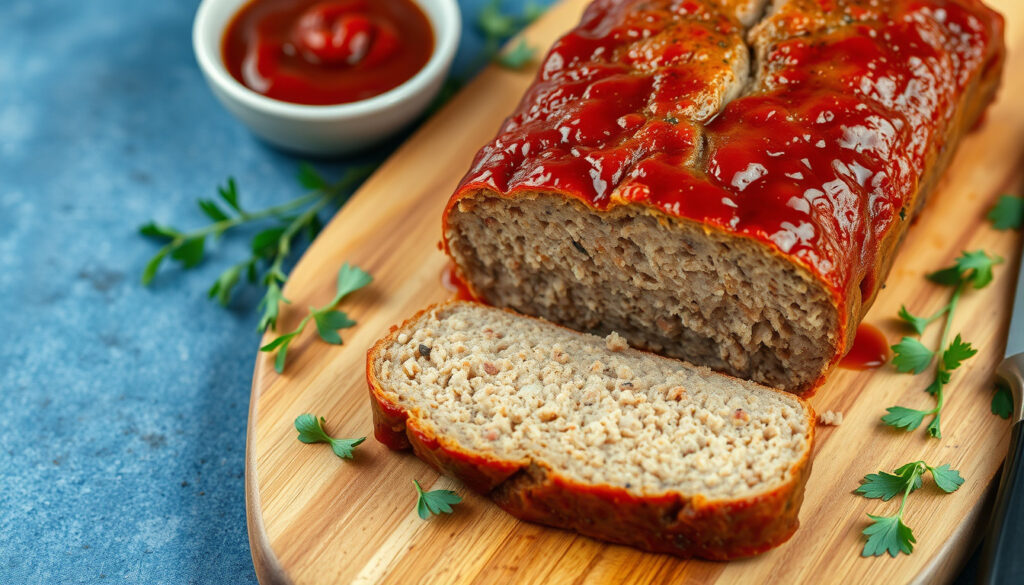
Easy Meat Loaf Recipe – Classic, Moist, and Adaptable
There’s a reason meatloaf has earned its place as a weeknight hero: it’s forgiving, endlessly adaptable, and when done right, impossibly tender – and the USDA’s safe internal temperature of 160°F (71°C) is a target any home cook can hit with a simple instant-read thermometer. Whether you’re after a classic ketchup-glazed loaf or a gluten-free alternative, this guide walks through the steps that deliver a moist, sliceable result every time.
Prep time: ~15 minutes ·
Cook time: 60–75 minutes ·
Servings: 6–8 portions ·
Key ingredients: ground beef, breadcrumbs, eggs, milk, onion, ketchup-based glaze ·
Internal temperature target: 160°F (71°C)
Quick snapshot
- A classic meatloaf combines ground beef, breadcrumbs, eggs, milk, and onion (Allrecipes (popular recipe database)).
- Safe internal temperature is 160°F (71°C) per USDA guidance (USDA FSIS (government food-safety authority)).
- Many recipes use a ketchup-brown sugar-mustard glaze (Budget Bytes (budget-friendly recipe site)).
- Optimal oven temperature varies: 350°F, 375°F, and even 400°F are used across trusted sources (HowToCook.Recipes YouTube (home cooking channel)).
- Some recipes target 165°F instead of 160°F, though this is above USDA safety minimum (Binky’s Culinary Carnival (food blog)).
- Most recipes bake the loaf first, then add glaze after 40 minutes, finishing when internal temp reaches 160°F (Self Proclaimed Foodie (home cooking blog)).
The table below shows the essential ingredients and their roles across five well-known recipes — one pattern: almost every version relies on the same binder-and-moisture trio.
| Ingredient | Role | Common ratio |
|---|---|---|
| Ground beef (80/20 lean) | Protein base; fat keeps loaf moist | 1–2 lb |
| Breadcrumbs (plain or panko) | Binder; absorbs moisture | ½–1 cup |
| Eggs | Binder; helps hold shape | 1–2 large |
| Milk (or buttermilk) | Moisture; tenderizes breadcrumbs | ¼–½ cup |
| Onion (finely chopped) | Flavor; moisture release | ½–1 cup |
| Ketchup (for glaze) | Sweet-tangy crust | ¼–½ cup |
| Brown sugar (optional in glaze) | Caramelization; sweetness | 1–2 tbsp |
| Worcestershire sauce | Umami depth | 1 tbsp |
What are the ingredients for meatloaf?
The core lineup is remarkably consistent: ground beef (usually 80/20 for moisture), breadcrumbs, eggs, milk, and finely chopped onion. Many recipes add a glaze made from ketchup, brown sugar, and mustard or Worcestershire sauce. Betty Crocker (trusted American cookbook brand) uses lean ground beef, beaten eggs, bread crumbs, Italian seasoning, and ketchup. Budget Bytes (budget-conscious recipe site) adds Worcestershire sauce to the glaze for extra depth. The binder (breadcrumbs + eggs) is what keeps the loaf from falling apart – skip it and you’ll get a crumbly mess.
The implication: once you master this base formula, you can swap in ground turkey, add vegetables, or change the glaze without losing the structure.
What is the best easy meatloaf recipe?
There isn’t one single “best,” but the simplest approach comes from Allrecipes: mix ground beef, chopped onion, milk, bread crumbs, and egg; shape into a loaf; top with a ketchup-brown sugar-mustard glaze; bake at 350°F for 1 hour. Betty Crocker’s (established recipe resource) version is nearly identical, but adds Italian seasoning for a flavor boost. Both recipes call for a 9×5-inch loaf pan or free-form shaping on a rimmed baking sheet.
For a quicker version, some cooks use a 375°F oven and reduce the bake time to 40 minutes before glazing, then finish until 160°F – a method shown in the HowToCook.Recipes video.
A higher temperature (375°F) shortens cook time but risks a drier crust if the glaze is added too early. The classic 350°F route is more forgiving for first-timers.
The pattern: the easiest recipes are the ones that minimize ingredients and steps. Stick to the Allrecipes or Betty Crocker template and you’ll have a reliable loaf on the table in about 90 minutes.
What is the secret ingredient in meatloaf?
Several recipe developers have a “secret” that improves texture or flavor. Erren’s Kitchen (UK-based recipe site) adds a baking soda slurry (¼ tsp baking soda mixed with 1 tbsp water) to the meat before mixing, which raises the pH and keeps the meat tender. Self Proclaimed Foodie (home cooking blog) soaks breadcrumbs in milk for 5 minutes before combining – a technique that ensures even moisture distribution. Binky’s Culinary Carnival (food blog) also soaks the breadcrumbs and warns against overmixing, which can make the loaf dense.
Why this matters: these small tweaks address the most common complaint – dry, crumbly meatloaf. A tender loaf is the result of managing moisture from the inside out.
How long do you cook meatloaf?
At 350°F, a 2-pound meatloaf takes roughly 1 hour to reach 160°F internally. Erren’s Kitchen bakes for 55 minutes; Betty Crocker says 1 hour. At 375°F, the time drops to about 40–50 minutes, as seen in the HowToCook.Recipes video. The key is to use an instant-read thermometer – the loaf is done when the center reaches 160°F, per the USDA FSIS (national food safety regulator) and FDA Safe Minimum Internal Temperatures chart (US food and drug authority).
The catch: thinner loaves (about 2 inches tall) cook faster, while thicker loaves may need an extra 10–15 minutes. Always rely on the thermometer, not the clock.
How do you keep meatloaf from crumbling?
Crumbling is almost always a binder problem. The classic solution is a combination of breadcrumbs and eggs – the breadcrumbs soak up liquid and the eggs coagulate during baking, holding everything together. Allrecipes uses 1 cup breadcrumbs and 1 egg per pound of meat. Food.com (community recipe site) uses a similar ratio. If you’re avoiding breadcrumbs, crushed pork rinds (for keto) or cooked oatmeal (for gluten-free) can work as a binder – but you may need to adjust liquid ratios.
Another tip: Budget Bytes recommends shaping the loaf into a 4×8×2-inch rectangle on a baking sheet, which maximizes surface area for browning and helps the loaf hold its shape.
Overmixing is the hidden enemy. Once you add the dry ingredients, mix just until combined – overworking the meat develops protein strands that make the loaf tough and prone to cracking.
The trade-off: using more binder makes the loaf firmer but can also make it denser. The sweet spot is about ½ cup breadcrumbs and 1 egg per pound of meat.
What temperature should meatloaf be cooked to?
The authoritative answer is 160°F (71°C) for ground beef, pork, or lamb mixtures, as stated by the USDA FSIS and the FDA. Some recipes, like Binky’s Culinary Carnival, list 165°F as the target – this is a common safe-zone for poultry-based mixtures, but for beef it’s unnecessary and can dry out the meat. Stick to 160°F and let the loaf rest for 5–10 minutes after baking; the temperature will carry over slightly.
The implication: a thermometer is the single most important tool for meatloaf success. Guessing by color or time leads to either undercooked or dry loaves.
Step-by-step: Easy meatloaf recipe
- Gather ingredients
- 1½ lb ground beef (80/20)
- ¾ cup plain breadcrumbs
- 1 large egg, lightly beaten
- ½ cup milk
- ½ cup finely chopped onion
- 1 tsp salt, ½ tsp black pepper
- For the glaze: ⅓ cup ketchup, 2 tbsp brown sugar, 1 tbsp mustard (or Worcestershire sauce)
- Soak the breadcrumbs – In a large bowl, pour the milk over the breadcrumbs and let sit for 5 minutes. This step, recommended by Self Proclaimed Foodie, ensures the crumbs absorb moisture evenly rather than stealing it from the meat.
- Mix the meatloaf – Add the ground beef, beaten egg, onion, salt, and pepper to the soaked breadcrumbs. Use your hands or a spatula to mix gently until just combined – do not knead. Overmixing creates a dense, tough loaf.
- Shape the loaf – On a parchment-lined baking sheet, shape the mixture into a rectangle about 4 inches wide, 8 inches long, and 2 inches tall, as suggested by Budget Bytes. This shape promotes even cooking and good browning.
- Bake and glaze – Bake at 350°F for 40 minutes. Meanwhile, mix the glaze ingredients. After 40 minutes, spread the glaze over the top of the loaf. Continue baking until the internal temperature reaches 160°F, usually another 20–30 minutes. Betty Crocker confirms this two-stage method.
- Rest and serve – Remove the meatloaf from the oven and let it rest for 10 minutes before slicing. Resting allows the juices to redistribute, ensuring a moist slice. The USDA-safe temperature of 160°F will hold steady during rest.
Gluten-free & keto adaptations
- Gluten-free: Replace breadcrumbs with rolled oats (certified GF) or crushed pork rinds. Use tamari instead of Worcestershire if needed.
- Keto: Use almond flour or crushed pork rinds, omit the milk (use a splash of water), and use a sugar-free ketchup or tomato paste for the glaze.
The catch: gluten-free binders are less absorbent, so reduce the liquid by about 2 tablespoons. Keto versions may need an extra egg to hold together.
Confirmed facts vs. what’s unclear
Confirmed facts
- Ground beef, breadcrumbs, eggs, milk, and onion form the classic base (Allrecipes).
- USDA/FSIS safe internal temperature for ground meat is 160°F (USDA FSIS).
- Soaking breadcrumbs in milk improves moisture (Self Proclaimed Foodie).
What’s unclear
- Optimal oven temperature (350°F vs 375°F vs 400°F) – not enough controlled testing.
- Whether 165°F is necessary for beef-based meatloaf (some recipes use it, but USDA says 160°F is safe).
- Best gluten-free binder for texture – anecdotal evidence only.
- Whether baking soda slurry works for all meatloaf (Erren’s Kitchen).
The pattern: most reliable sources agree on the base ingredients and safety temperature, but techniques and timing still vary.
What the experts say
“Soaking breadcrumbs in milk for 5 minutes before mixing is the simplest way to guarantee a moist, tender meatloaf.”
Self Proclaimed Foodie (home cooking blog)
“A baking soda slurry (¼ teaspoon baking soda + 1 tablespoon water) is my secret for ultra-tender meatloaf – it raises the pH and keeps the meat from drying out.”
“Shape the meatloaf into a rectangle about 4 inches wide, 8 inches long, and 2 inches tall – this shape cooks evenly and browns beautifully.”
These three perspectives – moisture management, tenderness science, and shaping technique – cover the most common pitfalls home cooks face. The editorial takeaway: master the basics before you experiment.
Summary
A great meatloaf doesn’t require fancy ingredients – just the right ratios, a reliable thermometer, and a few pro-level tricks like soaking the breadcrumbs or using a baking soda slurry. For the home cook who wants a family-friendly dinner, the choice is clear: stick to a 350°F oven, a 160°F target, and a simple ketchup glaze, or adapt using gluten-free or keto swaps without losing the tender, sliceable texture that makes meatloaf a classic.
Frequently asked questions
What is the best meatloaf recipe for beginners?
The Allrecipes “Easy Meatloaf” is a solid starting point – it uses common ingredients, simple steps, and a basic ketchup glaze. Follow the 350°F oven and 160°F internal temperature for guaranteed safety.
Can I make meatloaf without breadcrumbs?
Yes. Replace breadcrumbs with crushed crackers, rolled oats, almond flour, or crushed pork rinds. Adjust liquid accordingly – gluten-free options need less milk.
How do I know when meatloaf is done without a thermometer?
You can’t be certain without a thermometer. The USDA recommends using an instant-read thermometer to verify 160°F. Color and time are unreliable indicators.
Why is my meatloaf dry?
Overcooking (above 160°F), too little fat (use 80/20 beef), or too much binder are common causes. Also, overmixing can make the texture dense and dry.
Can I use ground turkey for meatloaf?
Yes, but ground turkey is leaner. Add 1–2 tablespoons of olive oil or grated zucchini to boost moisture. Cook to 165°F for poultry safety.
How do I store leftover meatloaf?
Wrap cooled slices in foil or place in an airtight container. Refrigerate for up to 4 days, or freeze for up to 3 months. Reheat in a 350°F oven until warmed through.
What is the secret to a non-crumbly meatloaf?
Use enough binder (1 egg and ½ cup breadcrumbs per pound of meat), avoid overmixing, and let the loaf rest before slicing. The soaking-the-breadcrumbs step also helps structure.
Can I make meatloaf in a loaf pan?
Yes, but the loaf will be more steamed than browned. For a crispier crust, shape the loaf free-form on a baking sheet as recommended by Budget Bytes and others.
More related posts
 James Baldwin: Biography, Books, Quotes, and Legacy
 Mia Tomlinson: Biography, Age, Parents, and The Conjuring 4 Role
 ASAP Rocky 2025: Net Worth, Legal Cases & Family
 Tom Brady Net Worth 2026: $300-350 Million Breakdown
 Emperor Penguin: Facts, Habitat, and Why They Are at Risk
 Cooking Hood Buyer’s Guide: Types, Effectiveness & Venting
 Jimmy White: Health, Wig, Net Worth, and Family Life
 Madeleine McCann: Latest News, Evidence & Unanswered Questions