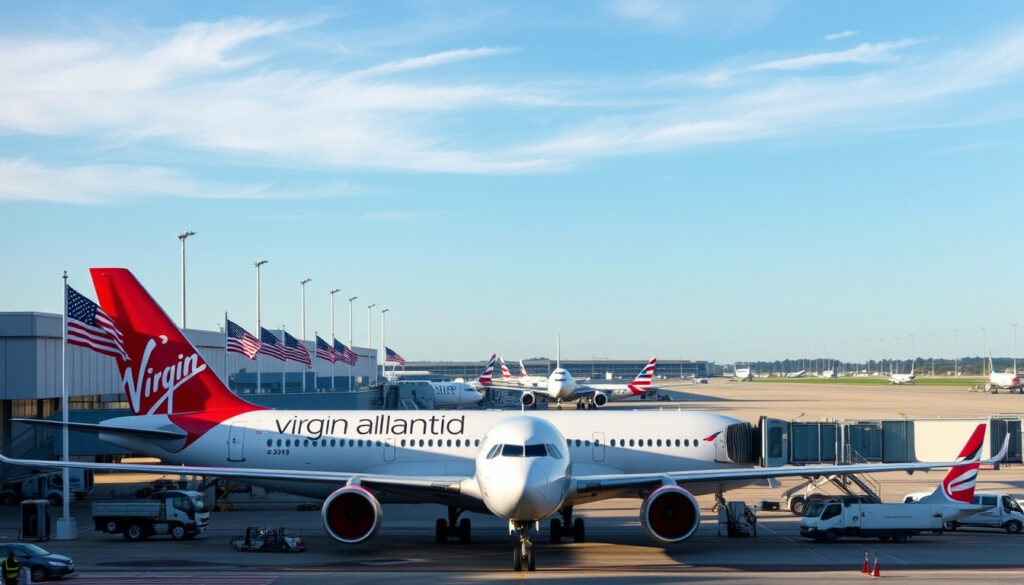
Virgin Airlines: Who Owns It and Does It Still Fly in the USA
Virgin Atlantic took its first flight in 1984, but the Virgin brand now covers three separate carriers with different owners, routes, and continents. This guide sorts out who owns what, whether you can fly Virgin in the U.S., and how to check in or track a flight.
Founded: 1984 (Virgin Atlantic) · Richard Branson role: Founder of Virgin Group · U.S. Virgin brand: Retired with Virgin America in 2019 · Virgin Australia owner: Bain Capital (majority) · Virgin Atlantic owners: Delta, Air France-KLM, Virgin Group
Quick snapshot
- Virgin Atlantic was founded in 1984 (Virgin Atlantic Annual Report 2024)
- Delta Air Lines acquired a 49% stake in Virgin Atlantic in 2013 (Virgin Atlantic Press Kit 2019)
- Virgin America brand was retired by 2019 (Wikipedia – Virgin America)
- Virgin Australia majority-owned by Bain Capital from November 2020 (Aviation Week)
- Exact current share percentages of Virgin Australia (Bain Capital stake reportedly fell to 40% after June 2025 relisting – Wikipedia – Virgin Australia)
- Richard Branson’s personal health details (only public statements can be cited) (Wikipedia – Virgin Australia)
- Which airline to avoid depends on individual route, safety record, and traveler priorities – no single answer applies universally (Wikipedia – Virgin Australia)
- The exact future of the Virgin brand in the U.S. market beyond transatlantic flights remains uncertain (Wikipedia – Virgin Australia)
- 2013: Delta acquires 49% of Virgin Atlantic (Virgin Atlantic Press Kit)
- 2016: Alaska Air buys Virgin America (Wikipedia)
- 2020: Virgin Australia enters administration; Bain takes over (Aviation Week)
- 2025: Virgin Australia relists on ASX (Wikipedia)
- Virgin Atlantic continues its SkyTeam alliance expansion (joined 2023 – Wikipedia – SkyTeam)
- Virgin Australia faces new ownership structure with Qatar Airways stake at 23% (Wikipedia – Virgin Australia)
- No U.S. domestic Virgin brand – travelers use Virgin Atlantic transatlantic or other carriers (Wikipedia – Virgin America)
Six facts, one pattern: each airline under the Virgin umbrella has a distinct ownership story and market role.
| Attribute | Detail |
|---|---|
| Legal UK carrier | Virgin Atlantic Airways Ltd. |
| IATA code (Virgin Atlantic) | VS |
| U.S. brand | Virgin America, retired in 2019 |
| Australian carrier | Virgin Australia |
| Owner of Virgin Australia | Bain Capital (majority) |
| Virgin Atlantic ownership | Delta Air Lines (49%), Air France-KLM (31%), Virgin Group (20%) |
Who owns Virgin Airlines?
There is no single company called “Virgin Airlines” – the name covers three separate operating entities. The one founded by Richard Branson is Virgin Atlantic, a UK long-haul carrier. Its ownership structure is a joint venture: Delta Air Lines holds 49%, Air France-KLM holds 31%, and Virgin Group holds the remaining 20%, according to the company’s 2024 Annual Report.
Who is the billionaire that owns Virgin Airlines?
Richard Branson founded the Virgin Group and started Virgin Atlantic in 1984. While Branson’s Virgin Group retains a 20% stake in Virgin Atlantic, he is not the majority owner of the airline today. Branson stepped back from day-to-day management but remains a public face of the brand. For Virgin Australia, Branson’s Virgin Group held around a 5% stake after the 2020 restructuring, per Australian Frequent Flyer.
What is the Virgin Group?
Virgin Group is a British venture capital conglomerate founded by Branson, with holdings in travel, finance, health, and media. It licenses the Virgin brand to the airlines but does not control them outright. The group’s involvement in aviation is limited to minority stakes and brand licensing.
Ownership is split: Delta and Air France-KLM control Virgin Atlantic; Bain Capital runs Virgin Australia. Branson is the founder but not the boss of either carrier today.
The pattern: Each airline under the Virgin umbrella has a distinct ownership structure with no unified control.
Does Virgin Airlines still exist in the USA?
No U.S. domestic airline carrying the Virgin brand operates today. Virgin America was launched in 2007 as a low-cost carrier based in California, but it was acquired by Alaska Air Group in 2016 and the brand was fully retired by 2019. Travelers looking for a Virgin flight within the U.S. will not find one.
What happened to Virgin America?
Alaska Air Group bought Virgin America for $2.6 billion, merging its operations and eventually phasing out the name. All former Virgin America aircraft were repainted in Alaska Airlines livery, and the separate operating certificate was surrendered.
Is Virgin Atlantic still flying to the US?
Yes. Virgin Atlantic is a UK airline that flies from London Heathrow, Manchester, and Edinburgh to multiple U.S. cities, including New York (JFK), Los Angeles, San Francisco, Boston, Washington Dulles, and Miami. It is governed by the UK Civil Aviation Authority and operates as a foreign carrier on transatlantic routes.
The implication: The Virgin brand exists on international flights to and from the U.S. but not as a domestic airline. Any reference to “Virgin Airlines in the USA” refers only to transatlantic routes.
What happened to Virgin Airways?
The corporate name “Virgin Atlantic Airways Ltd.” is the legal entity behind the UK carrier. No independent airline has ever operated under the name “Virgin Airways” – the common confusion comes from the informal shortening “Virgin Airways” that many passengers use. The brand history shows three separate airlines: Virgin Atlantic, Virgin America, and Virgin Australia.
Is Virgin Airlines still going?
Yes, but only as a brand umbrella. Virgin Atlantic and Virgin Australia are both operating. Virgin America is gone. So “Virgin Airlines” as a single entity never existed; the question is better answered by asking which Virgin-branded airline you mean.
Was Virgin America separate from Virgin Atlantic?
Yes. Virgin America was a legally separate U.S. airline founded by Branson’s Virgin Group and private investors. It had its own fleet, crew, and operating certificate. It was never a subsidiary of Virgin Atlantic. The two airlines had codeshare agreements but were run independently.
The pattern: The Virgin brand lives on in two separate airlines, but no single “Virgin Airlines” exists.
How do I check in for a Virgin Atlantic flight?
Virgin Atlantic offers online check-in through its official website and mobile app, typically opening 24 hours before departure. Passengers can also check in at airport kiosks or counters. Follow these steps for online check-in:
- Go to the Virgin Atlantic website or open the mobile app.
- Enter your booking reference and surname.
- Select your seats from the available options.
- Receive a mobile boarding pass.
- Proceed to baggage drop if you have checked luggage.
How does Virgin Atlantic online check-in work?
Passengers enter their booking reference and surname, select seats, and receive a mobile boarding pass. Baggage drop-off counters remain open at the airport for checked luggage. Frequent flyers in the Flying Club program may have priority boarding.
Where can I check Virgin Atlantic flight status?
Flight status is available on the Virgin Atlantic website by entering the flight number or route. The page displays scheduled departure, arrival, gate numbers, and any delays. Third-party platforms like FlightRadar24 also track Virgin Atlantic aircraft.
How do I contact Virgin Atlantic customer service?
Phone numbers, live chat, and social media support are listed on the official Virgin Atlantic contact page. For travelers in the U.S., a toll-free number is available. Virgin Australia has its own separate customer service and check-in channels.
The catch: There is no unified “Virgin Airlines” check-in system. Virgin Atlantic and Virgin Australia operate independently, and you must use the respective airline’s website or app for your specific booking.
Which airline to stay away from?
This is not a question with a one-size answer. Regulators such as the U.S. Federal Aviation Administration (FAA) and the UK Civil Aviation Authority (CAA) publish safety and consumer complaint data that let travelers compare carriers objectively. Virgin Atlantic maintains a strong safety record and has never had a fatal accident in its four-decade history (Wikipedia).
Is Virgin Atlantic safe?
Virgin Atlantic holds an IOSA (IATA Operational Safety Audit) certification, a global standard. Its fleet of Airbus A330, A350, and Boeing 787 aircraft is modern. The airline’s accident-free record places it among the safest long-haul carriers.
Which airline has poor customer reviews?
Consumer complaint data from the U.S. DOT and the UK CAA show that any airline can receive negative feedback depending on the metric – on-time performance, baggage handling, or seat comfort. Rather than targeting a single airline, travelers should compare data for the specific route and aircraft.
A single search phrase like “which airline to stay away from” oversimplifies air travel. The right choice depends on your route, budget, and what you value: price, legroom, or reliability. Check regulator reports before booking.
The pattern: No airline is universally “bad” – the answer is contextual. Use official complaint and safety databases rather than anecdotes.
Virgin Atlantic vs. Virgin Australia vs. Virgin America
Three carriers, three very different stories. Here’s how they compare across key dimensions.
| Attribute | Virgin Atlantic | Virgin Australia | Virgin America (retired) |
|---|---|---|---|
| Founded | 1984 | 2000 (as Virgin Blue) | 2007 |
| Hub | London Heathrow | Brisbane, Sydney, Melbourne | San Francisco |
| Ownership | Delta (49%), AF-KLM (31%), Virgin Group (20%) | Bain Capital (majority ~40%), Qatar Airways (23%), public float | Alaska Air Group (acquired 2016) |
| Service type | Long-haul international | Domestic + short-haul international | U.S. domestic |
| Status program | Flying Club | Velocity Frequent Flyer | Elevate (merged into Alaska) |
The pattern: Each airline targets a different market and has a unique ownership story.
Virgin Atlantic fleet and service specs
Six details paint a picture of what to expect when flying Virgin Atlantic.
| Spec | Detail |
|---|---|
| Fleet (selected) | Airbus A330-300, A350-1000, Boeing 787-9 |
| Cabin classes | Upper Class, Premium, Economy (Delight, Light, Classic) |
| Wi-Fi | Available on most long-haul aircraft (paid/free for Flying Club members) |
| Entertainment | Vera system with movies, TV, games |
| Alliance | SkyTeam (joined 2023) |
| On-time performance | Varies by route; check CAA/cirium data |
The pattern: Virgin Atlantic offers a modern fleet with consistent service but limited route network compared to global giants.
Pros and cons of flying Virgin Atlantic
Upsides
- Accident-free safety record
- Modern fleet with A350 and 787
- Upper Class offers lie-flat seats and access to Clubhouses
- SkyTeam alliance allows connections with Delta, AF-KLM
Downsides
- Limited route network compared to full-service giants
- Premium fares can be higher than competitors
- No domestic U.S. presence
- Some aircraft (A330) lack newer cabin products
The balance: Virgin Atlantic’s safety record and premium experience come with a smaller route map and higher fares.
Virgin Airlines brand timeline
- 1984 – Richard Branson founded Virgin Atlantic. (Annual Report)
- 2007 – Virgin America launched operations in the United States. (Wikipedia)
- 2013 – Delta Air Lines acquired a 49% stake in Virgin Atlantic. (Press Kit)
- 2016 – Alaska Air Group agreed to acquire Virgin America. (Wikipedia)
- 2019 – The Virgin America brand was retired after Alaska Airlines integration. (Wikipedia)
- 2020 – Virgin Australia entered voluntary administration; Bain Capital became majority owner. (Aviation Week)
- 2023 – Virgin Atlantic joined the SkyTeam alliance. (Wikipedia)
- 2025 – Virgin Australia relisted on the Australian Securities Exchange. (Wikipedia)
The pattern: The Virgin airline family has seen ownership changes and one brand retirement, leaving two active carriers.
What we know and what remains unclear
Based on available public sources, some facts are solid while others require caution.
- Virgin Atlantic was founded in 1984 by Richard Branson (Virgin Atlantic Annual Report)
- Delta Air Lines holds a 49% stake in Virgin Atlantic (Virgin Atlantic Press Kit 2019)
- Virgin America was acquired by Alaska Air Group and the brand retired by 2019 (Wikipedia)
- Virgin Australia entered administration in 2020; Bain Capital took majority control in November 2020 (Aviation Week)
- Exact current ownership percentages of Virgin Australia after June 2025 relisting (Wikipedia reports Bain at ~40%, Qatar at ~23%)
- Richard Branson’s personal health – only the public statement about an undisclosed diagnosis is known
- Which airline to avoid depends on individual traveler priorities – no authoritative single answer
- The exact future of the Virgin brand in the U.S. market beyond transatlantic flights remains uncertain
The implication: Use official sources for the most current ownership data, especially for Virgin Australia post-relisting.
What the people behind the brand have said
“We started with one plane and a simple idea: to shake up the market.”
— Virgin Atlantic – Our story (corporate page)
“The transaction will create a stronger, more competitive airline that benefits customers.”
— Bain Capital representative on Virgin Australia acquisition, cited by Aviation Week
“Our joint venture with Delta has been a game-changer for our network.”
— Virgin Atlantic spokesperson in press kit (2019)
For the U.S. traveler, the implication is clear: if you want a Virgin-branded flight, you’ll need to cross the Atlantic on Virgin Atlantic – or fly within Australia on Virgin Australia. There is no domestic Virgin option in America. The brand is alive, but only on transoceanic and Australian routes.
en.wikipedia.org, en.wikipedia.org, virginatlantic.com, simpleflying.com, en.wikipedia.org, simpleflying.com, seatmaestro.com, mediacircuit.org
Frequently asked questions
Is Virgin Atlantic the same airline as Virgin Australia?
No. They are separate companies with different owners, headquarters, and operations. Virgin Atlantic is a UK long-haul carrier; Virgin Australia is an Australian domestic and near-international carrier.
What is the Virgin Atlantic frequent flyer program called?
It is called Flying Club. Members earn miles on Virgin Atlantic flights and SkyTeam partner airlines.
What destinations does Virgin Atlantic serve?
Virgin Atlantic flies from the UK to North America, the Caribbean, Africa, the Middle East, and Asia. Major U.S. destinations include New York, Los Angeles, San Francisco, Boston, Washington D.C., and Miami.
Does Virgin Atlantic operate from London Heathrow?
Yes, its main hub is London Heathrow Terminal 3, with flights to many long-haul destinations.
Can I book Virgin Atlantic flights from Ireland?
Virgin Atlantic does not operate direct flights from Ireland, but you can connect through London or book codeshare flights with partner airlines.
What aircraft does Virgin Atlantic operate?
The fleet includes Airbus A330-300, A350-1000, and Boeing 787-9 Dreamliner aircraft.
Editor’s note: This article was compiled from official company reports, regulatory databases, and independent aviation journalism. Ownership percentages for Virgin Australia after its June 2025 relisting are based on public reports and may change as shareholder filings are updated. Always verify with the latest official sources.
Related reading
- Virgin Atlantic Annual Report 2024
- Wikipedia – Virgin Atlantic
- Wikipedia – Virgin Australia
- Australian Frequent Flyer – Virgin exits administration
- Aviation Week – Focus on Virgin Australia
More related posts
 James Milner: Career, Net Worth, Spanish Skill & Premier League Record
 Printing Shop Near Me: Where to Print Without a Printer
 Adrian Lewis: Retirement, Net Worth, and Comeback Hopes
 Pottery Cafe Guide: Prices, Process & Top Spots in Ireland
 Nelly Korda: Verified Facts on Net Worth, Relationship & Career
 Shoe Insoles: Cost-Benefit Guide for Foot Pain Relief
 Ken Jeong: Doctor Turned Hollywood Star – Full Biography