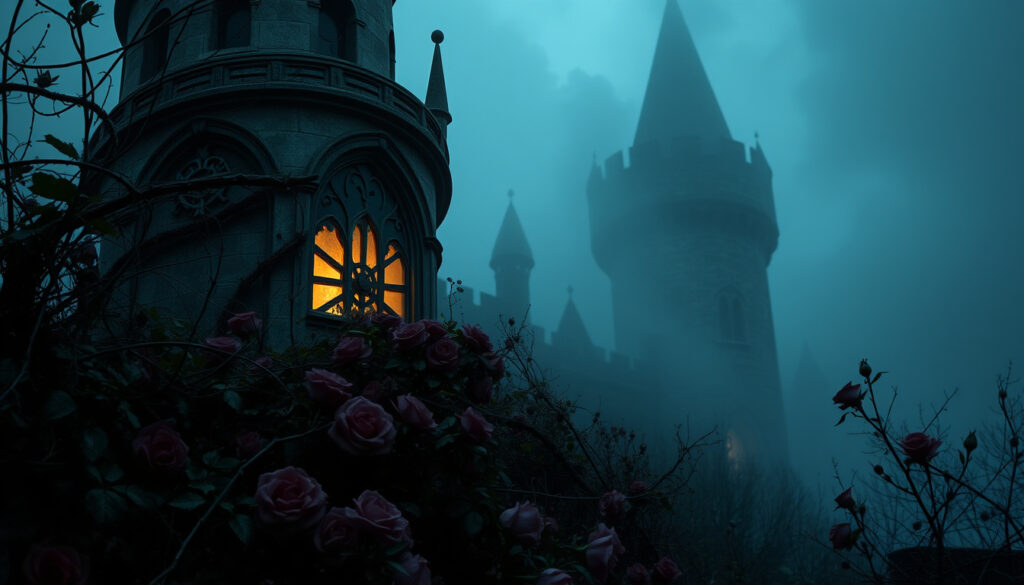
Sleeping Beauty: The Fairy Tale, Disney Film, and Cultural Meaning
Few fairy tales have traveled as far or shape-shifted as much as Sleeping Beauty. From a 17th-century Italian folk horror to a Disney princess crowned in pink, the story of a cursed sleeper has taken on meanings its earliest tellers could never have imagined.
Original fairy tale published: 1697 (Charles Perrault) ·
Grimm brothers’ version published: 1812 ·
Walt Disney animated film release: 1959 ·
Disney princess name: Aurora ·
Sleep duration in Disney film: Until true love’s kiss (not specified as 100 years)
Quick snapshot
- Charles Perrault published “The Sleeping Beauty in the Wood” in 1697 (Wikipedia)
- Brothers Grimm published “Little Briar Rose” in 1812 (Wikipedia)
- Disney released its animated film in 1959 (Disney trailer on YouTube)
- Kleine-Levin syndrome is a real sleep disorder sometimes called Sleeping Beauty syndrome (PMC / NIH)
- Exactly how old Aurora is across all adaptations — she is 16 in the Disney film, but other versions do not specify (Disney film)
- Whether the prince’s kiss is the only way to break the spell — that is a Disney addition; in the Grimms’ version she wakes simply when the prince arrives (Recovery Central)
- Whether the 100-year sleep appears in all early versions — Basile’s tale does not specify a duration (Wikipedia)
- c. 14th century: Medieval romance Perceforest contains an early influence (Wikipedia)
- 1634: Giambattista Basile’s “Sun, Moon, and Talia” published (Wikipedia)
- 1697: Perrault’s version (Wikipedia)
- 1812: Grimm’s version (Wikipedia)
- 1959: Disney film (YouTube)
- 2011: Live-action Sleeping Beauty (Emily Browning) released (IMDb)
- 2014: Maleficent released (IMDb)
- Continued reinterpretation in films and books (ABC News)
- Growing public awareness of Kleine-Levin syndrome as more cases are reported (ABC News)
- The idiom “sleeping beauty” remains common in English for dormant potential (Collins Dictionary)
The table below summarizes key facts across the main versions of the tale.
| Fact | Value |
|---|---|
| Year written (Perrault) | 1697 |
| Year written (Grimm) | 1812 |
| Disney release year | 1959 |
| Princess name (Disney) | Aurora |
| Villain (Disney) | Maleficent |
| Alternative name (Grimm) | Briar Rose (Dornröschen) |
What is the basic story of Sleeping Beauty?
The Perrault tale
- A princess is cursed by a fairy to die from a spindle prick, but a good fairy softens the curse to a hundred-year sleep. The king orders all spindles destroyed, but the princess pricks her finger anyway. She falls asleep, and the entire castle sleeps with her. A prince finds her, wakes her, and they marry. Perrault’s version then adds a second act: the prince’s ogress mother tries to eat the princess and her children (Recovery Central).
The Disney adaptation
- Disney’s 1959 film centers on Princess Aurora, cursed by Maleficent to die from a spindle prick on her 16th birthday. Three good fairies — Flora, Fauna, Merryweather — try to protect her by hiding her as a peasant named Briar Rose. The curse is softened to sleep, and only true love’s kiss can break it. Prince Phillip fights Maleficent as a dragon and awakens Aurora.
The Disney version sanitises the earlier folk tales, removing the attempted cannibalism and the non‑consensual elements found in Basile. For parents today, the question is whether the “true love’s kiss” framing erases the more complicated moral lessons of the original.
The implication: the “basic story” is not one story but a family of stories that reflect the values of each era. Perrault wrote for a court audience, the Grimms for a bourgeois household, and Disney for a global consumer market.
Is Sleeping Beauty called Rose or Aurora?
Name in different versions
- Disney’s princess is named Aurora, but she goes by the alias Briar Rose while in hiding. That alias comes directly from the Grimm version, where the princess is called Dornröschen (Briar Rose) (Wikipedia).
- Perrault gave his heroine no personal name; she is simply “the princess” or “La Belle au bois dormant” (The Sleeping Beauty in the Wood).
- The Grimm version gave the princess the name Briar Rose, which Disney borrowed for her peasant identity.
The pattern: the name shifts with the audience. Perrault’s lack of a name keeps her an archetype; Disney names her Aurora to make her a distinct character for merchandise and sequels.
What does Sleeping Beauty mean?
Literal meaning
- Collins English Dictionary defines “sleeping beauty” as “a beautiful person or thing that has been inactive for a long time” (Collins Dictionary). The phrase combines “sleeping” (inactive state) with “beauty” (aesthetic value).
Idiomatic usage
- In everyday English, calling someone or something a “sleeping beauty” suggests dormant potential — a person, place, or asset that is underappreciated and waiting to be “woken” into activity. The idiom often carries a positive, romantic undertone, but it can also be ironic. For a related example of a cultural figure whose work was rediscovered, see Beatrix Potter: Author, Conservationist, and Royal Link.
The idiom’s staying power shows how deeply the fairy tale has embedded itself in the language. For writers and marketers, using “sleeping beauty” taps into instant cultural recognition — but it risks sounding clichéd if overused.
The trade-off: the idiom is widely understood but carries an implied gender role — the beautiful, passive sleeper waiting for external action. Modern retellings increasingly twist that expectation.
What is the Grimm version of Sleeping Beauty?
Key differences from Perrault
- The Grimms’ “Little Briar Rose” (1812) simplifies Perrault’s plot. It omits the ogress mother entirely and ends as soon as the prince wakes the princess. The sleep lasts exactly 100 years (Recovery Central).
The pricking of the spindle
- The central action is the same as Perrault: a prophecy, a ban on spindles, a hidden spindle, and a finger prick. But the Grimms frame it more simply as an unavoidable fate, without the second act of danger after the wedding.
The catch: the Grimm version is often cited as the “original” fairy tale, but it is actually a reworking of Perrault with a Germanic folk‑tale tone. It became the version most people think of before Disney — shorter, less gruesome, and with a clearer moral about fate.
What is the famous line from Sleeping Beauty?
Disney iconic lines
- “You poor, simple fools. You think you can defeat me? You, a spindle? Ridiculous!” — Maleficent’s taunt to the good fairies (IMDb).
- Prince Phillip says, “I know you, I walked with you once upon a dream.” This echoes the song “Once Upon a Dream,” which itself is adapted from Tchaikovsky’s Sleeping Beauty ballet.
Fairy tale quotes
- The most famous literary line is the prophecy itself: “The princess shall prick her finger with a spindle and fall into a deep sleep for a hundred years.” The exact wording varies by translation.
Why this matters: Maleficent’s lines gave her a cultural footprint that rivals the heroine’s. In the 2014 film Maleficent, the villain becomes the protagonist, a shift that says as much about modern audience tastes as about the original story.
Did Aurora actually sleep for 100 years?
In Perrault
- Yes. In Perrault’s version, the princess and the entire castle sleep for exactly 100 years before the prince arrives (Wikipedia).
In Disney
- No. In the 1959 film, the curse is broken within a single day. Aurora pricks her finger, falls asleep, and is awakened by Prince Phillip’s kiss later that same day. The film never states that 100 years have passed.
Many fans assume the 100‑year sleep is part of the Disney canon because it’s so deeply associated with the story. In reality, Disney dropped that detail, perhaps to keep the romance immediate. For parents, that means the movie is less about patient waiting than about decisive action.
The takeaway: the 100‑year sleep is a literary device from the French tradition, not a Disney plot point. If someone asks “how long did Aurora sleep?” the answer depends entirely on which version they mean.
What disorder does Sleeping Beauty represent?
Kleine‑Levin syndrome
- Kleine‑Levin syndrome (KLS) is a rare neurological disorder characterised by recurrent episodes of excessive sleep (hypersomnia). During an episode, a person may sleep 16–20 hours a day for days or weeks, and when awake they can experience confusion, altered behaviour, and cravings (PMC / NIH).
- The condition was named after Willi Kleine and Max Levin, who documented cases between 1925 and 1936, and later formalised by Critchley in 1962 (PMC / NIH).
- Media coverage has popularised the nickname “Sleeping Beauty syndrome.” In 2011, ABC News reported on a British woman with KLS and noted the nickname (ABC News).
Cultural metaphor
- The fairy tale’s theme of extended sleep has made it a natural metaphor for KLS. However, the syndrome is not a “cursed” state — it is a medical condition that can be managed with medication and lifestyle adjustments. The nickname risks trivialising the disorder, but it also raises public awareness.
The pattern: the medical nickname reflects the tale’s cultural power, but it also risks trivializing a serious condition. Readers should understand the distinction between folklore and neurology.
Timeline
- — Charles Perrault publishes “La Belle au bois dormant” (Wikipedia)
- — Brothers Grimm publish “Dornröschen” (Little Briar Rose) (Wikipedia)
- — Walt Disney releases animated Sleeping Beauty (YouTube)
- — Live‑action film Sleeping Beauty (Emily Browning) released (IMDb)
- — Maleficent film released (Angelina Jolie) (IMDb)
What we know and what remains unclear
Confirmed facts
- Perrault wrote the most famous literary version in 1697 (Wikipedia).
- Disney’s princess is named Aurora (Disney film).
- The Grimm version includes a 100‑year sleep (Recovery Central).
- Kleine‑Levin syndrome is a real medical disorder sometimes called Sleeping Beauty syndrome (PMC / NIH).
What’s unclear
- Exact age of Aurora in all adaptations varies — she is 16 in the Disney film, but unspecified in others.
- Whether the prince’s kiss is the only cure is a Disney addition; in Grimm she awakens simply by his arrival.
- Whether the 100-year sleep appears in all early versions — Basile’s tale does not specify a duration.
Quotes from the story and about it
“You poor, simple fools. You think you can defeat me? You, a spindle? Ridiculous!”
— Maleficent (Sleeping Beauty, 1959)
“A beautiful person or thing that has been inactive for a long time.”
— Collins English Dictionary, definition of “sleeping beauty”
“Of all the things I’ve done, the most vital is coordinating those who work for me and aiming their efforts at a certain goal.”
— Walt Disney, on teamwork in adapting fairy tales
The Sleeping Beauty story has survived for centuries because it bends to each generation’s fears and desires. For fans of fairy tales, the implication is clear: the story is not one tale but many, each reflecting the values of its time. For readers curious about the medical condition, the nickname “Sleeping Beauty syndrome” is a double‑edged sword — it spreads awareness but risks romanticising a debilitating disorder. The cure lies in knowing the full story, not just the Disney version.
jaarmitage.com, maxcolchon.com, en.wikipedia.org, realsleepingbeauty.weebly.com, zeitkurier.ch
For those curious about the tale’s deeper layers, a detailed exploration of Sleeping Beautys name and moral offers further insight into the story’s evolution and its surprising medical connection.
Frequently asked questions
What is the meaning of the term Sleeping Beauty?
It describes a beautiful person or thing that has been dormant or inactive for a long period, often implying hidden potential.
Is the Sleeping Beauty story based on a real person?
No. It is a literary fairy tale with roots in European folklore. There is no historical princess who slept for years.
How old is Princess Aurora in the Disney movie?
She is 16 years old. The curse was set to take effect on her 16th birthday.
What is the name of the prince in Sleeping Beauty?
In the Disney film he is Prince Phillip. In Perrault and Grimm he is simply “the prince”.
Why did Maleficent curse Aurora?
In the Disney film, Maleficent curses Aurora because she was not invited to the princess’s christening. It is a revenge act for a social slight.
Is Sleeping Beauty the same as Briar Rose?
Briar Rose is the Grimm version’s name for the princess. In Disney, Aurora uses Briar Rose as her alias while hiding in the forest.
How many versions of Sleeping Beauty exist?
There are hundreds of oral and literary variants across Europe, with major versions by Basile, Perrault, the Grimms, and Disney.
What does Sleeping Beauty syndrome mean?
It is a popular nickname for Kleine-Levin syndrome, a rare sleep disorder that causes periods of extreme hypersomnia.
More related posts
 Justin Fletcher: Net Worth, Wife, Disability & 2026 Tour Dates
 Is Fear of God Essentials a Religious Brand? History & Meaning
 Cast of Another Simple Favor – Stars Roles Updates
 Charles II: Restoration Monarch and His Spanish Namesake
 Symptoms of the Flu: Recognize Signs and Differences
 Lee Ingleby: Career, Personal Life, and Roles in George Gently
 Billy Joel: Health, Marriages, Fortune, and Music