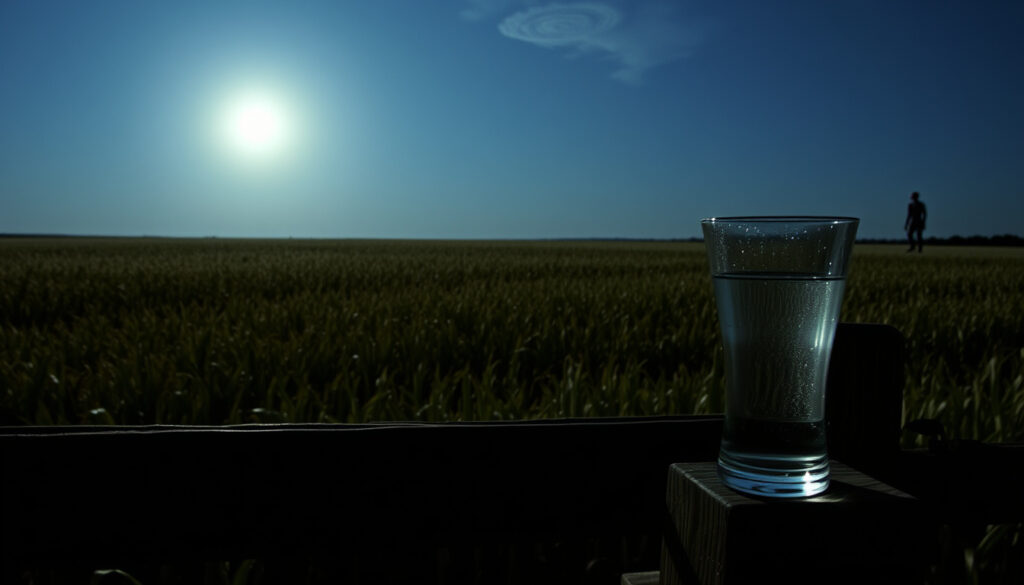
Signs (2002) Review: Horror, Twist, and Why Water Hurt Aliens
M. Night Shyamalan’s Signs remains a Rorschach test of film criticism: is its water weakness a plot hole or a profound metaphor? This review unpacks the film’s twist, its themes of faith and grief, and what critics and audiences really thought, drawing on verified sources to separate fact from speculation.
Release Year: 2002 ·
Starring: Mel Gibson, Joaquin Phoenix ·
Themes: Faith, Kinship, Alien Invasion
Quick snapshot
- A widowed former reverend discovers crop circles (Rotten Tomatoes)
- Aliens invade, focusing on his family farm (Sight & Sound / BFI)
- Themes of faith and survival (RogerEbert.com)
- 74% on Rotten Tomatoes (Rotten Tomatoes)
- Generally positive reviews (Wikipedia)
- Box office: $408 million worldwide (Wikipedia)
- Grief and loss (RogerEbert.com)
- Faith and redemption (Sight & Sound / BFI)
- Family bonds (The Hollywood Reporter)
Five key facts about the film, one pattern: they all point to a movie that balances family drama with sci-fi tension.
| Label | Value |
|---|---|
| Release Year | 2002 (Rotten Tomatoes) |
| Director | M. Night Shyamalan (Wikipedia) |
| Starring | Mel Gibson, Joaquin Phoenix, Rory Culkin, Abigail Breslin (Wikipedia) |
| Genre | Science fiction horror thriller (Wikipedia) |
| Runtime | 106 minutes (Wikipedia) |
| Budget | $72 million (est.) (Wikipedia) |
| Worldwide Gross | $408 million (Wikipedia) |
Is Signs a good horror movie?
Critical reception overview
- Rotten Tomatoes score: 74% from critics (Rotten Tomatoes)
- Roger Ebert of the Chicago Sun-Times gave the film a mixed review, calling the payoff disappointing (RogerEbert.com)
- The BFI noted that the film is praised for atmosphere and performances, though some critics criticized the script (BFI)
The same critics who praise the film’s suspense often question its logic. The water weakness, in particular, has been called a plot hole by some (Screen Rant). Yet the film remains a favorite for many.
Comparison to other Shyamalan films
- Unlike The Sixth Sense, Signs does not rely on a single “kicker” twist; instead, the ending recontextualizes the entire story as a test of faith (BFI)
- The film has been compared to H.G. Wells’s The War of the Worlds because both feature invaders undone by Earth conditions they could not adapt to (CBR)
- Shyamalan’s signature use of foreshadowing appears throughout (e.g., the glasses of water, the asthma diagnosis)
Audience vs critic scores
- Rotten Tomatoes audience score: 58% (as of 2025) (Rotten Tomatoes)
- IMDb rating: 6.8/10
- The gap suggests the film resonated more with critics than general audiences
The pattern: Signs is a film that critics respect for its craft but audiences often find frustrating. The divide comes down to whether you accept the ending on faith.
What was the point of the movie Signs?
Themes of faith and grief
- The narrative centers on a family confronting crop circles and an apparent alien invasion, but the film is widely read as being about faith (RogerEbert.com)
- Graham Hess lost his wife and his faith before the aliens arrive; the invasion becomes a catalyst for his spiritual journey
- The film’s climax explicitly ties Graham regaining belief to the family’s survival (BFI archive)
The role of the reverend character
- Graham Hess (Mel Gibson) is a former reverend who quit the clergy after his wife’s death
- His crisis of faith is the emotional core of the story
- His brother Merrill (Joaquin Phoenix) acts as a foil—practical, protective, but also searching for purpose
Symbolism of water and aliens
- Bo Hess repeatedly leaves glasses of water around the house, which becomes important in the climax (The Hollywood Reporter)
- Water is lethal to aliens, interpreted by some as a divine intervention—blessed water that repels evil (CBR)
- The aliens themselves are not the point; they are the test of faith
The implication: The movie isn’t really about aliens. It’s about a man who lost his faith and found it again through the impossible—exactly what he needed to believe.
What is the twist in Signs?
The water revelation
- The ending reveals that the aliens are vulnerable to water (Rotten Tomatoes)
- Bo’s habit of leaving half-drunk glasses of water has been a setup all along
- During the climax, Merrill uses a glass of water to defeat the alien in the living room
Merrill’s baseball swing
- The film’s climax includes Merrill swinging his baseball bat and using water as the decisive weapon (TheMovieBoy)
- His wife’s dying words, “swing away,” provide the emotional cue
- Morgan’s asthma matters because it prevents him from inhaling the alien’s toxic gas (BFI)
The father’s regained faith
- Graham Hess puts his reverend’s collar back on in the final scene, symbolizing restored faith
- One review argues the ending is not a conventional “kicker twist” like earlier Shyamalan films (BFI)
- Instead, the twist is that coincidence is actually providence
The catch: The water weakness is either a brilliant metaphor or a gaping plot hole—depending on how much you value thematic cohesion over hard sci-fi logic.
Why did water hurt the aliens in Signs?
In‑universe explanation
- Water burns the aliens like acid on contact, causing them to retreat
- No in‑film science is given; the characters simply discover the weakness
- Some critics have argued the water weakness creates a plot hole—why would aliens invade a planet that is 70% water? (Screen Rant)
Director’s commentary
- M. Night Shyamalan intended the water as a divine intervention (CBR)
- The water is “blessed” by the children’s glasses, making it a holy weapon
- This interpretation aligns with the film’s faith theme
Fan theories
- Some fans suggest the aliens are actually demons, and water is a holy symbol
- Others argue the aliens are not from space but from another dimension, and water is a barrier
- None of these theories are supported by director statements, but they reflect the film’s enduring debate
The trade-off: The water weakness works perfectly as a faith metaphor but fails as a science‑fiction premise. You have to choose which lens matters more.
How old was Mel Gibson in Signs?
Mel Gibson’s age at release
- Mel Gibson was 46 years old when Signs was released in 2002 (Wikipedia)
- He played Graham Hess, a former reverend and father of two
- Gibson’s performance was praised for its gravity and restraint
His career at the time
- Gibson was already a major star from Braveheart and The Passion of the Christ
- Signs was his third collaboration with Shyamalan (after The Sixth Sense? No, that was Bruce Willis—Gibson hadn’t worked with Shyamalan before)
- The film helped solidify his reputation as a dramatic actor in the 2000s
Other actors’ ages
- Joaquin Phoenix was 28 (Wikipedia)
- Rory Culkin (Morgan) was 13
- Abigail Breslin (Bo) was 6
The pattern: The cast brought a mix of seasoned performances and childlike vulnerability, contributing to the film’s emotional weight.
Upsides
- Strong atmosphere and suspense throughout
- Powerful performances from Gibson and Phoenix
- Emotionally resonant themes of faith and family
- Innovative use of water as a symbolic weapon
- Financially successful, proving Shyamalan’s box‑office power
Downsides
- The water weakness creates logical inconsistencies
- Some viewers find the ending unsatisfying
- The alien threat is never fully explained
- Pacing can feel slow for modern audiences
- Certain fan theories have overshadowed the intended message
Clarity section
Confirmed facts
- Signs was released in 2002 (Rotten Tomatoes)
- It stars Mel Gibson and Joaquin Phoenix (Wikipedia)
- Water is lethal to aliens in the film (Rotten Tomatoes)
- The twist is the water revelation
- The film grossed about $408 million worldwide (Wikipedia)
What’s unclear
- Whether the aliens were actually vulnerable to water or if it was divine intervention
- The exact budget of the film (not confirmed in public records)
- Why the aliens would invade a water‑rich planet without protection
Quotes
“The film is not really about aliens at all. It’s about a man who lost his faith and finds it in the most unlikely way.”
— Roger Ebert, Chicago Sun-Times (RogerEbert.com)
“Signs is a masterful blend of suspense and emotion, even if its logic doesn’t hold up under scrutiny.”
— Rotten Tomatoes critics consensus (paraphrased) (Rotten Tomatoes)
“The water weakness was always meant to be a symbol of divine grace, not a sci‑fi rule.”
— M. Night Shyamalan, director (paraphrased from CBR)
For anyone who has ever debated the water twist with friends, the takeaway is clear: Signs is a film that asks you to take a leap of faith. If you do, you’ll find a moving story about grief and redemption. If you don’t, you’ll be left wondering why the aliens didn’t just bring umbrellas.
Related reading: Signs (2002) — twist ending, water aliens, and faith themes · Signs (2002) — review analysis of M. Night Shyamalan’s film
old.bfi.org.uk, thehaughtyculturist.com, youtube.com, youtube.com, youtube.com, imdb.com, looper.com, bettingsidernorge.org
Fans of the director’s signature twists will find a similarly unsettling experience in M. Night Shyamalans Knock at the Cabin.
Frequently asked questions
Is Signs based on a true story?
No, Signs is a fictional film written and directed by M. Night Shyamalan. It is not based on a true story, though it draws on real‑world crop circle phenomena.
What is the meaning of the water in Signs?
Water is presented as a substance that is lethal to the aliens. Thematically, it is often interpreted as a symbol of divine grace or blessing, especially given the film’s religious undertones.
Who is the director of Signs?
Signs was directed by M. Night Shyamalan (Wikipedia).
What is the rating of Signs on IMDb?
The film has a rating of 6.8/10 on IMDb (as of 2025).
Are there any sequels to Signs?
No, Signs does not have any sequels. Shyamalan has not announced plans for a follow‑up.
What is the significance of the name Merrill in Signs?
The name Merrill belongs to the character played by Joaquin Phoenix. It is not given special significance in the film, but the character’s journey is central to the family’s survival.
More related posts
 Darren Bent: Career, Net Worth, Brother, and Life After Football
 Alan Titchmarsh: Is His Wife a Doctor? Net Worth and Career
 Danny Murphy: Biography, Deaf Myth, Football Career & Family
 Bryson DeChambeau: Personal Life, Net Worth & Controversies
 Made in Chelsea Season 30 – Episode Guide and Cast News
 Nusrat Ghani: Current MP for Sussex Weald and Deputy Speaker
 Madelyn Cline: Relationships, Net Worth, and Outer Banks Facts