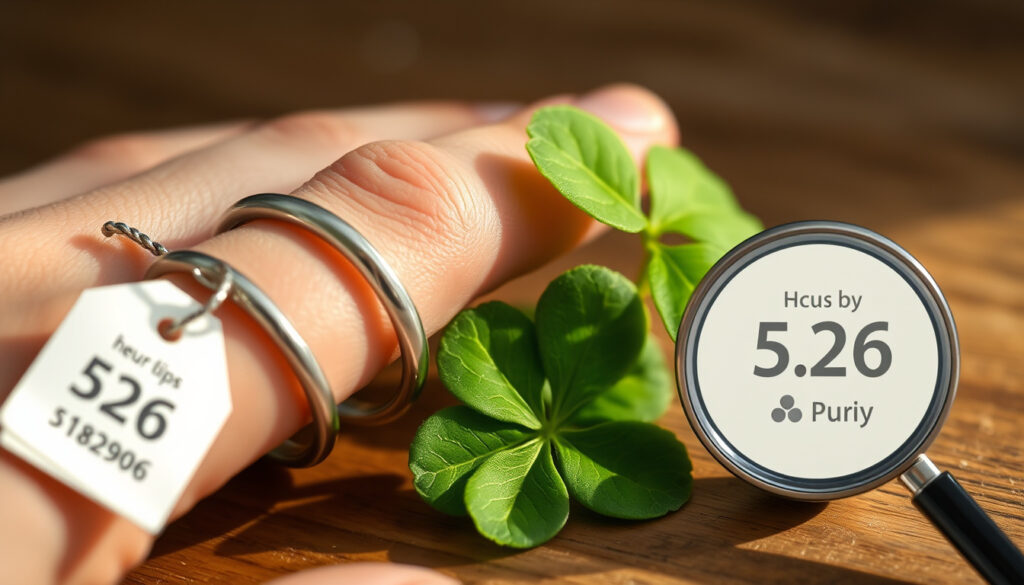
Silver Ring Cost, Purity, Finger Placement & Luck Guide
There’s a reason a simple silver band has held its value for centuries — and why you can find a real one for less than a date-night dinner. Between purity grades, finger placement traditions, and the surprising rules of “lucky” rings, buying a silver ring is less a purchase and more a cultural handshake — and by the end of this guide, you’ll know exactly which purity, price, and placement fit your hand and your bank account.
Average cost of a sterling silver ring: $50 ·
Purity of sterling silver: 92.5% silver ·
Most common finger for silver rings: Left ring finger (wedding) ·
Popular lucky ring symbol: Claddagh ring
Quick snapshot
- 925 sterling silver is an alloy of 92.5% silver and 7.5% copper (Tiffany & Co.)
- 999 fine silver is 99.9% pure (SilverJi)
- Exact lucky ring symbolism varies across cultures
- Medical advice on silver allergy prevalence is not universally documented
- Activation methods for lucky rings are not scientifically validated
- Retail price ranges for sterling silver rings vary widely by market; typical $20–$200 figures are not tied to a single authoritative source
- Claddagh ring history is traced to Galway in the late 1600s, and the design has been produced for more than 400 years (The Irish Jewelry Company)
- Understand what you’re paying for (purity, design, brand)
- Choose between 925 and 999 based on daily wear vs. occasional use
- Decide finger placement based on tradition or personal symbolism
Here are the essential numbers in one place.
| Average cost of a sterling silver ring | $50 |
|---|---|
| Purity of sterling silver | 92.5% silver |
| Purity of fine silver | 99.9% silver |
| Best finger for general wear | Left ring finger |
| Lucky ring symbol | Claddagh |
How much does a real silver ring cost?
Factors affecting silver ring price
- Purity: 999 fine silver is rarer and often more expensive than 925 sterling
- Design and craftsmanship: intricate patterns or gemstones increase labor costs
- Brand: established jewelers (e.g., Tiffany & Co.) command premiums over independent sellers
- Weight: heavier rings use more silver and cost more
Average price range for sterling silver rings
Most real sterling silver rings cost between $20 and $200. A plain band from a mid-tier brand typically falls at the lower end; a designer piece with stones can push past $150. According to a care guide published by Tiffany & Co., sterling silver jewelry (including rings) is priced based on the weight of the 92.5% alloy plus any additional materials or labor.
Cost comparison: 925 vs 999 silver
Two rows, one pattern: purity drives cost, but durability determines value for daily wear.
| Purity | Silver content | Typical cost (plain band) | Best use |
|---|---|---|---|
| 925 sterling | 92.5% silver + 7.5% copper | $20–$80 | Daily-wear rings, wedding bands |
| 999 fine | 99.9% silver | $50–$200 | Investment, occasional wear, bullion |
The trade-off: 999 is purer but softer. Buyers who plan to wear their ring every day save money — and get better durability — with 925.
The pattern: price tracks purity and brand, but your wearing habits should set the final value.
Is 925 or 999 silver better?
What is 925 sterling silver?
925 sterling silver is an alloy composed of 92.5% silver and 7.5% copper, as defined by international hallmarking standards. The copper is added deliberately: it hardens the metal, making it suitable for rings worn daily. The hardening effect is why sterling is the default for jewelry (Phoenix Refining). According to Tiffany & Co., this ratio has been the jewelry industry standard for decades because it balances silver’s natural luster with the strength needed for settings and clasps.
What is 999 fine silver?
999 fine silver is 99.9% pure silver — nearly elemental. It is soft and malleable, which makes it preferred for bullion and investment pieces. As explained by SilverJi, 999 silver is marked with a “999” stamp and is less common in jewelry because it scratches easily and cannot hold gemstone settings securely.
Durability and tarnish resistance comparison
The copper in 925 makes it harder than 999, but it also introduces tarnish potential. According to Tiffany & Co., sterling silver tarnishes when exposed to salty air, chlorine, sulfur, humidity, perspiration, cosmetics, household bleach, and other strong chemicals. Fine silver tarnishes less aggressively because it contains fewer reactive alloy metals, but it is too soft for most ring applications.
Which purity is best for rings?
For daily-wear rings — engagement bands, wedding rings, or anything worn 8+ hours a day — 925 sterling silver is the dominant choice. Several jewelry retailers, including Jewelry Lukas, emphasize that 925’s improved hardness and durability make it practical for continuous wear. 999 fine silver is better reserved for occasional pieces, heirloom items, or investors who want pure silver regardless of wear-and-tear.
Which finger is best for silver?
Which finger is lucky to wear a ring?
- Left ring finger: traditionally for wedding bands, associated with love and commitment
- Index finger: symbolizes authority, leadership, and ambition in many palmistry traditions
- Little finger (pinky): linked to communication, intuition, and business negotiations
Which finger not to wear ring?
Some traditions advise against wearing a ring on the thumb for spiritual reasons — particularly in Hindu and Vedic customs, where the thumb is considered a grounding digit not meant for ornamentation. No major safety or medical ban exists for thumb rings, but the cultural asterisk is worth noting if you follow those practices.
Which finger ring attracts money?
Money-attracting finger placement varies by tradition. In Western palmistry, the index finger is sometimes associated with Jupiter (expansion and wealth). In Indian tradition, the ring finger is linked to the Sun and is believed to attract financial prosperity when worn with specific stones like citrine or pyrite. According to folklore collected by USC Digital Folklore Archives, some cultural beliefs hold that a ring given as a gift (rather than self-purchased) carries more luck-attracting energy.
Cultural variations in finger meanings
Irish tradition offers one of the clearest finger-placement codes through the Claddagh ring. According to Encyclopaedia Britannica, the Claddagh ring’s heart, hands, and crown symbolize love, friendship, and loyalty — and the finger and direction in which it’s worn signal relationship status. Right hand + heart outward: single. Right hand + heart inward: in a relationship. Left ring finger + heart outward: engaged. Left ring finger + heart inward: married. While the code is flexible rather than legally fixed, as noted by Irish Culture and Traditions, it remains a widely observed custom.
Why this matters: choosing a finger isn’t just decoration — it’s a statement that other people read. If you’re wearing a Claddagh, know which message your finger sends.
A buyer who wants a lucky ring for money doesn’t need to guess. Index finger and ring finger are the two strongest candidates — and a gift-given Claddagh carries more symbolic weight than a self-purchased one.
Which ring brings good luck?
What are 7 lucky rings?
There is no single canonical list, but seven common lucky ring symbols stand out across Irish, European, and global traditions:
- Claddagh ring — love, loyalty, friendship; Irish tradition
- Horseshoe ring — general good fortune; European folk belief
- Four-leaf clover ring — luck, faith, love, hope; Irish-Celtic
- Hamsa hand ring — protection against evil eye; Middle Eastern and North African
- Evil eye ring — warding off negativity; Greek, Turkish, and Mediterranean
- Cross or crucifix ring — protection and faith; Christian tradition
- Heirloom ring (family piece) — ancestral luck; universal
How to activate Lucky ring?
“Activation” is a folk practice rather than a scientific one, but it has consistent steps across several traditions:
- Cleansing: soak the ring in salt water, or leave it under moonlight for one night, as described in various crystal and jewelry care guides
- Charging: place the ring in sunlight (careful with gemstones that fade) or on a selenite plate
- Setting intentions: hold the ring in your dominant hand and silently state your wish (money, love, protection, etc.)
- Gifting (Claddagh specific): per USC Digital Folklore Archives, some folk sources say it is bad luck to buy a Claddagh ring for yourself — it should be given as a gift to carry the full blessing
Which ring is for money?
Money-attracting rings typically feature stones associated with wealth: citrine, pyrite, jade, or green aventurine. In palmistry, the index finger (Jupiter finger) is the conventional mounting point for wealth-attracting rings. However, the cultural flexibility means any finger you consciously assign to the intention — and activate with a ritual — is considered effective by practitioners.
Popular lucky ring symbols and stones
Beyond the seven symbols above, specific gemstones are tied to money and luck:
- Citrine: “merchant’s stone” — associated with abundance and manifestation
- Pyrite (fool’s gold): believed to attract wealth and shield against financial loss
- Jade: ancient Chinese symbol of prosperity, luck, and harmony
- Green aventurine: known as the “stone of opportunity” in metaphysical circles
Who should not wear a silver ring?
Medical conditions — allergies and skin reactions
People with nickel allergies may react to some sterling silver alloys, because trace amounts of nickel can exist in the copper component. According to Tiffany & Co., sterling silver’s copper alloy can also tarnish — and the tarnish residue can sometimes cause green or black marks on skin, which is cosmetic rather than allergic but still bothers some wearers. Those with confirmed metal sensitivities should verify that the ring is labeled “nickel-free” or choose fine silver (999) for its lower alloy content.
Astrological and metaphysical considerations
In Ayurveda, certain body types (doshas) are advised against wearing silver. According to some traditional practitioners, Vata dosha individuals may find silver aggravates coldness, while Pitta dosha types benefit from silver’s cooling energy. The advice is not universally agreed upon and is largely anecdotal — but it’s a consideration if you follow Ayurvedic guidelines.
Professional and safety restrictions
Some professions restrict metal rings for practical safety reasons:
- Chefs and food handlers: metal rings can trap bacteria and are often prohibited by health codes
- Electricians: silver is conductive — a silver ring could cause a burn or shock if it contacts live wiring
- Machinists and heavy laborers: metal rings can catch in rotating equipment and cause degloving injuries (a known safety risk in industrial settings)
- Healthcare workers: many hospitals require bare hands below the elbow for infection control
Alternatives for those who cannot wear silver
If silver is out due to allergy, tradition, or profession, consider these alternatives:
| Material | Hypoallergenic | Durability | Best for |
|---|---|---|---|
| Titanium | Yes | Very high | Daily wear, professionals, sensitive skin |
| Platinum | Yes | Very high | Fine jewelry, engagement rings |
| Surgical-grade stainless steel | Yes (most grades) | High | Budget-friendly daily wear |
| Gold (14k–18k) | Depends on alloy | High | Traditional fine jewelry |
The catch: titanium and platinum are more expensive than silver but solve the allergy and safety problems entirely. If cost is the barrier, surgical-grade stainless steel offers a cheaper hypoallergenic alternative — though it lacks the luster of silver.
Nickel-allergic buyers who choose a “nickel-free” sterling ring still need to check the alloy composition. Some manufacturers use nickel in the copper blend; only explicit “nickel-free sterling” guarantees safety.
The takeaway: silver is not mandatory — a safe alternative only needs to fit your skin, your job, and your budget.
mozerisfineantiques.com, goldsell.co.uk, en.wikipedia.org, antiquesilverhallmarks.com, jeweltrendpro.com, jeweltrendpro.com, aquilajewellery.com, underpricedai.com, worthlens.ai, jeweltrendpro.com, jeweltrendpro.com, antiquesilverhallmarks.com, 925-1000.com, whatisthismark.com, en.wikipedia.org, letsgoireland.com, wikihow.com, irishcultureandtraditions.org, claddaghrings.com, go-to-ireland.com, irishjewelrycraft.com, claddaghring.com, cleanorigin.com, jeweltrendpro.com, blog.bluestone.com, thecladdagh.com, mckerjewelry.com, jeweltrendpro.com
Frequently asked questions
What is the difference between silver and sterling silver?
Pure silver (fine silver) is 99.9% silver. Sterling silver is an alloy of 92.5% silver and 7.5% copper (or other metals) for added hardness. Most jewelry is sterling silver because pure silver is too soft for daily wear.
Can silver rings cause skin discoloration?
Yes. Sterling silver can leave a green or black mark on skin due to oxidation or the copper content. This is cosmetic — not a sign of tarnishing quality — and is harmless for most people.
How to clean a silver ring at home?
Use a soft cloth and specialty silver polish, or soak for a few minutes in a solution of warm water and mild dish soap. Rinse thoroughly and dry with a non-abrasive cloth. Avoid toothpaste or baking soda — they are too abrasive for the metal.
Is it safe to wear a silver ring every day?
Yes, for most people. Sterling silver (925) is durable enough for daily wear, but you should remove it before swimming, showering, exercising, or sleeping, according to common care guidance from Charmly Jewelry.
What does a silver ring symbolize in different cultures?
Silver rings symbolize love (wedding bands), authority (signet rings), loyalty (Claddagh rings), and sometimes protection (silver’s historic association with purity and warding off evil). In Irish tradition, the Claddagh ring also signals relationship status via finger and direction.
How can I tell if a silver ring is real?
Look for a stamp: “925”, “Sterling”, “Ster”, or “S925” on the inside of the band. For fine silver, look for “999” or “Fine Silver”. Check with a magnet (silver is non-magnetic), and take it to a jeweler for an acid test if needed.
Are silver rings suitable for engagement rings?
Yes, but with caution. Sterling silver engagement rings are affordable and beautiful, but the metal is softer than gold or platinum and will scratch over time. Choose 925 sterling for durability, and be prepared for repolishing every few years if worn daily.
“Sterling silver must contain at least 92.5% silver per ISO 925.”
— Jewelry industry standard
“The Claddagh ring is a symbol of love, loyalty, and friendship.”
— Traditional Irish jeweler
For buyers in Ireland and beyond, the choice between 925 and 999 silver is not academic — it determines how long your ring lasts, how often you need to clean it, and what it communicates about your intentions. Daily-wear buyers should pick 925 sterling for its durability and value. Investment-minded buyers can choose 999 for purity. And for those chasing luck, a gift-given Claddagh on the right finger with a clear activation intention remains the most culturally potent choice. For the Irish buyer weighing tradition against practicality, the decision is clear: pick 925 for your everyday ring, activate it with ritual, and wear it on the finger that matches your story — or risk wearing a symbol that says the wrong thing.
More related posts
 Black Cardigan Guide: Styles, Fabrics, and Irish Shops
 James Ransone Dies by Suicide at 46: IT Chapter Two Actor
 Michelle Heaton: Illness, Sobriety, Husband, and Comeback
 Levi Colwill Injury Update: ACL Recovery Timeline & Salary
 Power Book III: Raising Kanan Episodes – Full Seasons Guide
 Shaun Ryder: Happy Mondays Frontman to Gogglebox Star
 How to Press Flowers: Methods, Mistakes, Color Tips
 How Many Episodes of Mobland – Season 1 Full Episode Guide