Marty McFly: Character Biography and Actor Connection
Few film characters from the 1980s still spark a double-take quite like a kid in a red puffer vest and a denim jacket zipping through time in a tricked-out DeLorean. Marty McFly isn’t just the protagonist of the Back to the Future trilogy; he’s a cultural shorthand for teenage rebellion, accidental heroism, and the sheer absurdity of meeting your own parents as teenagers. This guide separates the on-screen canon from the real-life story of the actor who made the character iconic.
Film Series: Back to the Future trilogy ·
Number of Films: 3 ·
Portrayed By: Michael J. Fox ·
Character Age: 17 ·
First Film Release: 1985 ·
Catchphrase: “This is heavy”
Quick snapshot
- Catchphrase: “This is heavy” (Associated Press)
- Iconic outfit: red puffer vest, denim jacket, Nike sneakers (Associated Press)
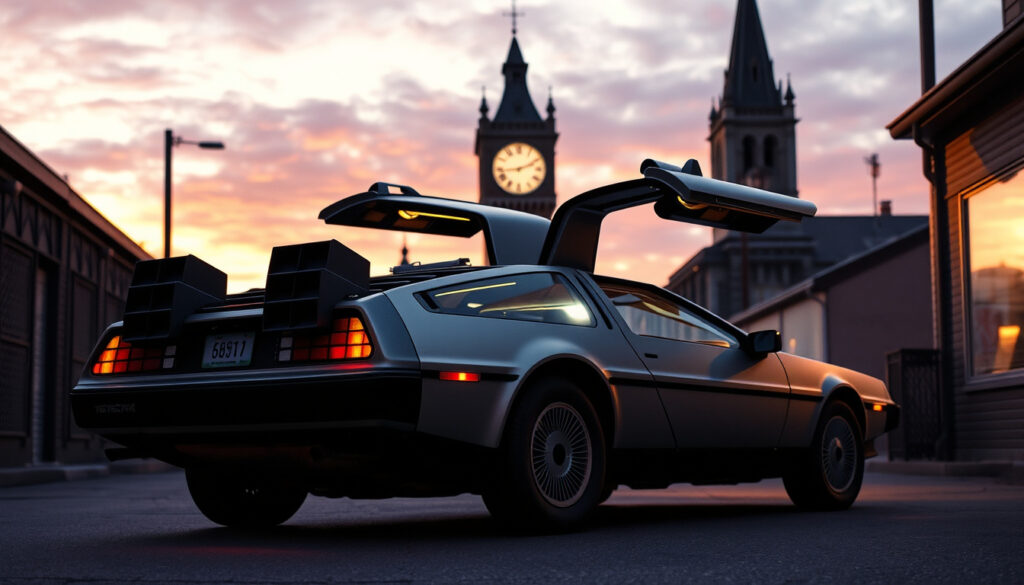
- Vehicle: DeLorean DMC-12 time machine (Associated Press)
- Diagnosed with Parkinson’s in 1991 (Wikipedia)
- Public revelation in 1998 (Wikipedia)
- Founder of The Michael J. Fox Foundation for Parkinson’s Research (Wikipedia)
Eight facts, one pattern: the fictional Martin Seamus McFly and the real Michael J. Fox are two different stories that audiences habitually blur. The table below sets the record straight.
| Fact | Value | Source |
|---|---|---|
| Full Name | Martin Seamus McFly | Wikipedia (Character Profile) |
| Portrayed By | Michael J. Fox | IMDb (Original Film Credits) |
| First Appearance | Back to the Future (1985) | Wikipedia (Film Entry) |
| Catchphrase | “This is heavy” | Associated Press (2025 Interview) |
| Vehicle | DeLorean DMC-12 | Wikipedia (Film Entry) |
| Father | George McFly | Wikipedia (Character Profile) |
| Mother | Lorraine Baines McFly | Wikipedia (Character Profile) |
| Actor’s Diagnosis | Parkinson’s disease (revealed 1998) | Wikipedia (Michael J. Fox Biography) |
The confusion between actor and character is not trivial. Fans searching for “what happened to Marty McFly” often land on pages about Michael J. Fox’s Parkinson’s diagnosis, blurring the boundary between a fictional teenager who never ages and a real person who has lived with a degenerative condition for three decades.
What is Marty McFly famous for?
Marty McFly is the protagonist of the Back to the Future trilogy, a teenage high school student and aspiring musician who becomes an accidental time traveler. The character, created by Robert Zemeckis and Bob Gale, first appeared in the 1985 film Back to the Future and is portrayed on screen by Michael J. Fox (Wikipedia).
Marty’s role in the Back to the Future trilogy
- Marty is sent from 1985 to 1955 in a time-traveling DeLorean built by Doc Brown (Wikipedia, Film Synopsis).
- His actions in 1955 threaten his own existence by preventing his future parents from falling in love.
- In Back to the Future Part II, Marty travels to 2015 and later to an alternate 1985 (Wikipedia, Character Timeline).
- In Part III, Marty travels to 1885 to rescue Doc Brown (BacktotheFuture.com, Official Franchise Site).
Michael J. Fox’s performance
Michael J. Fox was cast in January 1985, replacing Eric Stoltz after five weeks of shooting (Wikipedia, Michael J. Fox Biography). Fox was 24 years old playing a 17-year-old, and he balanced filming Back to the Future with his ongoing role on Family Ties (BacktotheFuture.com, Official Cast Page). The BBC archive described Marty as an “all-American teen hero” in a 1985 interview with Fox (BBC Archive, 1985 Interview).
Fox’s portrayal turned a scripted teenager into a generational icon. The Associated Press noted in 2025 that Fox’s Marty embodies “a quintessential teenager and a guitar-playing youth striving to hold his family together” (Associated Press, Feature Interview).
Iconic catchphrase and style
- Marty’s catchphrase, “This is heavy,” is uttered in reaction to time travel, self-revelations, and surreal situations.
- His style — red puffer vest, denim jacket, ripped jeans, and Nike Bruin sneakers — became a hallmark of 1980s film fashion.
- Marty’s vehicle, the DeLorean DMC-12, is as iconic as the character himself, functioning as a time machine when it reaches 88 miles per hour.
The pattern: Marty McFly is famous not for a single moment but for the entire package — an ordinary kid thrown into extraordinary circumstances, played by an actor working under Hollywood’s most grueling schedule, delivering a performance that audiences still quote four decades later.
Are the McFlys Irish?
The surname McFly is of Irish origin, though the films never dwell on the family’s ethnic background in any meaningful way. The question arises from the name itself and from fan curiosity about Marty’s father, George McFly.
Marty’s surname and Irish heritage
- The McFly surname is Irish, meaning “son of Flann” or descended from a person named Flann (Wikipedia, Character Profile).
- The character’s full name, Martin Seamus McFly, uses the Irish spelling of “Seamus.”
- No canonical material in the films addresses the family’s cultural identity beyond the name.
George McFly’s traits
Marty’s father, George McFly, is a timid, passive character who is bullied by Biff Tannen. George is a science fiction fan and an aspiring writer. Some fans have speculated that George exhibits traits associated with autism spectrum disorder — social awkwardness, intense focus on niche interests, difficulty reading social cues — but this is not confirmed in any official canon (Wikipedia, Fan Theories Section).
What this means: The Irish heritage is entirely nominal. The real drama in the McFly household is not about ethnicity but about generational transformation — Marty’s intervention in 1955 turns his father from a bullied nerd into a confident novelist, rewriting the family’s entire future.
What happened to Marty McFly?
This question crosses two separate stories depending on who the asker is thinking of: the fictional character or the actor who played him.
Marty’s timeline after the trilogy
- In Back to the Future Part III, Marty returns to 1985, destroys the DeLorean, and lives a normal life in Hill Valley.
- He reunites with his girlfriend, Jennifer Parker, and his family’s future is secure.
- The films end with Doc Brown visiting from 2015, confirming Marty’s story is complete and happy.
Did Marty McFly die?
- No. Marty McFly is a fictional character who does not die in any canonical Back to the Future film (Wikipedia, Character Fate).
- Rumors of Marty’s death are false and typically confuse the character with Michael J. Fox.
- In the original film, an alternate timeline briefly shows Biff Tannen murdering George McFly, but Marty survives.
Alternate futures
In Back to the Future Part II, an alternate 1985 shows a dystopian Hill Valley where Biff is wealthy and Marty’s mother is divorced. Marty and Doc Brown must restore the timeline by retrieving the almanac.
When someone types “Marty McFly death” into a search engine, they are usually looking for information about Michael J. Fox’s health, not the character. The two have been intertwined in public consciousness to the point where misinformation spreads quickly — which is exactly why separating them matters for readers who want accurate answers.
The implication: Understanding that Marty McFly is alive in fiction prevents false confusion with Michael J. Fox’s real diagnosis.
What was Marty McFly diagnosed with?
The short answer: nothing. Marty McFly, the fictional character, was not diagnosed with any condition in the films. The diagnosis belongs to Michael J. Fox, the actor who portrayed him.
Michael J. Fox’s Parkinson’s disease
- Michael J. Fox was diagnosed with Parkinson’s disease in 1991 (Wikipedia, Michael J. Fox Biography).
- He publicly revealed his diagnosis in 1998.
- Fox founded The Michael J. Fox Foundation for Parkinson’s Research in 2000.
- He has outlived initial life expectancy projections and continues to advocate for research (Wikipedia, Michael J. Fox Biography).
Public revelation in 1998
Fox’s decision to go public was a turning point. He had kept the diagnosis private for seven years while continuing to act, including roles in Spin City and the Back to the Future sequels (Associated Press, 2025 Profile).
Life expectancy and advocacy
- Life expectancy for Parkinson’s varies significantly per individual; no public entity has released a specific prognosis for Fox.
- Fox has remained active in film and television in limited capacities.
- His foundation has raised over $1 billion for Parkinson’s research.
The confusion between the character and the actor is not innocent. Every time a fan searches for “Marty McFly Parkinson’s,” they are exposed to a real human story that has nothing to do with the fictional teenager. The separation is respectful to both the art and the artist.
The distinction: Marty McFly has no diagnosis; Michael J. Fox lives with Parkinson’s. Keeping the two separate is crucial for accurate information.
What does Biff call Marty?
Biff Tannen, the trilogy’s primary antagonist, has a limited but effective vocabulary of insults for Marty.
Biff’s insults and slurs
- Biff calls Marty “McFly” as a default, often with contempt.
- The primary insult is “Chicken,” used to goad Marty into reckless behavior.
- In the 1955 timeline, Biff calls Marty a “wise guy” and threatens him physically.
McFly vs. Chicken
The nickname “Chicken” is central to Marty’s character arc. In Back to the Future Part II and Part III, Marty’s refusal to be called “Chicken” drives him into increasingly dangerous situations — racing Needles, accepting a duel, and nearly getting killed.
Cultural impact of the bullying
Biff’s bullying is not incidental; it is the catalyst for the entire plot. If Biff had not bullied George McFly in 1955, Marty might never have been born. The tension between Biff and Marty also underlines the film’s core theme: standing up to bullies transforms not just the individual but the entire timeline.
Why this matters: Biff’s insults are a narrative tool. “Chicken” is not just a taunt — it is the flaw that Marty must overcome to grow from a reactive teenager into someone who can make his own choices.
Timeline signal
- 1985: Back to the Future released; Marty travels to 1955. (IMDb, Back to the Future Part II Credits)
- 1989: Back to the Future Part II; Marty travels to 2015. (IMDb, Back to the Future Part III Credits)
- 1990: Back to the Future Part III; Marty travels to 1885. (BacktotheFuture.com, Official Cast Page)
- 1991: Michael J. Fox diagnosed with Parkinson’s disease. (Wikipedia, Michael J. Fox Foundation)
- 1998: Fox publicly reveals his Parkinson’s diagnosis. (Wikipedia, Michael J. Fox Foundation)
- 2000: The Michael J. Fox Foundation for Parkinson’s Research is founded. (Wikipedia, Michael J. Fox Foundation)
- 2020s: Fox continues advocacy and occasional acting roles. (Wikipedia, Michael J. Fox Foundation)
“This is heavy.”
— Marty McFly, Back to the Future
“My optimism is a conscious choice.”
— Michael J. Fox, Associated Press Interview
“Great Scott!”
— Doc Brown, Back to the Future
What’s certain and what’s not
Confirmed facts:
- Marty McFly is a fictional character from the Back to the Future franchise.
- Michael J. Fox has Parkinson’s disease.
- Marty’s catchphrase is “This is heavy.”
- The DeLorean time machine is the primary vehicle.
Uncertain or debated:
- Whether George McFly has autism is not confirmed in canon; it is a fan theory.
- Michael J. Fox’s exact life expectancy is not publicly specified; it varies per individual.
- Marty’s exact birth year is not explicitly given in the films – he is 17 in 1985, so born 1968, but some sources suggest 1969.
- The DeLorean’s time travel rules regarding paradoxes are not fully explained in canon.
youtube.com, youtube.com, youtube.com, en.wikipedia.org, en.wikipedia.org, youtube.com, imdb.com, imdb.com, filmtvuk.uk
Fans interested in the actor behind the character can explore Michael J. Foxs health journey for a deeper look at his real-life challenges.
Frequently asked questions
How old is Marty McFly in Back to the Future?
Marty McFly is 17 years old in Back to the Future (Wikipedia, Character Profile).
What car does Marty McFly drive?
Marty drives a Toyota SR5 pickup truck in 1985. The time machine is the DeLorean DMC-12 owned by Doc Brown (Wikipedia, Film Details).
Does Marty McFly have a brother?
Yes. Marty has an older brother named Dave McFly and a sister named Linda McFly (Wikipedia, Character Profile).
Who plays Marty McFly?
Michael J. Fox plays Marty McFly in all three Back to the Future films (IMDb, Film Credits).
What year does Marty McFly travel to first?
Marty’s first time travel is from 1985 to 1955 (Wikipedia, Film Synopsis).
Is Marty McFly based on a real person?
No. Marty McFly is a purely fictional character created by Robert Zemeckis and Bob Gale. Michael J. Fox’s performance gives the character a naturalistic feel, but there is no real-life counterpart (Wikipedia, Film Development).
What is Marty McFly’s full name?
Martin Seamus McFly (Wikipedia, Character Profile).
Why does Marty McFly say ‘heavy’?
The word “heavy” was 1980s slang meaning “profound,” “significant,” or “overwhelming.” Marty uses it to express awe at the implications of time travel and the surreal situations he finds himself in.
For readers trying to understand the full scope of Marty McFly’s legacy, the separation is clear: the fictional character is an eternal 17-year-old time traveler whose adventures are frozen in three films from the 1980s and early 1990s. The man who played him, Michael J. Fox, wrote a completely different story — one of resilience, advocacy, and public courage in the face of a devastating diagnosis. The implication for anyone asking “what happened to Marty McFly” is that they owe it to themselves to check whether they mean the fictional character or Michael J. Fox, because the answer changes everything.
More related posts
 Steven Bartlett: Net Worth, Biography, Dragons’ Den Facts
 Jennifer Lawrence: Health, Family, Career & Net Worth
 ASICS Gel-NYC Black – Variants, Prices & Buy Guide
 Zarah Sultana: Biography, Suspension, and Views
 Brenda Blethyn: Biography, Vera Role & Personal Life (2024)
 Robbie Savage: Net Worth, Career, Family, and Latest Updates
 Ademola Lookman: Salary, Net Worth, Tribe, Wife, Stats
 Flights to Palma de Mallorca: Cheap Airlines and Budget Guide